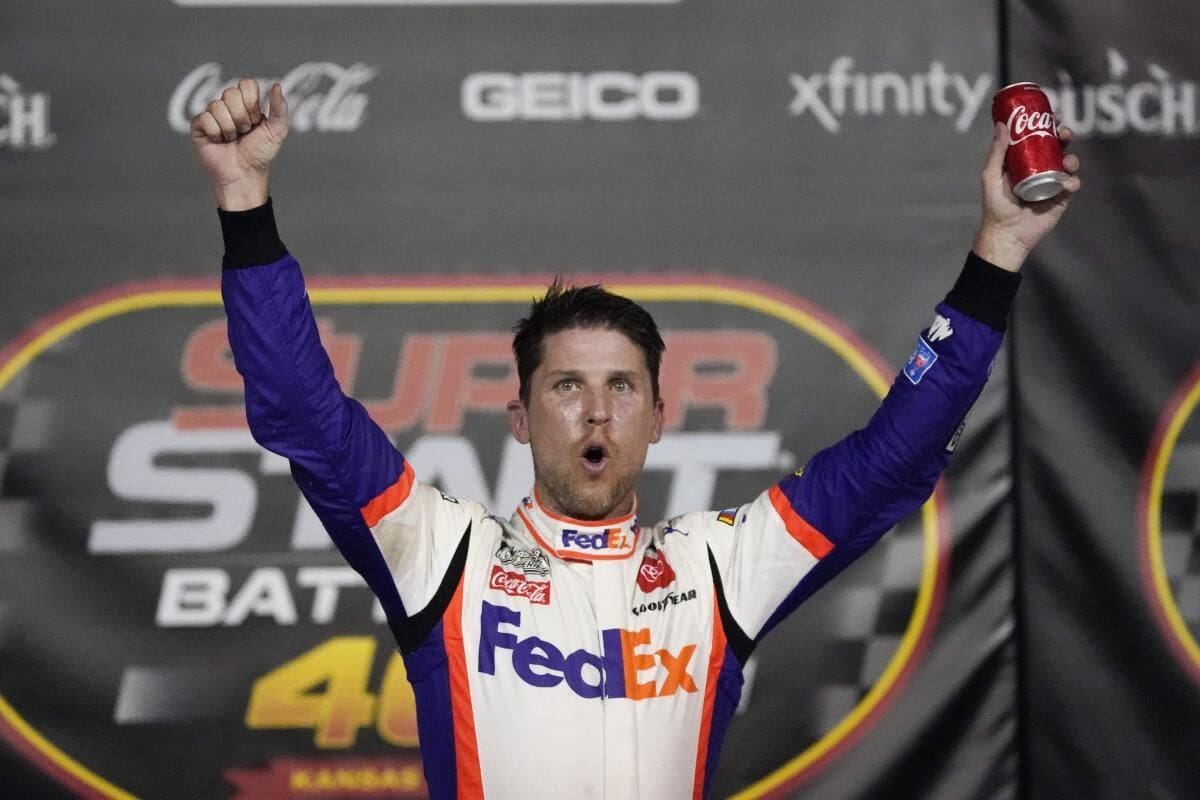
Denny Hamlin Opens Up on Atlanta Struggles: Denny Hamlin‘s recent reflections on his challenges at Atlanta Motor Speedway have sparked a deeper conversation about strategy and adaptability in racing. His unforeseen collision with Chase Briscoe demonstrates the nature of such tactics. As Hamlin contemplates the lessons learned from this experience, the implications for his team’s future performance and championship aspirations become increasingly relevant. What adjustments might they consider as they confront the evolving dynamics of the NASCAR circuit?
Key Highlights
- Denny Hamlin experienced multiple wrecks at Atlanta, leading him to feel cursed at the unpredictable track.
- His strategy for the Quaker State 400 involved caution, but overly conservative tactics limited his potential gains.
- A last-lap wreck, sparked by Chase Elliott, reflected the unpredictability of racing and contributed to Hamlin’s disappointment.
- Despite recent misfortunes, Hamlin remains focused on upcoming races, leveraging past successes at venues like Watkins Glen and Bristol.
- Analysts emphasize the need for strategic adjustments, while fans maintain hope for Hamlin’s turnaround in performance.
Denny Hamlin’s Struggles at Atlanta Motor Speedway
Despite entering the Atlanta Motor Speedway with a well-calibrated strategy aimed at overcoming past misfortunes, Denny Hamlin once again found himself entangled in adversity, highlighting a troubling pattern that has emerged over his career at this particular track.
The No. 11 Toyota driver has often been a victim of circumstance at Atlanta, a venue notorious for its unpredictability and racing.
Hamlin’s struggles were evident as he confronted multiple wrecks in previous appearances, leading him to humorously suggest a “curse” that haunts him at this 1.54-mile reconfigured circuit.
This season’s playoff opener was no exception, as his carefully devised plan unraveled due to a late-race incident that forced him to abandon both strategy and hopes for a strong finish.
His disappointment was palpable during the post-race debrief, revealing the emotional toll that such misfortunes exact on a driver of his caliber.
Yet, amidst the frustration of another setback, Hamlin displayed a resilient spirit, expressing enthusiasm for upcoming races on tracks less prone to chaos.
This contrast of despair and optimism encapsulates the essence of a seasoned competitor who, despite repeated trials at Atlanta, remains undeterred in his pursuit of excellence.
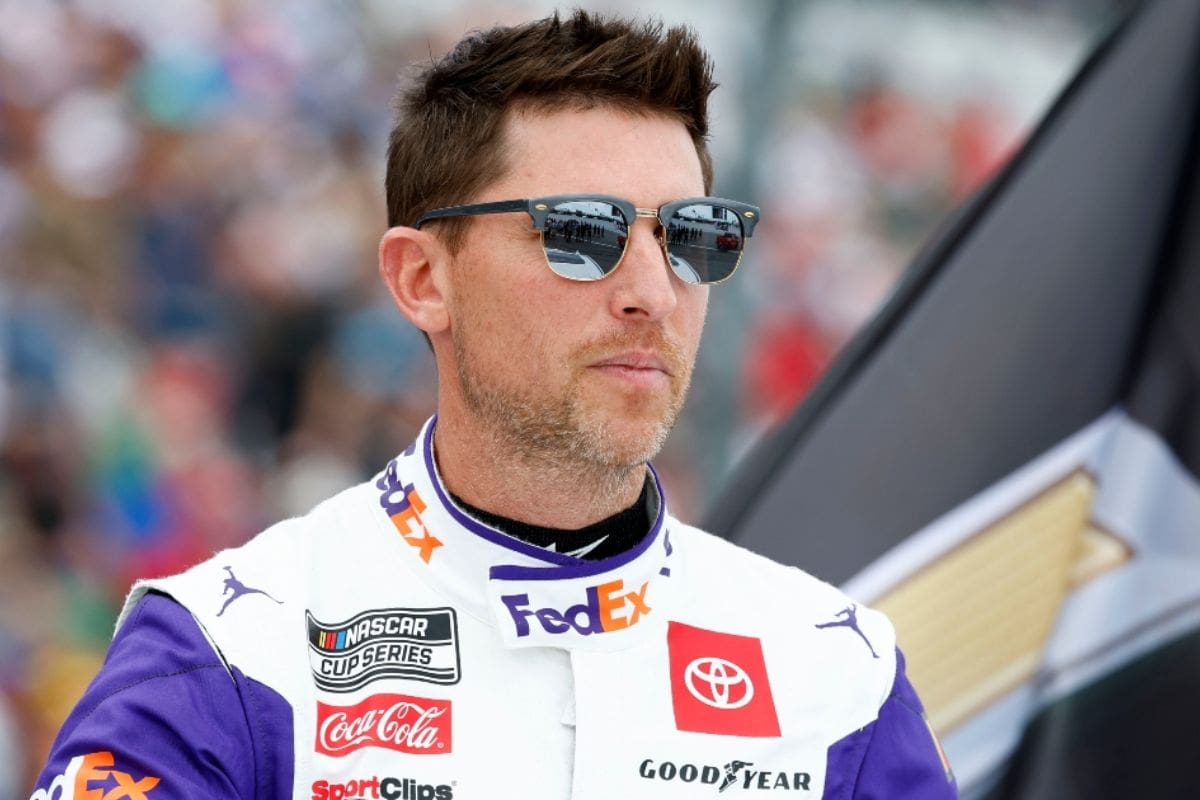
Hamlin’s Strategy at the Quaker State 400
Following the challenges faced at Atlanta Motor Speedway, Denny Hamlin approached the Quaker State 400 with a strategy that reflected both caution and experience.
Having previously excelled as a smart draft racer, Hamlin’s plan for the race was predicated on a calculated gamble—waiting for the right moment to seize track position. However, the execution of this strategy proved problematic, as he exhibited an overly conservative approach that hindered his performance.
Starting from the 38th position, Hamlin struggled to break into the top ten at any stage during the race. His decision to play the odds, anticipating a larger number of wrecks and incidents, ultimately backfired.
In his post-race reflections, he acknowledged this miscalculation: “I thought there would be a bigger wreck…just trying to play the numbers.” This statement highlights the inherent risk in adopting a strategy reliant on external factors, particularly in a sport as unpredictable as NASCAR.
“I thought there would be a bigger wreck, you know. Just trying to play the numbers. Figured there would be more incidences, and there were…there were still some playoff guys and some stuff. But overall, I didn’t care about what anyone else did, just tried to get 20 points, which is a mid to high team finish. Just trying to get through this round, that’s it.” – hamlin
Denny Hamlin on his strategy to avoid wrecks that worked for all but the final lap Sunday at Atlanta: pic.twitter.com/2P83qP6HPS
— Bob Pockrass (@bobpockrass) September 8, 2024
Hamlin’s focus on accumulating points rather than aggressively pursuing a higher finish may have limited his potential gains. By prioritizing a conservative approach, he aimed merely for a “mid to high team finish,” eschewing the assertiveness often required to capitalize on opportunities in the dynamic environment of a race.
Consequently, while his intentions reflected a seasoned understanding of the sport, the outcome served as a clear reminder that in racing, the execution of a strategy can be as critical as the strategy itself.
The Late-Race Incident and Hamlin’s Reaction
As the Quaker State 400 drew to a dramatic close, Denny Hamlin found himself embroiled in a last-lap wreck that would further complicate his already challenging race. The incident unfolded as Chase Elliott made a jittery action, inadvertently forcing Ross Chastain into the wall. This triggered a cascade of chaos, culminating in a multi-car crash that ensnared Hamlin amidst the wreckage, alongside Harrison Burton.
Reflecting on the incident, Hamlin straightforwardly admitted, “I didn’t see it. My car just turned sideways and I obviously got hooked there.” His admission emphasizes the unpredictable nature of racing, particularly in the narrow confines of Atlanta Motor Speedway, where the track becomes congested in the closing laps.
Hamlin elaborated on this challenge, stating, “The track gets so logjammed there and it’s really hard to march to the front.” This commentary not only highlights his frustration but also reveals the intricacies of strategy in a environment where split-second decisions can dictate outcomes.
As Hamlin processes this latest setback, the broader implications on his season and mental fortitude will certainly be scrutinized as he seeks to recalibrate for the races ahead.
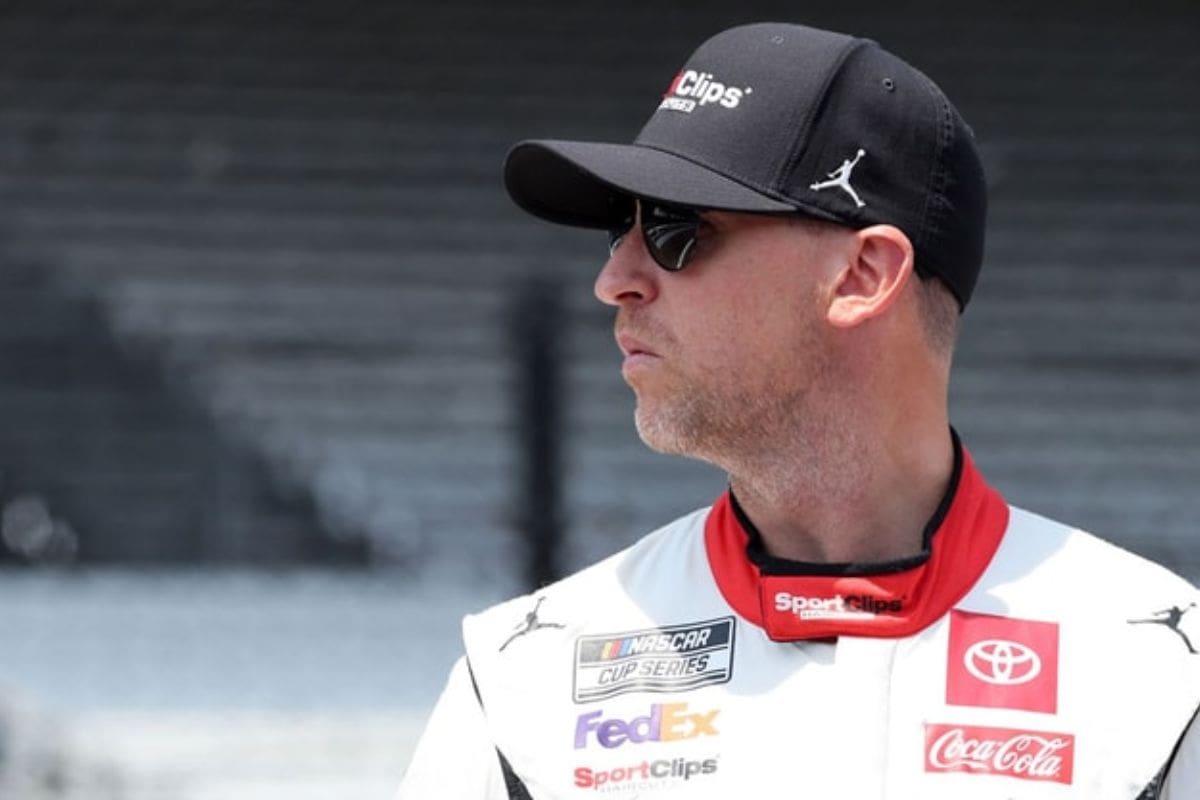
Recap of Hamlin’s Misfortunes at Atlanta
Denny Hamlin’s recent outings at Atlanta Motor Speedway have been plagued by misfortune, culminating in a series of incidents that have left him questioning his luck. The Quaker State 400 presented an especially dire scenario for Hamlin, who encountered three distinct wrecks throughout the race, each compounding his frustrations.
While he successfully navigated the initial collision involving Kyle Busch, the subsequent wreck, which involved Joey Logano blocking Chris Buescher, left Hamlin entangled in chaos once again.
The final incident sealed his fate, as he collided with a sliding Chase Briscoe, damaging his right front and effectively ending his competitive run. Reflecting on this tumultuous experience, Hamlin expressed his disbelief at the series of unfortunate events, humorously suggesting that if one were to play the Powerball, betting on the number 11 would be the way to go, given his apparent curse.
His lament resonated with fans and analysts similarly, highlighting the capricious nature of motorsport where skill can sometimes be overshadowed by sheer bad luck. Hamlin’s top-five positioning at the end of a stage only to emerge empty-handed clearly demonstrates the razor-thin margins that define success in racing.
In his own words, he questioned, “Am I just generally cursed?”—a sentiment that emphasizes the emotional toll that relentless misfortune can take on a seasoned competitor.
“If you’re gonna play the Powerball, definitely play the 11. It’s gonna hit. The other wreck, the 22 pulled a late block on the 17 on the last lap and frickin’ wrecked himself, the 17 and me. I was top-five again coming to the end of a stage and got nothing out of it. Am I just generally cursed?” – hamlin
The Atlanta track, once a venue of promise, has transformed into a stage for Hamlin’s misadventures, leaving many to ponder what it will take for him to break this cycle.
Looking Ahead to Future Races
After a challenging experience at Atlanta Motor Speedway, where misfortunes seemed to plague Hamlin at every turn, the focus now shifts to his upcoming races, where he hopes to turn his luck around.
With the Atlanta race now behind him, Hamlin’s attention is keenly directed towards tracks where he has historically excelled. Significantly, his past victory at Watkins Glen in 2016 serves as a reminder of his skill on road courses, while his recent success at Bristol highlights his ability to dominate when the conditions align.
As Hamlin contemplates the races ahead, the urgency to perform well is palpable. “I don’t know where we’ll finish,” he remarked, emphasizing the unpredictability of racing, “but obviously, we gotta go in the next couple of weeks and perform good.” This statement reflects both the stress he faces and the resilience he must summon to navigate the challenges of the remaining season.
The upcoming races will not only test his driving skill but also the tactical insight of Joe Gibbs Racing. As the countdown to the playoffs continues, Hamlin’s ability to convert potential into results will be scrutinized closely.
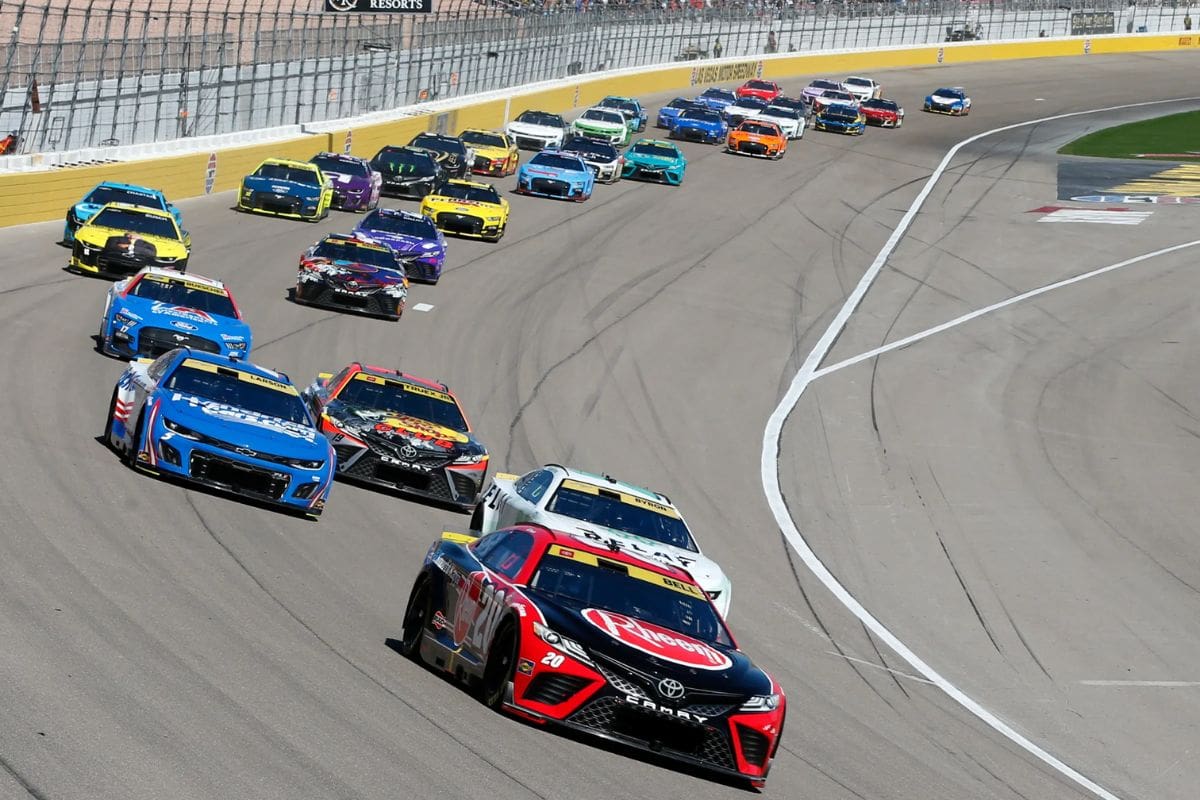
News in Brief: Denny Hamlin Opens Up on Atlanta Struggles
The challenges faced by Denny Hamlin at Atlanta Motor Speedway emphasize the unpredictable nature of NASCAR racing. The reliance on a “wreck strategy” proved insufficient amid the chaotic dynamics of the race, culminating in a notable late-race incident. This experience highlights the importance of adaptability and resilience in competitive racing. As Hamlin and his team regroup and refine their tactics, a renewed focus on strategy may be crucial for achieving championship aspirations in future events.
ALSO READ: Denny Hamlin’s Bold Move Against NASCAR’s Greed: The End of a 20-Year Alliance?