
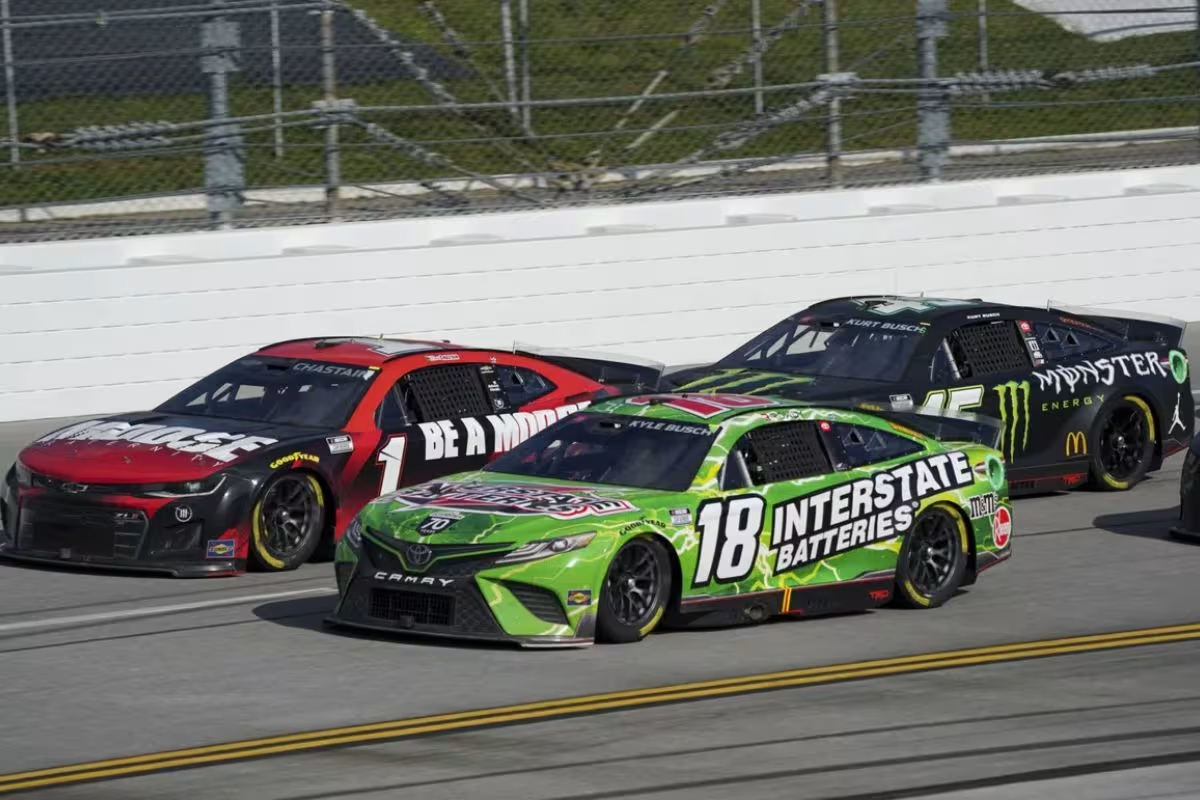
NASCAR’s Heroic Days Are Over: NASCAR’s shift to Next-Gen cars has diminished the sport’s once-celebrated heroism. As noted by Denny Hamlin, the vehicles creates an environment where driver skill plays a lesser role in outcomes. The noticeable reduction in horsepower and aerodynamic advantages has resulted in excessive parity. Historical moments of resilience, such as Kyle Busch‘s memorable victory at Talladega, are now overshadowed by predictable finishes and mechanical performance. This evolution has led to a loss of iconic feats that originally defined NASCAR’s charm, raising critical questions about its future. Further insights reveal the depth of these changes.
Key Highlights
- Denny Hamlin identifies a “physics problem” with Next-Gen cars, affecting racing integrity and performance dynamics.
- The introduction of Next-Gen cars has diminished individual heroism, making machines dictate race outcomes over driver skill.
- Excessive competitive parity leads to predictable finishes, overshadowing extraordinary driver achievements and reducing fan engagement.
- Veteran drivers note a lack of energy in racing lines, contributing to the absence of iconic moments in NASCAR.
- Kyle Busch’s historic 2008 Talladega win epitomizes the lost heroic era, showcasing resilience that is less common in today’s racing environment.
Denny Hamlin’s Comments and Kyle Busch’s Struggles
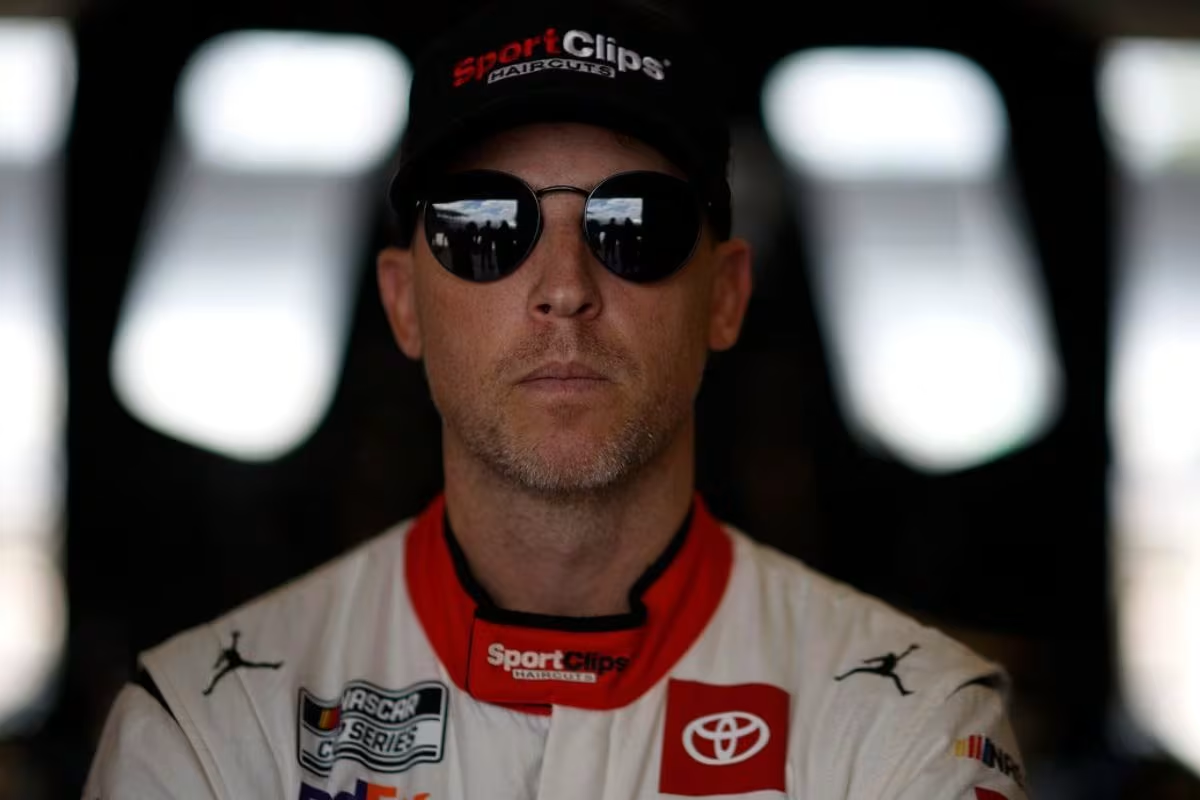
The challenges faced by drivers like Kyle Busch have been highlighted by Denny Hamlin‘s assertion that the sport is struggling with a notable “physics problem” attributed to the Next-Gen cars.
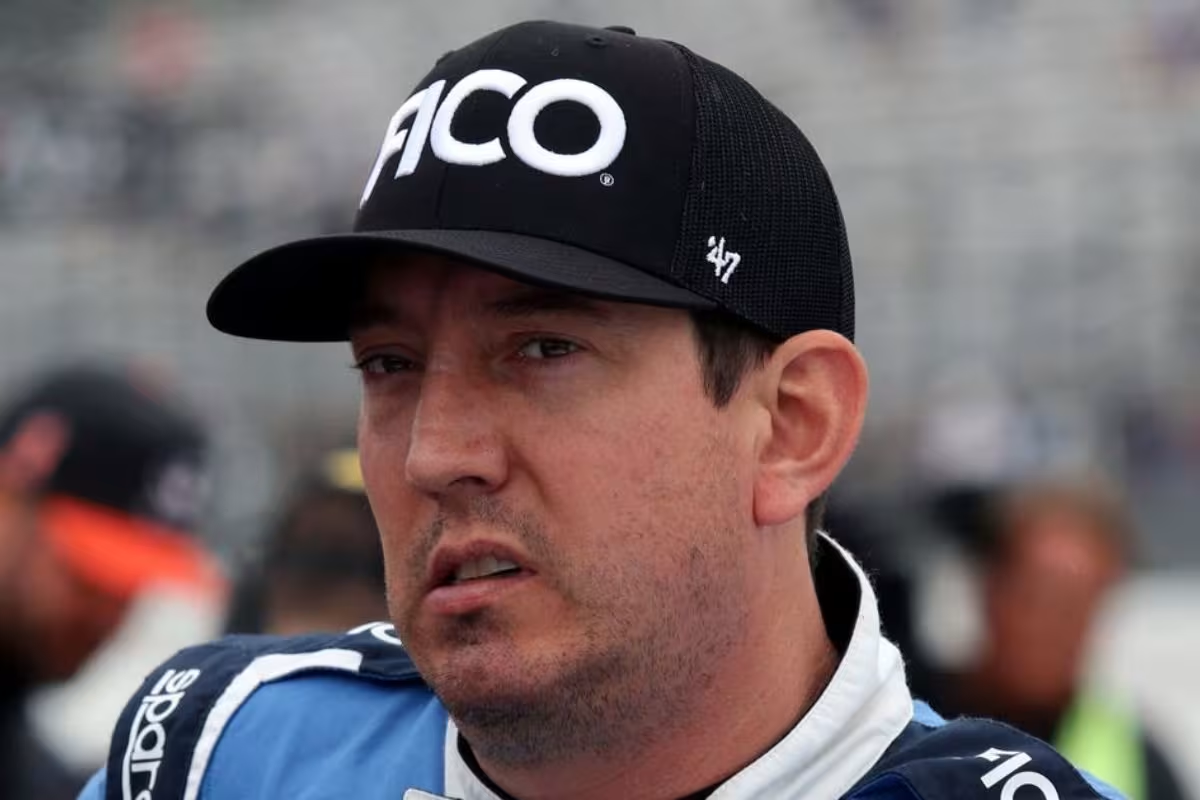
Busch’s tumultuous 2024 Cup Series season presents these challenges, as he navigates a landscape rife with mechanical failures and misfortunes that have plagued his performance.
During the recent Yellawood 500, Busch’s struggles were clearly illuminated. While he narrowly avoided the race’s largest crash, known as the “Big One,” his subsequent attempt to break from the main pack highlighted a more profound issue.
In an era where collaboration is paramount, Busch’s isolation during a critical moment is emblematic of a sport undergoing a significant shift. An insider’s commentary on the absence of a “heroic element” in racing suggests that the competitive dynamics have evolved, potentially leaving veteran drivers like Busch vulnerable and unsupported.
The Loss of Heroic Moments in NASCAR
The once-celebrated moments of individual heroism on the track have become increasingly rare. The change to the Next-Gen car has altered the competitive dynamics and also diminished the iconic feats that once defined the sport. Historically, drivers like Dale Earnhardt Sr. showcased their exceptional skills by deftly maneuvering through the field, a reflection of their skill and charisma.
However, the current environment, emphasized by lower horsepower and reduced aerodynamic advantages, has relegated these individual wins to the background. Kyle Busch‘s recent struggles exemplify this shift.
“No. Because you’ve already got two lines that don’t have any energy. They’re tied. I know times have changed and I know I’m old. But if that would have been Dale Jr. or Dale Sr., the whole line would have went with them.” -(wallace)
The absence of energy in racing lines, as lamented by veteran Kenny Wallace, further demonstrates how the thrill of dynamic racing has been replaced by a stagnant predictability.
Consequently, NASCAR risks losing its identity, as the thrilling drama that characterized its storied history becomes a mere echo of the past.
Next-Gen Car’s Impact on NASCAR
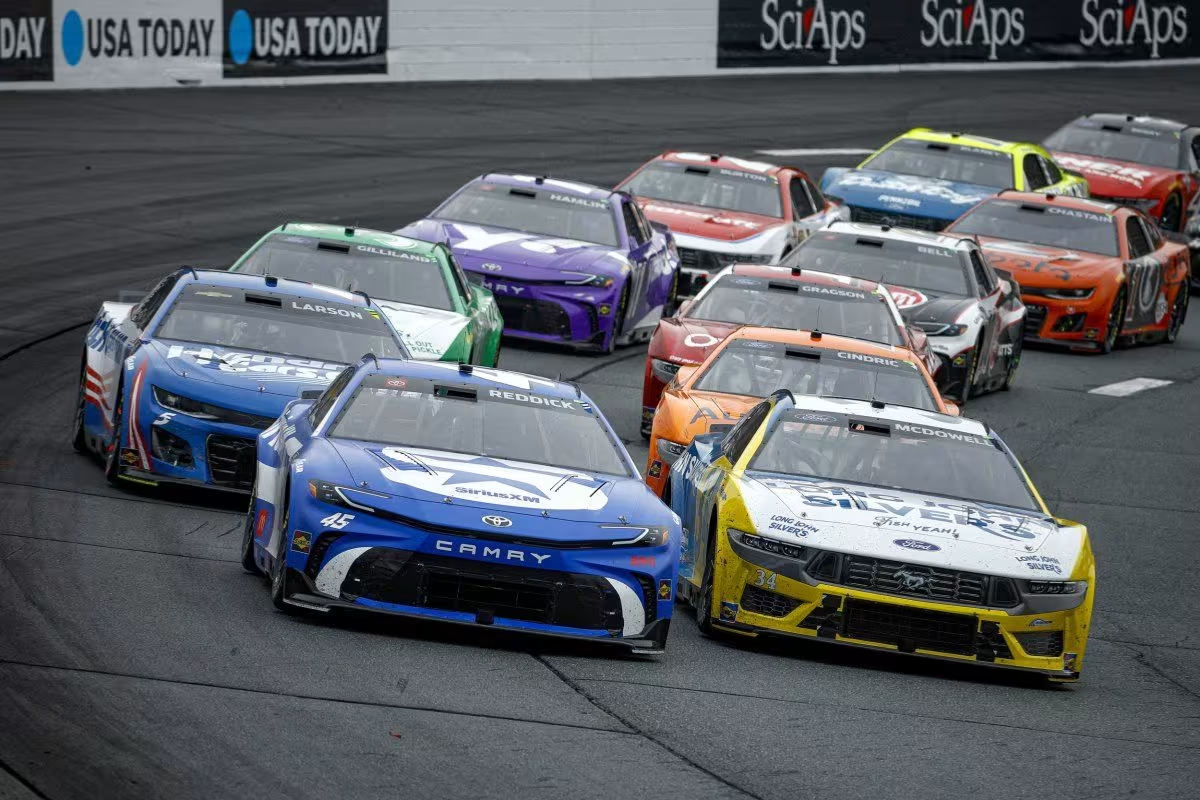
Transforming the competitive landscape of NASCAR, the Next-Gen car has introduced a paradigm shift in both performance and strategy. Intended to curb team expenditures and improve parity, its implementation has yielded mixed results.
However, this newfound parity comes at a considerable cost to the sport’s narrative and the development of heroism among its drivers. The absence of standout figures who inspire fan loyalty is clear. as Denny Hamlin’s achievements demonstrate, even multiple Daytona 500 victories do little to evoke a sense of heroism in a landscape where consistency overshadows extraordinary feats.
“Everybody would have definitely went with Kyle Busch…But nowadays, we’re so far removed from the old days, I’m not even sure that we have a hero. Do we have a hero? …Denny’s won three Daytona 500s. Who else would we have gone with? I’m not so sure.”-(wallace)
The modern racing environment has nurtured an atmosphere where drivers like Kyle Busch, once revered for their ability to transform dire situations, are overshadowed by a collective mediocrity.
The Next-Gen car’s design has unknowingly diluted the drama that once characterized NASCAR’s races.
As the garage becomes increasingly homogenized, the question arises: can NASCAR reclaim its heroic legacy, or is it doomed to an existence defined by parity at the expense of individuality? The Next-Gen car may have redefined competition, but it risks sacrificing the very core of what makes racing heroic.
Kyle Busch’s Historic Performance at Talladega
Kyle Busch’s remarkable triumph at Talladega in 2008 stands as a demonstration of his resilience and tenacity in the face of adversity. The 2.66-mile superspeedway, notorious for its unpredictability, had previously been a graveyard for Busch, who faced a troubling history of wrecks in his prior six Cup races there.
Busch’s early race misfortune—a pit stop mishap that left him a lap down—could have easily derailed his efforts. However, his ability to seize the ‘lucky dog’ opportunity on the following caution showcased his keen awareness and opportunistic nature.
Additionally, Busch’s deft maneuvering through the chaos of a 12-car pile-up on the final lap exemplified not only his driving expertise but also his mental fortitude under pressure.
“I don’t think I’ve finished one here without wrecking, or at least without a torn-up car,” -(busch)
The 2008 victory at Talladega was a notable milestone, marking his third Sprint Cup win of the season and his seventh across NASCAR’s top three series.
News in Brief: NASCAR’s Heroic Days Are Over
The beginning of next-gen cars in NASCAR has greatly altered the dynamics of the sport, leading to a diminished presence of heroic moments that once defined legendary races. Denny Hamlin’s observations and Kyle Busch’s recent struggles underscore the challenges faced by drivers in adapting to these changes. The shift in vehicle design has not only impacted driver performance but also the general excitement and unpredictability, raising concerns about the future appeal and integrity of NASCAR racing.
ALSO READ: Fans Say Goodbye to Talladega? NASCAR Suffers 1 Million Viewer Loss!

