

Ben Beshore reflects on Legacy Motor Club’s struggles in 2024 and is channeling insights into tactical advancements for a robust 2025 campaign. The shift to a Toyota framework brought adaptation challenges, evident in the modest race results. A thorough leadership recalibration, including key appointments like Travis Mack and Chad Johnston, signals a focused plan to enhance race performance. Utilizing extensive data analyses of the Toyota Camry, the team aims to refine vehicle performance, informed by past experiences. The new partnership with Erik Jones positions Beshore to spearhead improvements, setting the stage for Legacy Motor Club’s promising path in the coming season.
Key Highlights
- Ben Beshore aims to leverage his experience as Jones’ full-time crew chief to improve LMC’s performance in the 2025 season.
- LMC’s struggles in 2024 were largely due to adapting to the new Toyota framework, impacting race competitiveness.
- Strategic leadership changes, including Beshore’s appointment, are intended to drive tactical improvements and enhance vehicle performance.
- LMC is focusing on incremental “one percent gains” through process optimization to achieve better results in the upcoming season.
- Performance goals for 2025 are set with an emphasis on refining race strategies and fostering strong team dynamics.
Legacy Motor Club’s Challenging 2024 Season
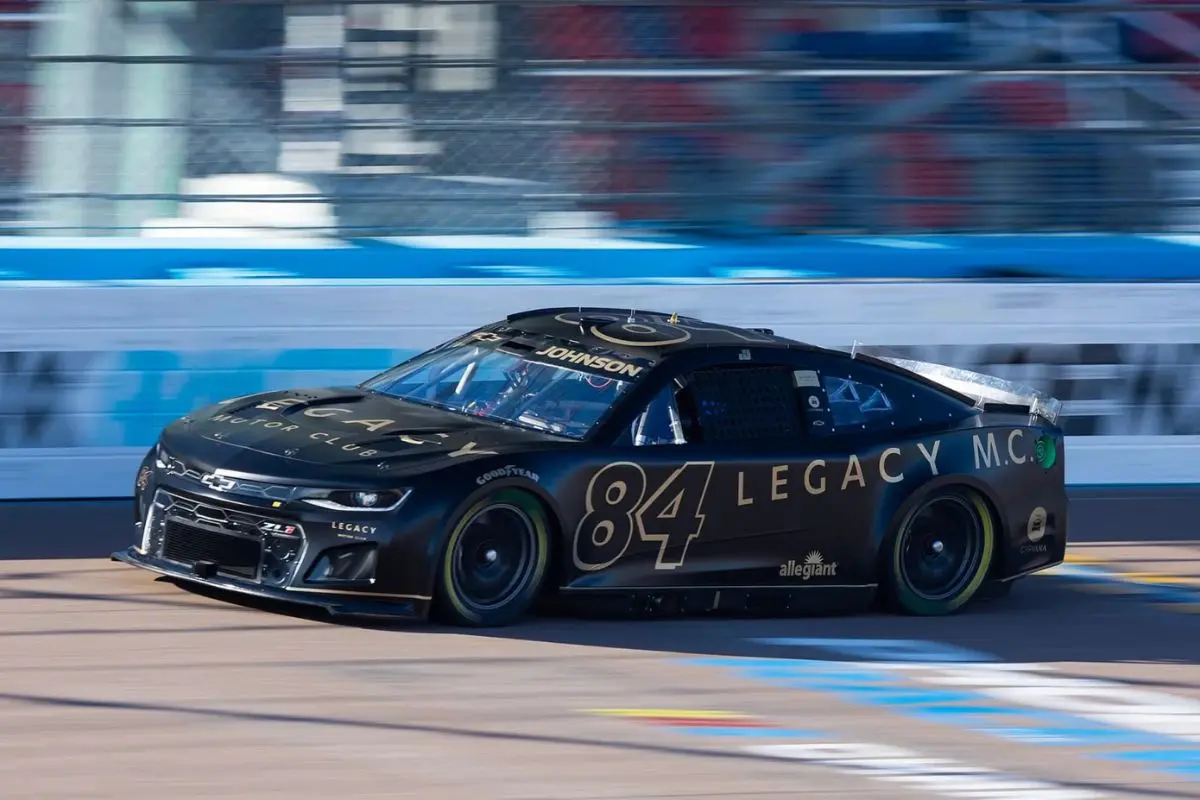
The 2024 season posed considerable challenges for Legacy Motor Club, a team navigating through the complexities of a manufacturer switch that required adapting to a new Toyota framework. This change was particularly arduous given the team’s nascent status in their tertiary competitive year.
Led by veteran Jimmie Johnson, the team faced the formidable task of gathering performance data on the Toyota Camry from scratch, a considerable undertaking for any team but especially intimidating for one still establishing its foundation.
Legacy Motor Club’s decision to independently steer through the shift, eschewing potential collaboration with the well-established Toyota powerhouse Joe Gibbs Racing (JGR), compounded the difficulty. While this choice may have been driven by a desire for autonomy and the cultivation of an independent team ethos, it undeniably limited the team’s access to valuable insights and specialized synergies that could have accelerated their adaptation process.
The results of this challenging season were evident in the team’s performance metrics. With drivers Erik Jones, John Hunter Nemechek, and Johnson himself participating as a part-time driver, the team managed to secure only one top-5 and six top-10 finishes.
Building for 2025: Ben Beshore’s Insights
Legacy Motor Club’s arduous 2024 season set the stage for tactical recalibrations as the team looks toward 2025 with renewed vigor. Acknowledging the need for strategic improvements, Ben Beshore, a key figure in the team’s leadership, has been instrumental in orchestrating a series of calculated changes. The objective is clear: revitalize the team’s competitive edge through meticulous restructuring.
To execute this vision, the club has focused on assembling a blend of seasoned expertise and groundbreaking leadership, evidenced by several key appointments:
- Travis Mack as Crew Chief for the #42 Car: With a rich background from Hendrick Motorsports and Kaulig Racing, Mack’s appointment brings a wealth of tactical insight and proven success as Daniel Suarez’s crew chief. His role is essential in refining race strategies and optimizing vehicle performance.
- Chad Johnston as Manager of Race Engineering: Johnston, a 7-time Cup Series race winner, is tasked with improving engineering protocols and driving technical advancements. His experience is expected to raise the team’s engineering capabilities.
- Jacob Canter as Competition Director: Canter’s recruitment aims to strengthen competitive analysis and strategic planning, ensuring that the team remains agile and responsive to dynamic racing conditions.
- Brian Campe Returning to Technical Director Role: Previously serving in an interim capacity, Campe’s return to his technical director role is tactical, providing continuity and reinforcing the technical foundations of the team.
These personnel changes reflect a thorough strategy to harness talent and expertise, positioning Legacy Motor Club for a resurgent 2025 season.
“It took us a while to get up to speed with the manufacturer change there maybe longer than we wanted it to. But I think we’ve got a lot of pieces in place now, where we can start the year off strong. Brought on a lot of new people with our technical director and adding Chad Johnson and Travis Mack from Kaulig. So getting some different viewpoints from different teams and hopefully trying to mesh those together and put together a good package for Erik to compete with.”
🗣️ "It's just about the fine details now and that takes good quality people to refine that."
🔧 @LEGACYMotorClub Crew Chief Ben Beshore weighs in on the organizational changes ahead of 2025 and how they will help improve performance at the team.
More ➡️ https://t.co/WGRTG5gVtL pic.twitter.com/qV2uqj7A2p
— SiriusXM NASCAR Radio (Ch. 90) (@SiriusXMNASCAR) December 11, 2024
Erik Jones and Ben Beshore: A Blossoming Partnership
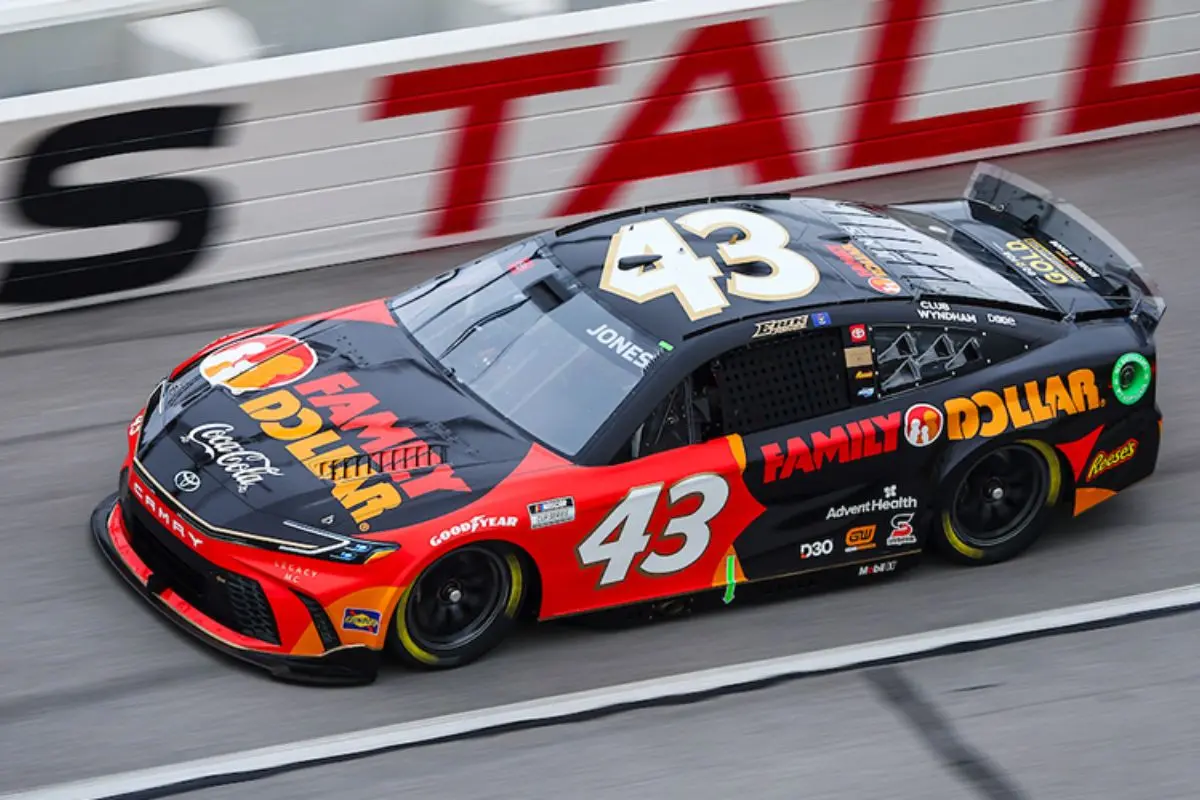
Forging a partnership that promises growth, Erik Jones and Ben Beshore navigated the final leg of the 2024 season with an eye toward cultivating a winning formula. While the results were modest, with only one top-20 finish over five races, the pair laid the groundwork for future success.
“I would say that it is a trial period currently.” – (Jones)
Jones, initially cautious by describing this period as a “trial,” found reassurance in Beshore’s approach and tactical insights. The announcement on November 19 of Beshore as Jones’ full-time crew chief for 2025 highlights a mutual commitment to refining their collaborative dynamic.
A closer examination reveals the potential in their evolving partnership. Despite the absence of immediate victories, a foundation of communication and strategy has been established. Understanding their key performance areas will be essential as they set realistic goals for the upcoming season.
With Beshore’s tactical expertise and Jones’ adaptability, the team is poised to surpass their current performance baseline. Their 2025 objectives, such as consistently finishing above the top 20, set a pragmatic path for potential future wins.

The Challenges of Modern NASCAR
Navigating the complexities of modern NASCAR requires teams to adapt to a environment where engineering creativity has taken a backseat to standardization. The introduction of the next-gen car has ushered in notable parity, fundamentally altering the competitive dynamics of the sport.
As cars and parts are now sourced from standardized, approved vendors, the traditional engineering-driven edge has been curtailed, shifting the focus towards meticulous quality control and incremental gains.
“The Cup Series used to be more of an engineering juggernaut to just come out with new parts and pieces and lighter stuff. Constantly developing clips and suspensions. And now that’s all the same across the board. So now it’s more of a QC (Quality Control) process. The level of refinement is so small that one guy does something, 1% or 2% better than the next guy and that’s the kind of the difference these days.” – (Ben Beshore)
Ben Beshore, a prominent figure in NASCAR, succinctly captures this evolution, stating, “The Cup Series used to be more of an engineering juggernaut… Now it’s more of a QC (Quality Control) process.” In this transformed environment, success hinges on the ability to refine minute details, with even 1% to 2% improvements proving crucial. This shift necessitates a tactical recalibration for teams aiming to remain competitive.
- Standardization: Teams are restricted in their ability to innovate, as components must conform to stringent regulatory standards.
- Quality Control: The focus has shifted from groundbreaking engineering to ensuring perfection in assembly and maintenance of standardized parts.
- Incremental Gains: Achieving marginal improvements is now the primary avenue for gaining a competitive advantage.
- Resource Allocation: Teams must judiciously allocate resources to optimize performance within the confines of standardized parts.
Legacy Motor Club’s Strategy for 2025 Success
Embracing a tactical pivot, Legacy Motor Club (LMC) is poised to utilize its recent insights and data to improve its performance in the 2025 NASCAR season. Central to this strategy is the careful refinement of processes and leveraging incremental gains—an approach emphasized by team leader Ben Beshore. His philosophy centers on achieving “one percent gains” by optimizing every aspect of operations, from the organization of parts to the assembly of competitive racing packages.
“It’s stacking up those one percent gains that you can get here and there either through organizing your parts or coming up with the best way to put that package together there. So it’s just about the fine details now. And like you said that takes good quality people to refine that.” – (Ben Beshore)
A notable component of LMC’s strategy involves harnessing the potential of their revamped team. By integrating quality personnel who bring creative perspectives and specialized expertise, LMC aims to enhance its competitive edge. The infusion of fresh talent is expected to facilitate smoother implementation of tactical initiatives, fostering a culture where continuous improvement is inherent.
Moreover, LMC’s approach is strengthened by a year’s worth of thorough data on the Toyota Camry. Insights gained from the 2024 season are being carefully analyzed to address challenges posed by parity in the NASCAR circuit.
This data-driven methodology enables LMC to make informed decisions and fine-tune their race strategies, ensuring that every component of their vehicle is optimized for peak performance.
News in Brief: Ben Beshore Reflects on Legacy Motor Club’s Struggles
Legacy Motor Club’s 2024 season has been marked by considerable challenges, yet it presents opportunities for tactical realignment and growth. The insights of Ben Beshore, coupled with the evolving partnership with Erik Jones, form the cornerstone of the club’s aspirations for a more competitive 2025.
Steering through the complexities of modern NASCAR demands a refined approach, and the club’s tactical initiatives aim to harness these challenges into a platform for future success, positioning itself as a formidable contender in upcoming seasons.
ALSO READ: Legacy Motor Club’s Trust Issues With Toyota Partnership Threaten Jimmie Johnson’s Vision

