
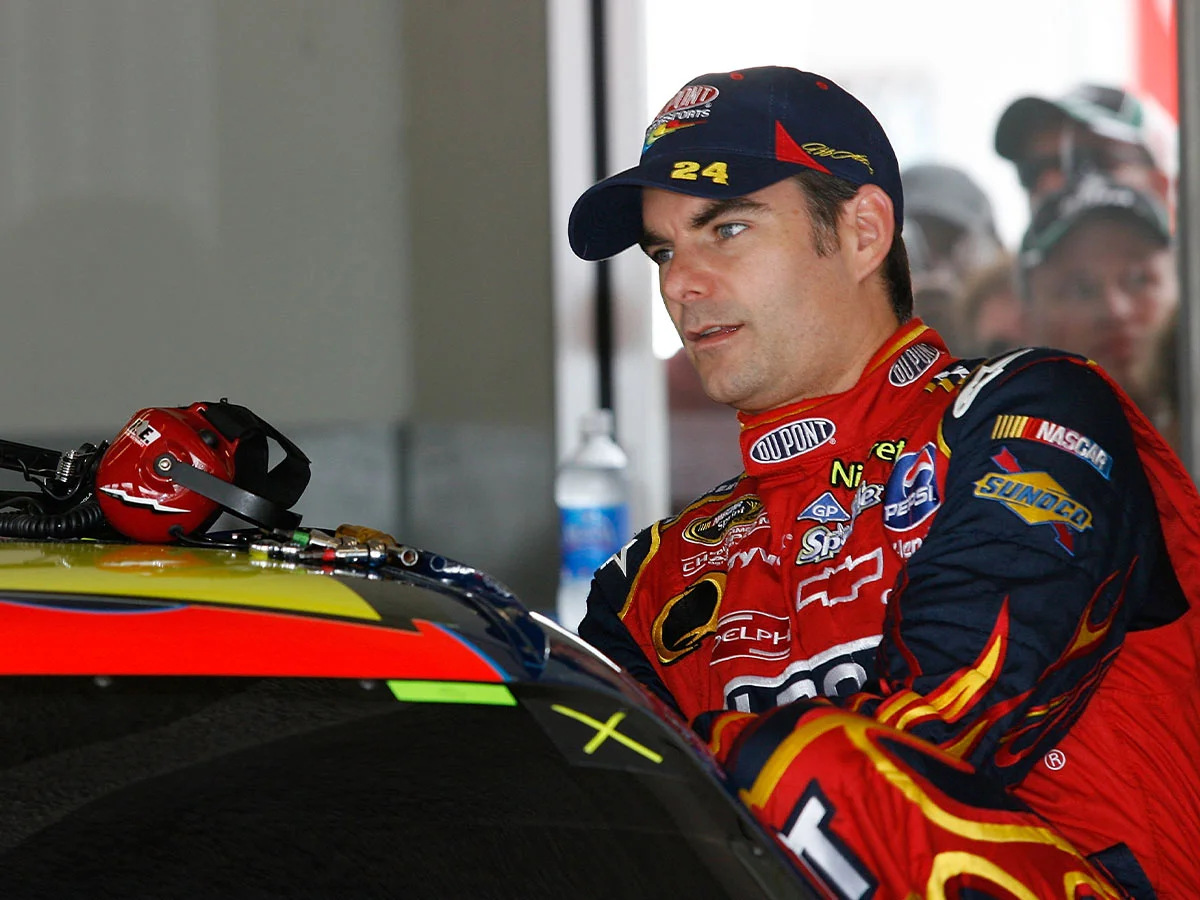
Jeff Gordon, an iconic figure in American motorsports, revealed a deeply personal truth about his time at the top in his recent NASCAR confession, describing a longing for the simple joys that stardom sometimes took away. While his remarkable achievements on the track in places like Bristol and Indianapolis made headlines, it’s Gordon’s revelation about the emotional cost of his success that caught the attention of racing fans and insiders alike.
Racing Into the Spotlight: Gordon’s Meteoric Rise
When Jeff Gordon entered NASCAR’s Cup Series full-time in 1993 driving for Hendrick Motorsports, anticipation ran high due to his early racing successes. His breakthrough came in 1994 with a dramatic win at the inaugural Brickyard 400 in Indianapolis—a victory witnessed by millions and seen as a defining moment that brought NASCAR to new audiences across the United States.
On and off the track, Gordon’s rise was meteoric. With his engaging personality, youth, and slick sponsor appeal, he quickly turned into a favorite for brands and media alike. His résumé would eventually boast four Cup Series championships—in 1995, 1997, 1998, and 2001—as well as 93 career wins, making him a household name. Yet beneath those achievements, Gordon struggled with pressures few could see.
A Confession Beyond Championships
Close friend and rival Kenny Wallace, known for his candor and charisma, offered new insight into Gordon’s real thoughts during an appearance on the Happy Hour Podcast hosted by Kevin Harvick. Wallace and Gordon had battled for years on the circuit, competing in over 300 races and forming a friendship that spanned countless introductions and driver parades at iconic venues like Dover and New Hampshire.
Kenny Wallace described a powerful memory from their pre-race routines, recalling:
“I wanted to beat Jeff Gordon, and Jeff and I were good friends, and he even admitted that. I don’t want to get off base here, but Jeff Gordon and I, we were riding in a pickup truck driver’s introduction at Dover, no, New Hampshire, and we’re waving and we’re waving.”
—Kenny Wallace, NASCAR driver and broadcaster
Wallace went on to recall moments of genuine camaraderie shared during these introductions, despite the fierce competition they displayed on the track. These truck rides, where drivers would wave at cheering crowds, offered a rare break from the intensity of racing and allowed personalities to shine through away from the cameras.
The Emotional Weight Behind Success
Wallace’s story highlighted a moment when Gordon revealed the cost of public expectation and year-round scrutiny, sharing:
“I start laughing about something, and Jeff Gordon—I’d cut this bad pinkie off to be Jeff Gordon. He looked at me dead serious, and if Jeff hears us, he’ll know it. He looked at me after winning three championships. He looked at me dead seriously and went, ‘God, I wish I could laugh like you.’ It just hurt my heart,”
—Kenny Wallace, NASCAR driver and broadcaster
This private exchange echoed Gordon’s past comments in prominent interviews, including a notable appearance on 60 Minutes in 1998 and a revealing USA Today interview in 2015. In those discussions, Gordon spoke candidly about the toll of constant media attention, the strain of his public divorce from Brooke Sealey in 2003, and what it meant to be dubbed NASCAR’s “golden boy.” Even with championship glory and a carefully maintained sponsor-friendly image, Gordon yearned for the genuine, unguarded happiness he saw in peers like Kenny Wallace.
The statement,
“I wish I could laugh like you,”
became a symbol of this longing. In an interview with Sports Illustrated in 2015, Gordon noted that life at Hendrick Motorsports required him to mature quickly, with little space for the carefree demeanor that others could enjoy. For Gordon, every move on and off the track was under scrutiny, shaping not only his career but his sense of personal freedom.
Legacy and Pressure in the Wallace Family
Legacy weighs heavily in NASCAR circles, and Kenny Wallace knows this from experience as the brother of 1989 Cup champion Rusty Wallace. Prodded about sibling dynamics on the podcast, Wallace recalled the unique pressures and privileges of his famous family, responding to Harvick’s query:
“How did Rusty’s dynamic help what you did on or off the racetrack? Did it help at all? Did he ever help you?”
—Kevin Harvick, NASCAR driver and podcast host
Kenny’s answer spoke to both gratitude and the challenges of comparison:
“I literally love Rusty and Mike. I got the best brothers. They spoil me. I’m 62 years old and I’m still the baby,”
—Kenny Wallace, NASCAR driver and broadcaster
The Wallace family, featuring brothers Rusty, Kenny, and Mike, stands among NASCAR’s royal bloodlines, much like the Pettys, Allisons, and Earnhardts. Fans have cheered these names for generations, but that recognition comes at a price. While Rusty’s championship success provided Kenny with opportunities—such as early car tests and guidance—it also cast a long shadow, setting a high bar that fueled constant comparisons throughout Kenny’s career.
Kenny’s nine Xfinity Series victories and popularity with fans established his own mark in the sport, yet expectations tied to the Wallace surname added complexity to his journey, mirroring what Jeff Gordon described as the burdensome cost of legacy and fame. Both men, in different ways, battled to be seen beyond the titles and the family names that defined them in the public eye.
The Shared Struggles Behind the Glory
The intertwined stories of Gordon’s confession and Wallace’s experience as Rusty’s sibling reveal deeper truths about NASCAR. For stars like Jeff Gordon—whose winning streaks, four championships, and 93 career Cup victories commanded attention—the real challenge was finding happiness amid relentless pressure and expectation. Kenny Wallace, celebrated for his approachable attitude and own on-track wins, still grappled with stepping outside a brother’s shadow.
The competitive world of NASCAR is built on speed and statistics, but as these stories show, it is also shaped by family ties, personal sacrifices, and the relentless spotlight that can make joy fleeting, even for the sport’s greatest. Gordon’s NASCAR confession, delivered through candid moments and echoed by his closest rivals, reveals the side of competition that often goes unseen by the millions who watch from the stands or their living rooms.
As NASCAR continues to produce legends and rivalries, these recollections stand as a reminder of the emotional depth within the sport. Whether it’s the longing to laugh freely or to forge an individual legacy apart from a celebrated surname, the human side of racing resonates as powerfully as the roar of engines on a Saturday night in Bristol or Indianapolis. The next generation of drivers—and fans—will continue to see these stories unfold, adding new chapters to the legacy of stars like Jeff Gordon and the Wallace family.

