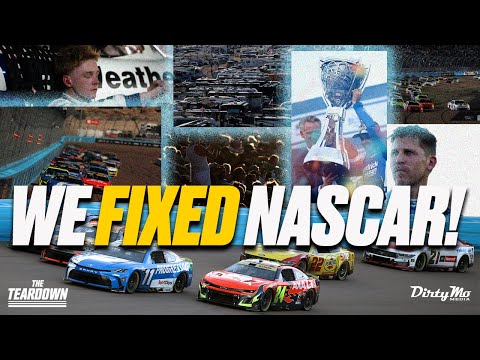
Calls are mounting for changes to NASCAR’s team structure, with Jordan Bianchi of The Athletic promoting a hard cap of three cars per organization to promote Joe Gibbs Racing parity and level the competition. The proposal, highlighted in recent discussions, aims to prevent dominant teams like Joe Gibbs Racing and Hendrick Motorsports from overshadowing smaller and mid-sized organizations, intensifying the ongoing debate over fairness and resource allocation in the NASCAR Cup Series.
Why Some Want Fewer Cars Per NASCAR Team
The current makeup of the NASCAR Cup Series sees powerhouse teams such as Joe Gibbs Racing and Rick Hendrick’s organization fielding four full-time cars, leveraging considerable speed and resources on race weekends. According to Bianchi, this structure gives larger operations significant advantages in technical development, data gathering, driver recruitment, and sponsorship, making it challenging for smaller teams to keep pace.
Bianchi introduced his push for a three-car cap during a recent episode of The Teardown podcast, emphasizing that NASCAR races could become more open and unpredictable if all teams operated with similar resources. He argued that limiting technical alliances would further ensure teams stand on their own.
“I want to limit teams to three cars and three cars only. No four car teams. Ideally, I would love to go even further and go to two car teams. But I just don’t know that that might be a bridge too far.”
— Jordan Bianchi, The Athletic
“Joe Gibbs Racing and Hendrickk Motorsports dominate to an excessive degree. Throw Team Pensky in there obviously with the championships and the playoff success, but on a week to week basis, it’s a lot about Hendrick. It’s a lot about Joe Gibbs Racing. I want to see teams like Trackhouse and Ross Chastain almost win the championship. That was a cool moment.”
— Jordan Bianchi, The Athletic
“I also want to severely limit technical alliances. I want to stand these teams alone,” Bianchi added.
— Jordan Bianchi, The Athletic
Lessons From Formula 1 and Budget Cap Comparisons
Bianchi’s recommendations borrow from Formula 1’s rulebook, in which each team is restricted to two cars, budgets are capped, and technical partnerships are strictly controlled. He noted that Formula 1’s cost cap, introduced in 2021, reined in excessive spending—a concern in NASCAR, where running one competitive Cup Series entry is estimated to cost around $20 million annually. This comparison underscores the argument for parity, intending to prevent the largest outfits from permanently outspending and outpacing the rest of the field.
Mid-Sized Teams Grabbing Opportunities
Recent performances from teams like Trackhouse have shown that, with the right approach, new competitors can make their mark even against established giants. Trackhouse Racing, debuting in 2021, managed to secure significant sponsorship deals this season, including support from Red Bull. The team’s blend of rising stars and experienced talent—such as rookie Shane van Gisbergen and seasoned driver Ross Chastain—delivered six victories in the current campaign. Looking ahead, Trackhouse is also preparing to bring Xfinity standout Connor Zilisch into the Cup Series lineup, further raising mid-sized team hopes.
How 2025 Charter Rules Are Shifting the Landscape
NASCAR’s newly established charter agreement for 2025 limits Cup Series teams to a maximum of three charters, aligning in part with Bianchi’s vision. This agreement, accepted by nearly all teams except for 23XI Racing and Front Row Motorsports, cements the new three-car framework. However, both Joe Gibbs Racing and Hendrick Motorsports have been grandfathered into the agreement, allowing them to continue running four-charter operations. For organizations new to four-car operations beyond 2025, any additional entry will have to be an “open” car, running without a guaranteed spot or full charter benefits.
The partial adoption of these limits keeps the topic of Joe Gibbs Racing parity at the forefront, especially as mid-tier and independent teams look for a clearer competitive path. With continued debate over fair play and how technical partnerships might be trimmed, the conversation remains active among team owners, drivers, and NASCAR’s governing bodies.
As the next season approaches, all eyes will be on how these changes influence team dynamics and race outcomes. Whether implemented as Bianchi suggests, or evolved further, the pursuit of greater parity and opportunity in NASCAR will remain a driving force in any future rule adjustments.