
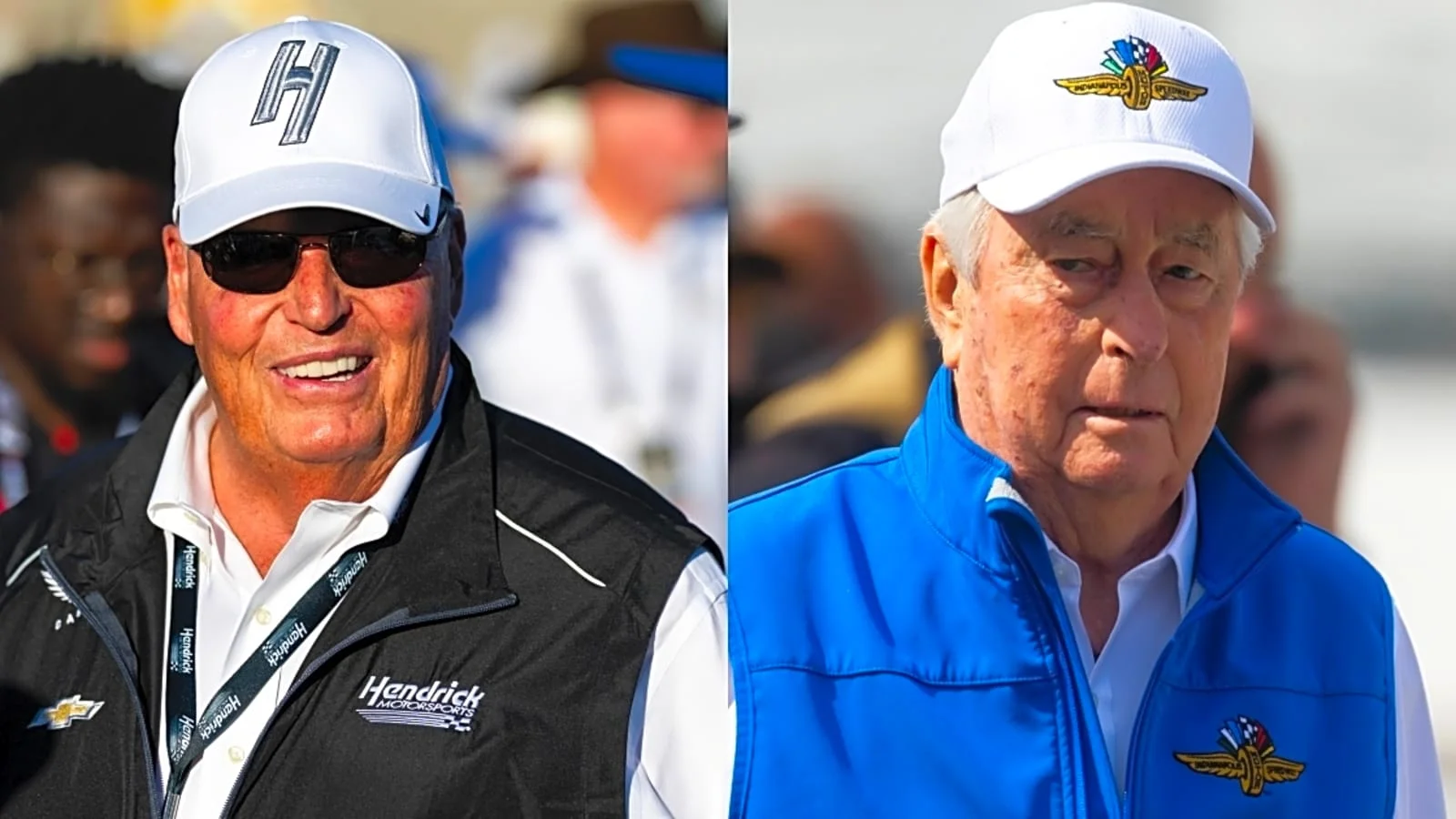
Rick Hendrick and Roger Penske have been ordered to appear for in-person depositions, following a decision by U.S. District Judge Kenneth Bell on Tuesday. The ruling comes amid an ongoing antitrust dispute involving Michael Jordan’s 23XI Racing, Front Row Motorsports, and NASCAR, highlighting the central role of Hendrick and Penske in the case and positioning the Rick Hendrick NASCAR deposition as a key event in the legal process.
Judge Rejects Limits on Deposition Procedures
Bell responded to requests from both parties to restrict the depositions, including proposals to conduct them via Zoom and to impose boundaries on the questioning. Instead, Bell determined that Hendrick and Penske must attend unrestricted, in-person depositions before the trial begins.
“As the Court has repeatedly said, the trial of this matter will be publicly and fairly contested under the relevant rules and law, without regard to the notoriety of the companies and individuals involved,”
Judge Kenneth Bell wrote in his ruling.
NASCAR CEO Jim France had previously requested that Hendrick and Penske testify during the trial. However, both Hendrick and Penske resisted being compelled to disclose financial specifics under direct examination. NASCAR filed a motion supporting their effort to
“put ‘guardrails on their testimony’ at trial ‘limiting such testimony to the high-level subject matter of their Declarations.’”
Teams Argue for Full Testimony in Legal Battle
23XI Racing and Front Row Motorsports countered by insisting that Hendrick and Penske should not receive protection from deposition inquiries, especially since both had agreed to testify at the trial, scheduled to start December 1 in Charlotte, North Carolina. Their argument centered on the need for a transparent and thorough litigation process.
“No company or individual will be accorded special treatment (which is effectively what movants request here). NASCAR has told Plaintiffs and now the Court, that Mr. Hendrick and Mr. Penske will be called as witnesses for NASCAR at trial. Therefore, unless NASCAR irrevocably commits not to call these individuals as trial witnesses, then Plaintiffs have the right to promptly depose them before trial and cross-examine them at trial within the governing Federal Rules, without limitation,”
stated Judge Kenneth Bell.
Dispute Rooted in Charter System Changes
The lawsuit’s focal point is NASCAR’s recently introduced charter agreement, delivered to teams at the outset of the 2024 playoffs with a fixed deadline for signing. Charters provide Cup Series teams with guaranteed race entry and a predictable share of weekly revenue, forming the financial backbone of their businesses. However, both 23XI and Front Row Motorsports rejected the terms, claiming the agreement left them without a viable alternative. As a result, they are competing without charters and facing sharply reduced prize money, arguing that the lack of a fair contract could jeopardize their future in the sport.
Ongoing Legal Developments Shape the Challenge
The current order is the third consecutive ruling by Bell in this high-stakes legal fight. The previous week, he granted the teams partial summary judgment regarding the definition of the relevant market. His decision ensures the case will move forward under the standard of “premier stock-car racing,” dismissing NASCAR’s suggestion that dissatisfied teams could switch to IndyCar or Formula 1, which the court determined are not equivalent to NASCAR’s Cup Series for the purposes of this litigation.
Earlier, on October 28, Bell dismissed NASCAR’s countersuit against the two teams and Curtis Polk, a 23XI Racing co-owner and an adviser to Michael Jordan, marking another pivotal moment in the broader conflict.
Significance and Next Steps for the Racing Industry
This ruling intensifies the courtroom standoff between NASCAR and some of its most prominent teams, with the Rick Hendrick NASCAR deposition and Roger Penske’s testimony poised to provide crucial insights under oath. The outcome could reshape how teams interact with NASCAR, potentially influencing the structure of the Cup Series and the financial models underpinning it. Attention now turns to December 1, when the trial is slated to begin in Charlotte, with the motorsports community watching closely for developments that may have lasting effects on the sport.

