
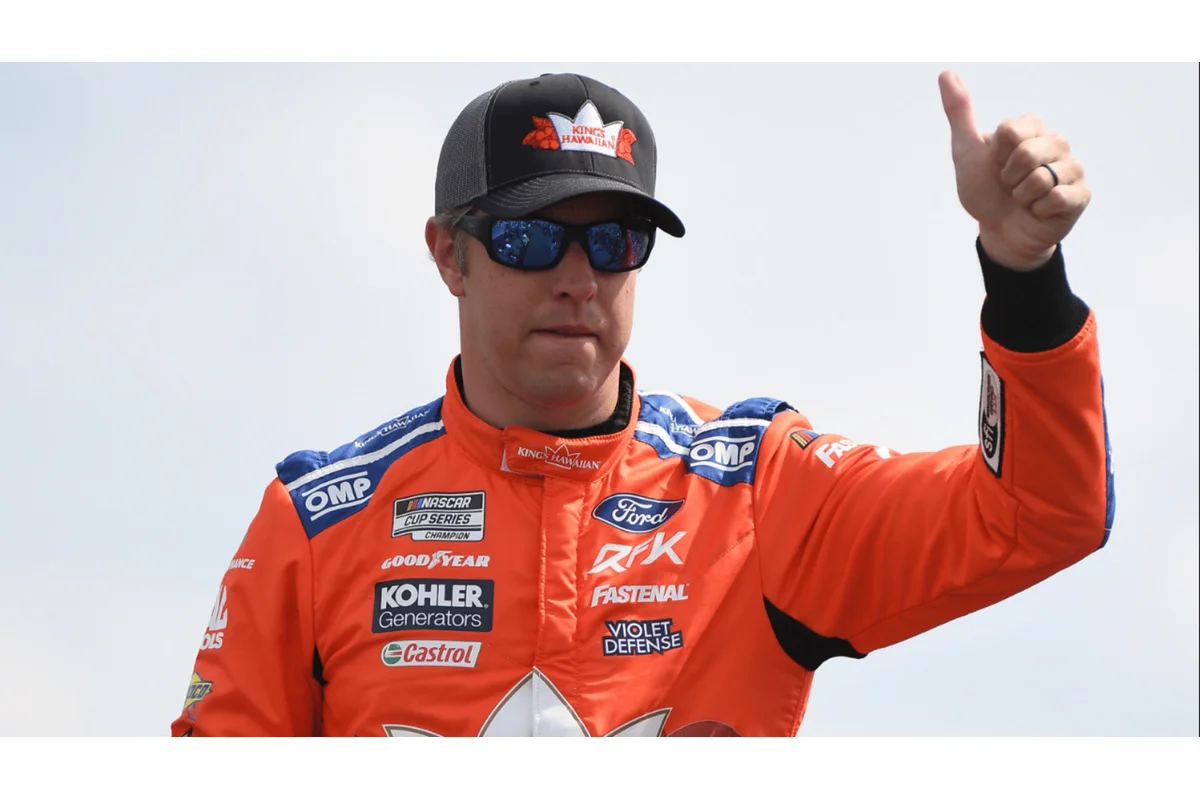
Brad Keselowski’s perspective on Steve Phelps following the NASCAR commissioner’s resignation has become a lightning rod for discussion. The focus keyword, “Brad Keselowski on Steve Phelps,” encapsulates the split among fans, who voiced both relief and disappointment after Phelps stepped away in January 2026.
Steve Phelps’ resignation did not draw universal regret among NASCAR’s dedicated fan base. Many longtime followers of the sport viewed his departure as an overdue shake-up—an opportunity to revisit contentious decisions, mend strained relations between teams and officials, and potentially resolve disputes over the ongoing charter debate. Social media erupted with mixed reactions, as fans celebrated, criticized, and analyzed Phelps’ influence during his turbulent leadership.
Inside the Garage: Brad Keselowski Offers a Contrarian View
While the public narrative around Phelps’ resignation leaned heavily on blame and celebration, the sentiment inside NASCAR circles proved more nuanced. Brad Keselowski, co-owner at RFK Racing and Cup Series champion, stood apart from much of the fan base. Instead of adding his voice to the chorus of critique, Keselowski directly addressed Phelps’ legacy with a balanced take offered to journalist Bob Pockrass.
“Steve has been a big part of a number of key initiatives for the sport for last dozen plus years as I recall. I’ve enjoyed a great personal relationship with him. The sport’s going to miss him.”
— Brad Keselowski, NASCAR Cup Series champion and RFK Racing co-owner
This six-word acknowledgment—
“The sport’s going to miss him”
—was striking in its contrast to the online commentary dominating platforms like X (formerly Twitter). While some may have discounted Phelps’ contributions due to controversies such as the NASCAR lawsuit, Keselowski underscored the profound mark Phelps left on NASCAR’s evolution.
Phelps’ career in NASCAR began in 2005 as Vice President of Marketing. His rapid ascent—Chief Marketing Officer in 2006, Senior Vice President in 2012, Executive Vice President in 2013, and Chief Operating Officer in 2018—culminated in his appointment as president later the same year. By the time Phelps was named commissioner in 2025, he had overseen many of the organization’s most consequential changes.
Keselowski’s stance challenged prevailing fan sentiment, reframing Phelps’ legacy through the lens of someone who witnessed NASCAR’s internal operations and high-level strategic moves.
“It’s sad to see him go, but life has its changes.”
— Brad Keselowski, NASCAR Cup Series champion and RFK Racing co-owner
Steve Phelps’ Legacy: Transforming NASCAR Amid Upheaval
During his tenure, Phelps was both a catalyst and navigator of transformation in NASCAR. He helped broker the merger with International Speedway Corporation—a move that altered NASCAR’s commercial foundation. Under his guidance, the series weathered the immense disruptions of the COVID-19 pandemic, managing to continue the racing season at a time when other major sports shut down.
Innovation flourished under Phelps, who supervised the introduction of the Next-Gen car, which aimed to level the competitive playing field, and pushed for major schedule enhancements—such as hosting the LA Coliseum Clash and launching the Chicago Street Race. He also secured a landmark $7.7 billion media rights agreement and extended the charter system, providing financial security even as debate raged between teams and governing officials.
The summary of his impact is clear: even in the face of divisive lawsuits and criticism, Phelps played a pivotal role in reshaping NASCAR for the modern era. His abrupt resignation marked the end of a crucial chapter and has prompted speculation about the sport’s next steps.
Speculation Swirls Over Leadership Changes After Phelps’ Departure
Almost immediately after Phelps announced his exit, attention shifted to NASCAR President Steve O’Donnell, sparking rumors that another leadership shake-up could be imminent. The online chatter even included humorous suggestions about O’Donnell’s resignation letter already “sitting in the printer,” reflecting a community on edge in anticipation of more changes.
However, FOX Sports insider Bob Pockrass dispelled rumors of O’Donnell’s departure:
“I expect Steve O’Donnell to continue in his role as president. Phelps was working on international and big-picture planning/ideas and would expect that to be assumed by those in other roles. Don’t expect a replacement to Phelps, who was in a role more or less created for him.”
— Bob Pockrass, FOX Sports NASCAR insider
This clarification highlights that the commissioner role was uniquely crafted for Phelps, with its focus on long-term vision and international expansion. Instead of appointing a direct successor, NASCAR is expected to distribute these strategic responsibilities among existing leaders, removing immediate pressure on O’Donnell’s tenure.
O’Donnell’s own path through NASCAR, dating to his entry in 1996 and rising through various executive roles including Chief Racing Development Officer and COO before becoming president in 2025, demonstrates organizational stability. His public presence has increased, and with NASCAR distancing itself from controversy, O’Donnell represents the continuity the sport may need as it navigates through an unsettled environment.
The Road Ahead: NASCAR Faces a New Era
Phelps’ departure leaves NASCAR on the threshold of yet another pivotal moment, raising immediate questions about its direction and governance. As key responsibilities shift and leadership adapts, both fans and insiders will be watching closely to see how the balance of tradition, innovation, and commercial interests plays out in the coming seasons.
The immediate focus will be settling the ongoing charter negotiations and addressing unresolved tensions stemming from recent legal challenges and controversial changes. Brad Keselowski’s outspoken respect for Phelps reminds observers that influential leadership leaves a complex legacy, often recognized most keenly during times of transition.
With Steve O’Donnell expected to provide organizational steadiness, the next chapter of NASCAR may depend on its ability to integrate lessons from a turbulent but transformative era. Fans—still deeply passionate and vocal—will no doubt continue to play a crucial role in shaping the future of the sport, as the community grapples with questions about competitive balance, transparency, and leadership for years to come.
Brad Keselowski on the resignation of NASCAR commissioner Steve Phelps and the new charter terms (which are still being finalized with the teams). @NASCARONFOX pic.twitter.com/3K0UvGxUu6
— Bob Pockrass (@bobpockrass) January 9, 2026

