Denny Hamlin, a key figure in NASCAR and a driver for Joe Gibbs Racing, accepted partial responsibility for the dramatic Denny Hamlin Daytona 500 wreck involving 20 cars during Lap 124 at the Daytona 500. The incident, which also saw Justin Allgaier acknowledge complete fault, unfolded late in Stage 2, substantially altering the race‘s outcome and the standing of several drivers.
Hamlin Reflects on Responsibility for the Massive Wreck
With Stage 2 nearing closure, Justin Allgaier led the pack as Hamlin quickly closed in, eyeing valuable stage points. Hamlin attempted to pass Allgaier, who initially left a slim opening, which Hamlin tried to seize. Allgaier responded with a late defensive block, leading to an explosive crash that swept up 20 drivers, shaking up the field. Despite Allgaier’s clear acceptance of blame, Hamlin, in a post-race interview, attributed part of the incident to his own aggressive tactics amid the intense atmosphere.
“Allgaier took 100 percent of the blame; I’ll take 20 of it,”
Hamlin said.
“I’ll take 20 of it because it was an aggressive move, but it’s coming at the end of the stage. He’s gotta know I’m gonna be aggressive, like, I’m gonna take every run I’m gonna get at the end of a stage because stage points do matter to me. I established very early I wanted to be in the top. It’s why once I cleared the bottom lane, I went right to the top. That’s where I wanted to be to end the stage. I was coming with such a massive run… I made up my mind probably 100 yards or so before I actually went high, I said, ‘I’m going to the outside no matter what,’ because I knew where he had run on the top before that, so I’d knew there’d be enough space.”
— Denny Hamlin, Driver
“It was enough space, obviously, if he didn’t move up, I had outside position, but it probably happened so quickly that it caught him off guard. So, for me, I think my 20 percent is that he probably didn’t have a whole lot of time to react or see that was coming, therefore was late to react to it.”
— Denny Hamlin, Driver
The Aftermath and Impact on the Daytona 500 Contestants
Labeled the “Big One” of this year’s Daytona 500, the Lap 124 pileup held major significance. For Denny Hamlin, who was central to the incident, the crashes resulted in a disappointing 31st-place finish after his promising stage performance. Numerous other drivers found their race derailed, affecting the outcome and strategies throughout the remainder of the event. This chain reaction demonstrated how a split-second decision in the upper racing lane, combined with late blocking, can dramatically impact the standings at a pivotal moment like the end of a stage.
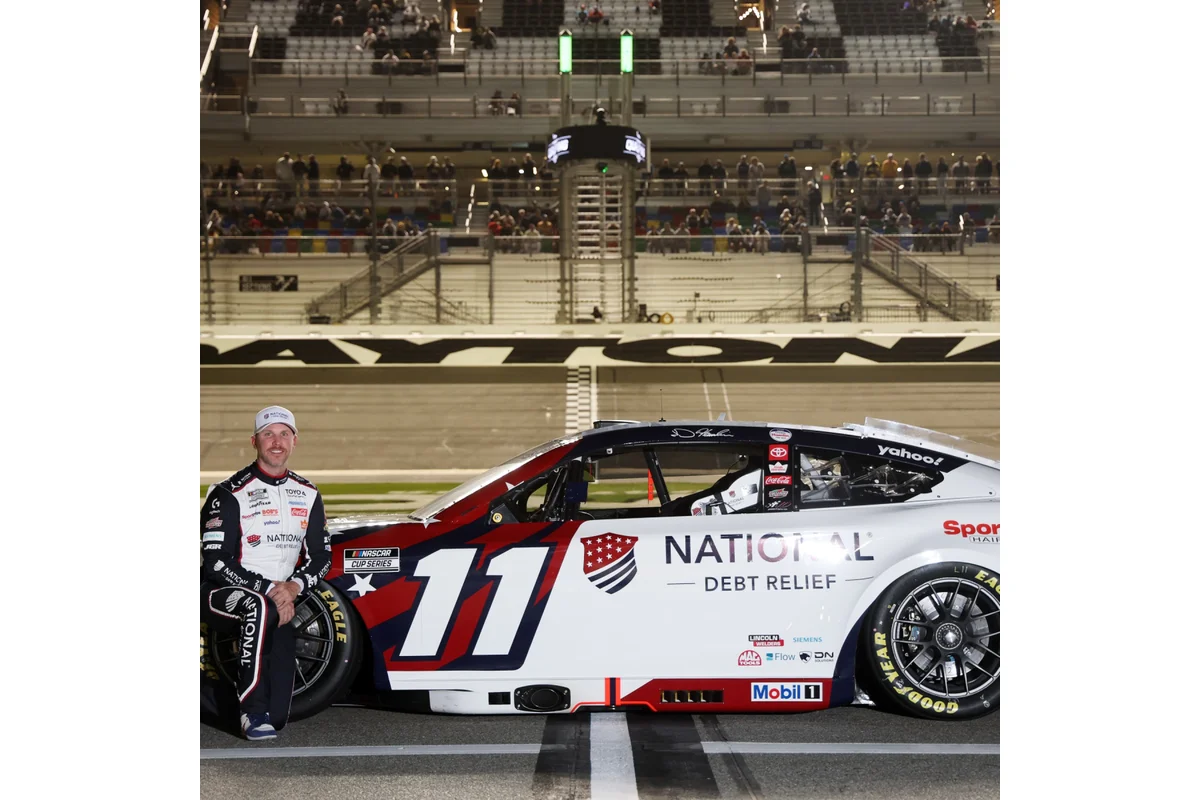
Hamlin’s Honest Evaluation and Thoughts on Alternative Choices
Looking back, Denny Hamlin expressed regret about the moves that contributed to the Denny Hamlin Daytona 500 wreck. Acknowledging the pressure of the approaching stage end and the tactical considerations in play, Hamlin contemplated different possible decisions he might have made, all while considering the downstream effects on every driver behind him. The intense passion and aftermath of the wreck left Hamlin pondering alternative tactics that could have completely changed the race’s dynamics.
“Had I had it to do all over again, I would have stayed on the 40 [Allgaier],”
Hamlin said.
“We were running 10 mph faster than him at the time because of the push I got. If I go into the tri-oval and check up for him, does the 12 [Ryan Blaney] just plow into the back of me? Probably not because he’s got a good spotter, he’s good driver, so they can know and plan for that kind of stuff, but it would have caused a huge domino effect had I checked up and not taken it.”
— Denny Hamlin, Driver
“Or I could have just gone to the bottom and probably cleared him with the speed differential that I had. … Again, doing it all over again, had I known what the result was gonna be, I would have just stayed in line there for a few more laps.”
— Denny Hamlin, Driver
Wider Implications for Racing Tactics and the Daytona 500 Field
The Denny Hamlin Daytona 500 wreck serves as a stark reminder of the fine margins and elevated stakes in major NASCAR races. The aggressive pursuit of stage points, coupled with strategic blocking and calculated runs, demonstrates just how quickly fortunes can change for even experienced drivers. The incident will likely lead to ongoing evaluation of late-race tactics—not just for Hamlin and Joe Gibbs Racing, but for all competitors, including those affected like Ryan Blaney and Justin Allgaier. As teams reflect on the chain of events, discussions on risk, timing, and team coordination are expected to intensify in the wake of such a high-impact collision.