
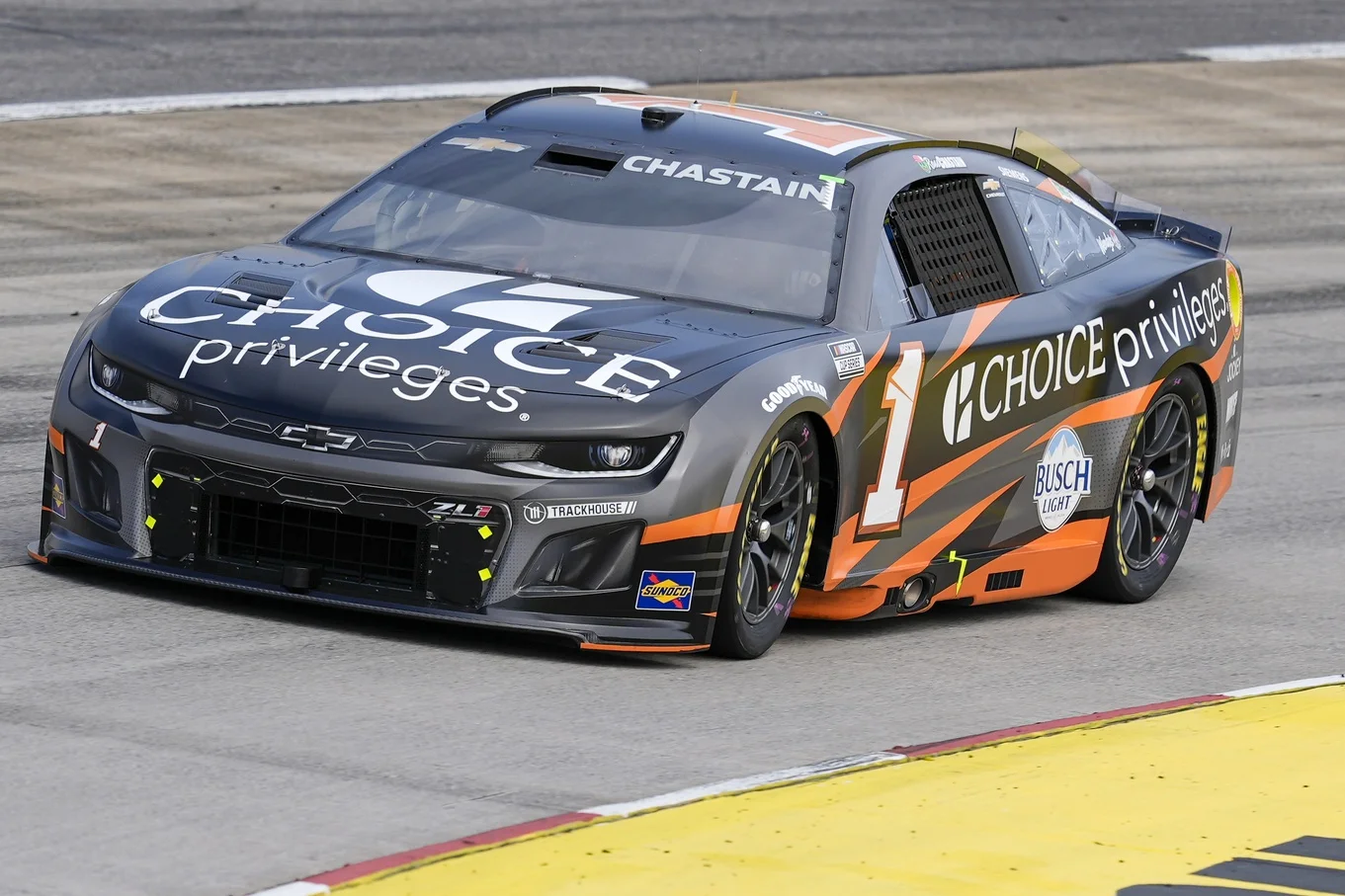
In a season defined more by mounting frustration than by groundbreaking triumphs, TrackHouse Racing’s 2025 campaign took another twist during the wild NASCAR Cup Series stop at Texas Motor Speedway. Ross Chastain, driving the No. 1 chevrolet/”>Chevrolet, battled from a mid-pack starting position through a race marred by wrecks and relentless cautions. While the outcome was a hard-fought second-place finish, Chastain’s blunt post-race comments revealed deep concerns within TrackHouse Racing, exposing a team searching for answers and confidence amid self-imposed pressure and on-track adversity.
The expectations coming into 2025 were sky-high for TrackHouse Racing. Their roster featured the tenacious Chastain, rookie Shane van Gisbergen adapting from Supercars with high-profile sponsorship from Red Bull, and Xfinity champion Daniel Suarez. This lineup was intended to launch the organization into the upper echelon of the Cup Series. Instead, the team’s early results have been underwhelming, with just four top-five finishes—half of which came in a single race at Las Vegas. Poor qualifying runs in Texas underscored their season’s difficulties. Chastain and van Gisbergen both started outside the top-30; Suarez only slightly fared better at 25th on the grid.
Once the green flag waved, the Texas event quickly became a survival exercise. Chastain threaded through a minefield of spinning cars and debris. His car, however, proved difficult to handle, lacking grip and feeling unbalanced as he fought to simply maintain pace with the leaders. Despite these physical and mental challenges, Chastain’s No. 1 team managed to hang in contention, aided by the pit crew’s grit and fast adjustments orchestrated by crew chief Bill Surgen. A broken jack threatened to derail their afternoon, forcing jackman Shane to scramble for a replacement as precious seconds slipped away. Nevertheless, a critical set-up change during a late caution period transformed Chastain’s fortune, giving him newfound confidence behind the wheel.
Post-race, Chastain’s voice carried exhaustion and unfiltered honesty as he confronted the underlying issues plaguing TrackHouse Racing.
Yeah, that’s a working-class day… Just no confidence in the car yesterday. And y’all saw that. Just the speed of the TrackHouse cars on Saturdays is terrible. And we’re just not confident, all three drivers. So there was one pit stop today that Bill Surgen and the group it takes a ton of people back at TrackHouse and on the box here in GM at Chevrolet. And they made me a confident driver all of a sudden with one adjustment.
In that moment, Chastain laid bare a crisis that extended beyond a single race—a collective unease impacting the entire organization, eroding morale and destabilizing performance on qualifying and race days alike.
Despite finishing second, Chastain failed to lead a lap or score stage points, a harsh reflection of TrackHouse Racing’s current limitations. For much of the day, he struggled to even crack the top-10 while his teammates endured similar difficulties. Daniel Suarez ultimately rallied to tenth and van Gisbergen, still on a steep learning curve with oval racing, finished a quiet 22nd—each result tinged with disappointment and unfulfilled promise.
Van Gisbergen’s transition to NASCAR’s unique brand of competition has been challenging. Guidance from compatriot Scott McLaughlin, who remarked,
There’s going to be a point where it’s going to either click or you’re just going to have some luck go your way and that’s going to change that qualifying metric, you’re going to be able to qualify not third-last,
highlighted the sense of hope mixed with struggle. At Texas, van Gisbergen managed to avoid major wrecks and finished just outside the top-20, a modest achievement that reflects both his persistence and the team’s ongoing hurdles.
For Chastain, it was a “working-class day” that required every bit of grit and adaptability his team could muster. He expanded upon the ordeal, describing the pivotal impact of seemingly minor changes.
And it was small stuff. It doesn’t even make sense. But after that, I was a confident driver. We still had a jack break, so hats off to Shane to quickly recover and get that other jack out there. But yeah, I can’t drive an uncomfortable car. I can’t personally. So as soon as they got it comfortable or at least gave me some confidence, we started going forward.
His candid appraisal offered fans rare access to the emotional and psychological battles being fought within TrackHouse Racing every weekend.
TrackHouse Racing’s struggles go deeper than just a lack of raw speed. Chastain’s remarks revealed a crisis in confidence spreading among all three drivers. The team’s inability to qualify well and consistently provide its drivers with stable, fast cars has bred doubt and pressure, both internally and externally. While resources, financial backing, and talented personnel exist, the execution on Saturdays and Sundays has simply not matched the potential that was so widely anticipated at the season’s outset.
The aftershocks from Texas have forced TrackHouse Racing to confront its shortcomings head-on. Suarez’s season has been uneven, at times hinting at a breakthrough before sliding back into the midfield. Van Gisbergen’s journey—with flashes of promise and plenty of learning pain—continues to unfold in public view. The frustration is visible, not just in missed results but in the body language and frank post-race commentary now emerging from the garage.
What’s become painfully clear is that incremental adjustments and “working class days” carry as much value as outright speed in this year’s championship fight. The Texas race, despite its drama and devastation, provided TrackHouse Racing with a modicum of hope: a reminder that resilience, quick thinking, and unity can still salvage respectable finishes when outright pace is lacking. Yet, the recurring need for such heroics spotlights the gap between ambition and achievement—an imbalance that cannot be ignored if the team is to reach its target of consistent, competitive runs.
Beyond the internal dynamics, TrackHouse Racing’s drivers have found themselves entangled in external drama as well. The tension between Ross Chastain and rival Joey Logano remains one of the Cup Series’ most combustible storylines. At Texas, Chastain’s obvious enthusiasm for Michael McDowell’s late-race run—paired with a subtle jab at Logano—kept fans buzzing.
I gave the 22 [Joey Logano] a really good push. There’s never been anybody in the series cheering for the #71 [Michael McDowell] car harder, not on his team, than I was, so wanted to see him win over that guy for sure,
Chastain admitted, following McDowell’s late crash and disappointment.
This ongoing rivalry traces its roots back to COTA, escalating further at Martinsville after Logano blamed Chastain for spinning him out. Chastain, for his part, refuted Logano’s version of events, insisting,
He’s [Logano] mad from COTA. He says that I pushed a car into him late in the race. When I first heard about it, I honestly didn’t understand what they were saying, he said.
These conflicts, while secondary to TrackHouse Racing’s current on-track challenges, serve to illustrate the pressure cooker environment facing the team and its drivers as tempers flare and rivalries intensify.
The culmination of events at Texas brought another layer of emotional complexity. Chastain watched as McDowell, who had seized the lead with ten laps to go, spun out after a defensive move under pressure from Logano near the finish. Logano then capitalized to take his first victory of the year, leaving Chastain visibly disappointed, his hopes of seeing someone other than his adversary in Victory Lane dashed. The episode further illuminated the pent-up frustration percolating beneath the surface for both Chastain and TrackHouse Racing as a whole.
With the 2025 NASCAR season not yet at its halfway mark, TrackHouse Racing finds itself at a crossroads. The raw ingredients for success are present—talented drivers, energetic sponsors, a dedicated pit crew, and the technical partnership with Chevrolet. Still, the persistent struggles with car comfort, qualifying pace, and a lack of composure under pressure have combined to stall the team’s upward trajectory. The need to turn potential into actual results has never been more urgent, with every team member feeling the weight of expectation from both within and outside the TrackHouse Racing camp.
As the schedule moves forward, the team is forced to reflect on what must change to reverse its fortunes. Chastain’s willingness to speak candidly about TrackHouse Racing’s issues pierced through the carefully constructed optimism that often surrounds NASCAR teams.
Just no confidence in the car yesterday… all three drivers. So there was one pit stop today that Bill Surgen and the group… made me a confident driver all of a sudden with one adjustment.
It was an admittance not just of current weaknesses, but also of a belief that there remains a path back to competitiveness if trust, feedback, and execution can be synchronized at each level of the organization.
The season so far has tested the limits of patience for everyone involved with TrackHouse Racing. For Chastain, moments of pride are invariably hard-earned, emerging from periods of discomfort and doubt. The hope is that each “working class day,” each battle through adversity, brings the team a step closer to realization of its ambitions in one of motorsport’s toughest arenas.
The impact of these performance struggles, as exposed by Chastain, stretches far beyond the points standings. If the underlying issues around car setup, driver comfort, and team confidence continue unchecked, TrackHouse Racing risks squandering the significant investments made during the off-season and fueling negativity that could erode further morale. The team must respond quickly and decisively to avoid turning a rocky stretch into a lost campaign.
For the time being, the lessons from Texas serve as both a warning and a guidepost. TrackHouse Racing’s blend of vulnerability and determination is as captivating as it is concerning, providing real human drama in a season that has produced more questions than answers. The potential for redemption, however, remains within reach. As the garage doors close each Sunday, the journey to rediscover belief and consistency presses on, with the fate of TrackHouse Racing’s 2025 season hanging in the balance and the eyes of the NASCAR world glued to what comes next.

