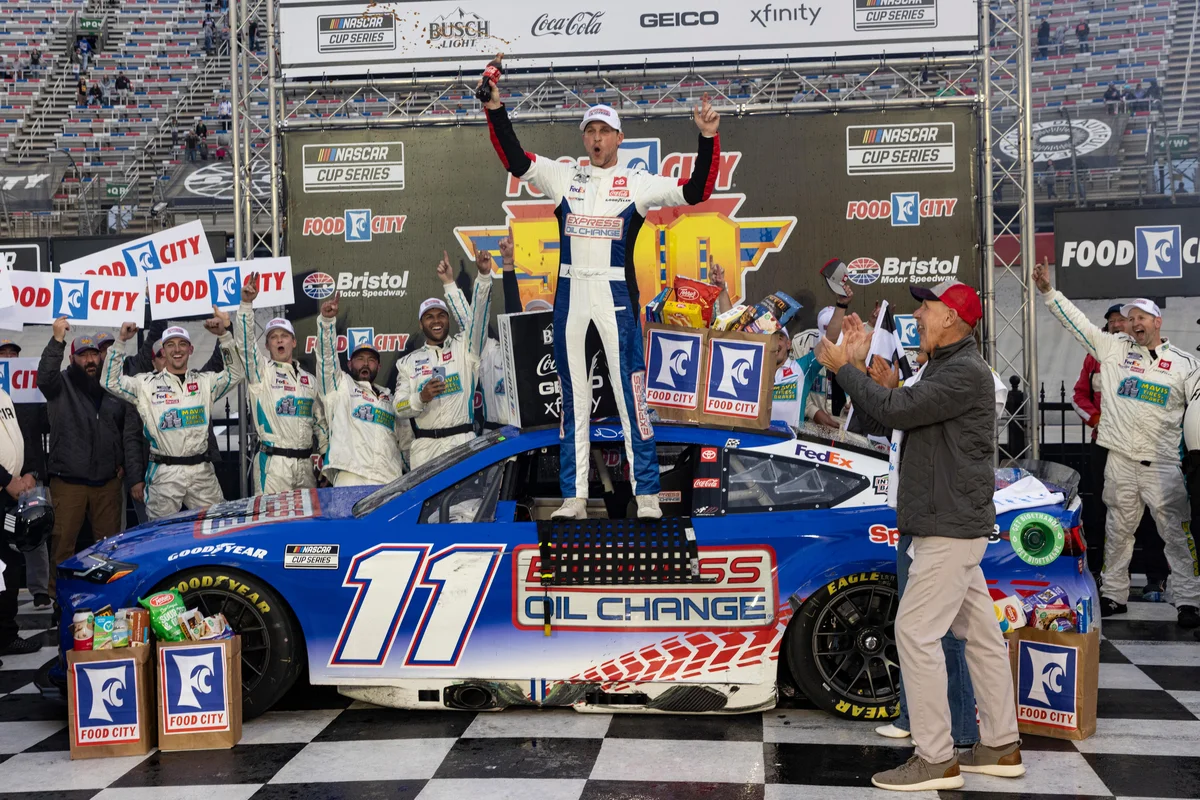
Denny Hamlin, long known as the primary Denny Hamlin NASCAR villain, is stepping out of the spotlight after enduring personal loss and professional setbacks, creating a vacancy for NASCAR’s top antagonist as the 2026 season unfolds. With Hamlin’s reputation softened among fans, discussions are intensifying across the community about which driver is poised to inherit the label of villain on the track and in the stands.
Drivers Poised to Become NASCAR’s Next Villain
The NASCAR community has always voiced its opinions with passion—often through resounding boos echoing from grandstands. Recent changes and off-track events have shifted where this energy is directed, but the tradition continues, with a new batch of drivers now attracting attention as potential villains for 2026.
Ty Gibbs is leading much of the online speculation and is frequently mentioned among fans as their top choice for the villain role. One observer noted,
“I honestly think his first win in Cup will be boo’d mercilessly, especially if he gets it at the expense of others, which is also super likely.”
As the grandson of Joe Gibbs, Ty faces accusations of nepotism, and his hard-charging, sometimes careless driving style has made him the focus of fan frustration. Since his entry into NASCAR’s premier series, his reputation for on-track incidents and impatience has continually fueled criticism, and many anticipate the jeers will reach a fever pitch once Gibbs scores his first top-level victory.
Joey Logano remains a familiar name in these discussions. Known for his assertive tactics and his championships won under the divisive playoff format, Logano continues to divide NASCAR audiences. As another fan put it,
“Joey probably. Denny won over some people after Phoenix. (Not me)… who wants to kick a man while he’s down horrendously.”
Many in the fanbase view Logano’s titles as the product of a system that undervalues consistency across the season, and while Hamlin’s misfortunes have begotten some sympathy, reactions against Logano tend to resurface as soon as competitive tension rises mid-year.
Bubba Wallace’s role as a lightning rod for criticism is unique, with much of the attention extending beyond his performance on the track. According to one commenter,
“Still probably gonna be Bubba, and we all know why…”
Wallace deals with backlash rooted not only in his activism but also in his prominence as a high-profile Black driver, making his experiences with fan scorn distinct from others mentioned.
Kyle Busch, another name notoriously associated with the villain image, is waiting in the wings.
“If Busch can get a win, I… can go back to hating him,”
wrote one fan. Busch’s ‘Rowdy’ reputation, though less visible since his last major triumph in 2023, could quickly return should he taste victory again in 2026, according to many in the NASCAR community.
Even as Hamlin moves into a period of fan sympathy following a near-championship loss and the heartbreaking death of his father in a house fire, the cycle of villainy remains unbroken in NASCAR. For every driver who exits the role, another appears ready to accept the crowd’s boos, ensuring a constant rotation of targets for fan derision and debate.
A Tradition of Booing: NASCAR’s Villainous Legacy
Boos from the stands are as old as the sport itself, their volume an unofficial barometer of a driver’s ability to stir strong emotions. The passing of NASCAR’s villain mantle from one era to another has become a tradition woven through the sport’s history, with every decade introducing its own central figure to energize fan passions.
During the 1970s and 1980s, Darrell Waltrip personified the NASCAR villain, earning the nickname ‘Jaws’ due to his outspoken personality and provocative banter, particularly targeted at racing greats such as Richard Petty and Bobby Allison. Waltrip’s combination of brash commentary and aggressive tactics ensured he was on the receiving end of constant jeers.
The 1990s witnessed Jeff Gordon‘s rise to villain status, mainly because of his relentless winning and gleaming corporate image. His alignment with the powerhouse Hendrick Motorsports team made him a target for those who preferred a more rugged, blue-collar persona in their heroes, and with every new trophy, louder boos followed.
Into the 2000s, Tony Stewart fully inhabited the villain archetype. Stewart was unapologetically fiery, directly confronting both competitors and interviewers, and amassing a trail of on-track altercations and memorable soundbites. Fans responded in kind, turning their disapproval into fuel for Stewart’s combative spirit.
For much of the 2010s and until the mid-2020s, Denny Hamlin emerged as the sport’s chief antagonist. He reveled in his role, often openly challenging fans’ loyalties. Notably, his comment at Bristol,
“I beat your favorite driver… all of them,”
condensed the spirit of rivalry between Hamlin and those in attendance, keeping boos at a constant din for years.
This antagonistic dynamic shifted in 2025. Hamlin’s heart-wrenching finish at Phoenix, where he lost the championship in dramatic style, softened fans’ reactions. Pain off the track compounded this transformation, as the loss of his father in a home fire garnered widespread empathy, and for the first time, a driver long defined by antagonism found a measure of acceptance in the stands.
What Awaits NASCAR’s Fan Culture Post-Hamlin?
Fan energy, whether supportive or critical, remains the lifeblood of NASCAR. As Hamlin steps away—at least temporarily—from the role of villain following deeply personal tragedies, the question of who will fill that void grows increasingly relevant. The intense debate illustrates how central the villain archetype is to the sport’s drama and spectacle, with figures like Ty Gibbs, Joey Logano, Bubba Wallace, and Kyle Busch all positioned as likely successors.
History shows that NASCAR fans cherish both their heroes and their antagonists, responding with equal vigor to dominance, controversy, or difference. As the 2026 season begins, the cycling of villainy promises to add another compelling chapter, keeping the crowd’s boos and debates alive from the grandstands to the digital forums. Whether the next villain is crowned after a controversial win, a bold statement, or an on-track dustup, one thing remains clear: NASCAR’s tradition of passionate, vocal engagement will ensure that the Denny Hamlin NASCAR villain legacy endures, no matter who inherits the title next.
Who will be the most booed driver in Cup going into 2026?
byu/GetBuschWhacked inNASCAR