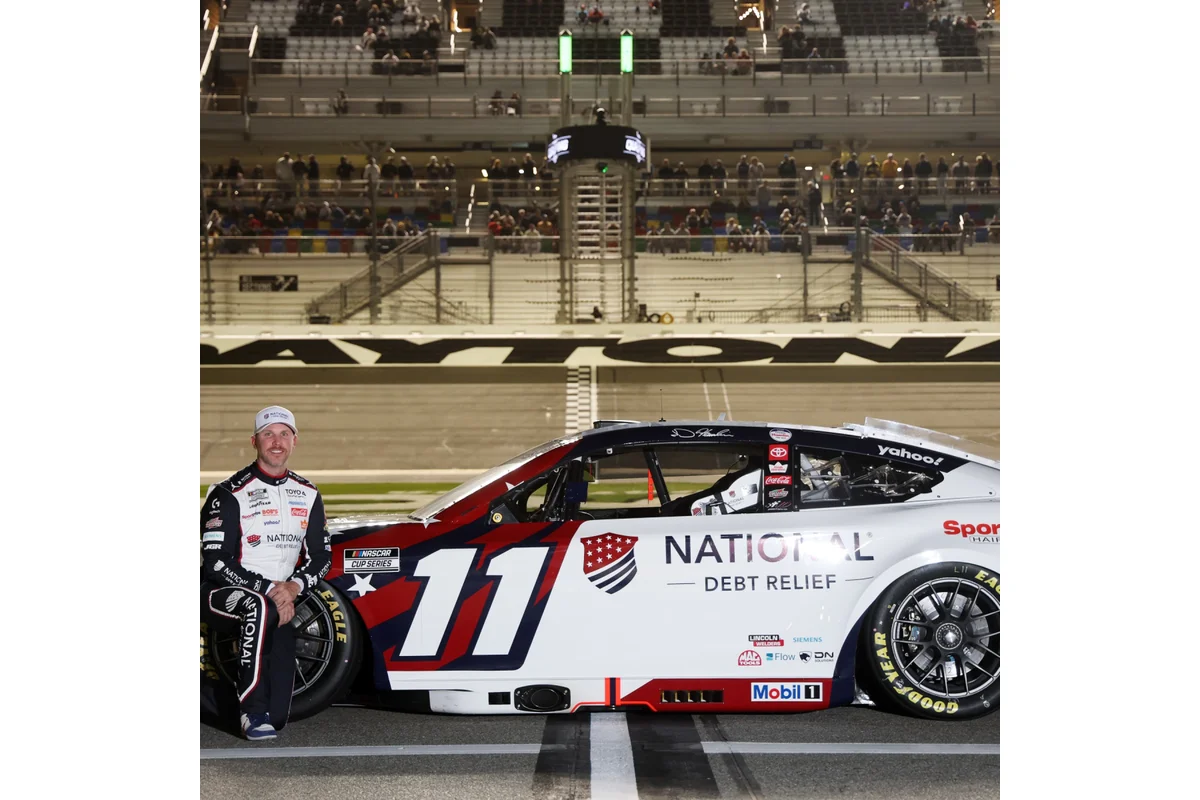
Denny Hamlin, a prominent driver and team owner, has unveiled his Denny Hamlin Daytona 500 plan at Daytona International Speedway in Daytona Beach, Florida, following this year’s tense and incident-filled race. Citing concerns that the current format emphasizes fuel-saving strategies over competitive racing, Hamlin’s proposal centers on significantly raising car speeds to bring back more dynamic competition.
Hamlin revealed that he has already discussed these ideas with NASCAR executives, seeking to reverse the trend seen since the introduction of the Next Gen car in 2022, which has placed a stronger focus on fuel efficiency and led to conservative racing tactics from teams.
Inside Hamlin’s Vision: Making Handling Count Again
After Tyler Reddick’s win, which gave Hamlin his first victory as a team owner with 23XI Racing, Hamlin shared specifics on how increased speeds could alter the competition, separation among cars, and reintroduce racing styles reminiscent of previous Daytona 500 events.
“There’s a way, but we’re going to have to increase the speeds by a lot,”
Hamlin said, emphasizing that cars need to be less stable and more dependent on driver skills and team set-ups.
He argued that the changes would challenge drivers more directly by making handling a critical factor compared to the tightly packed fields currently seen due to the car’s stability:
“You’re going to make it where handling matters. That’s going to spread the field, that’s going to make it to where … it’ll look a little more like racing from the past.”
— Denny Hamlin, Team Owner
Challenges of the Current Racing Package
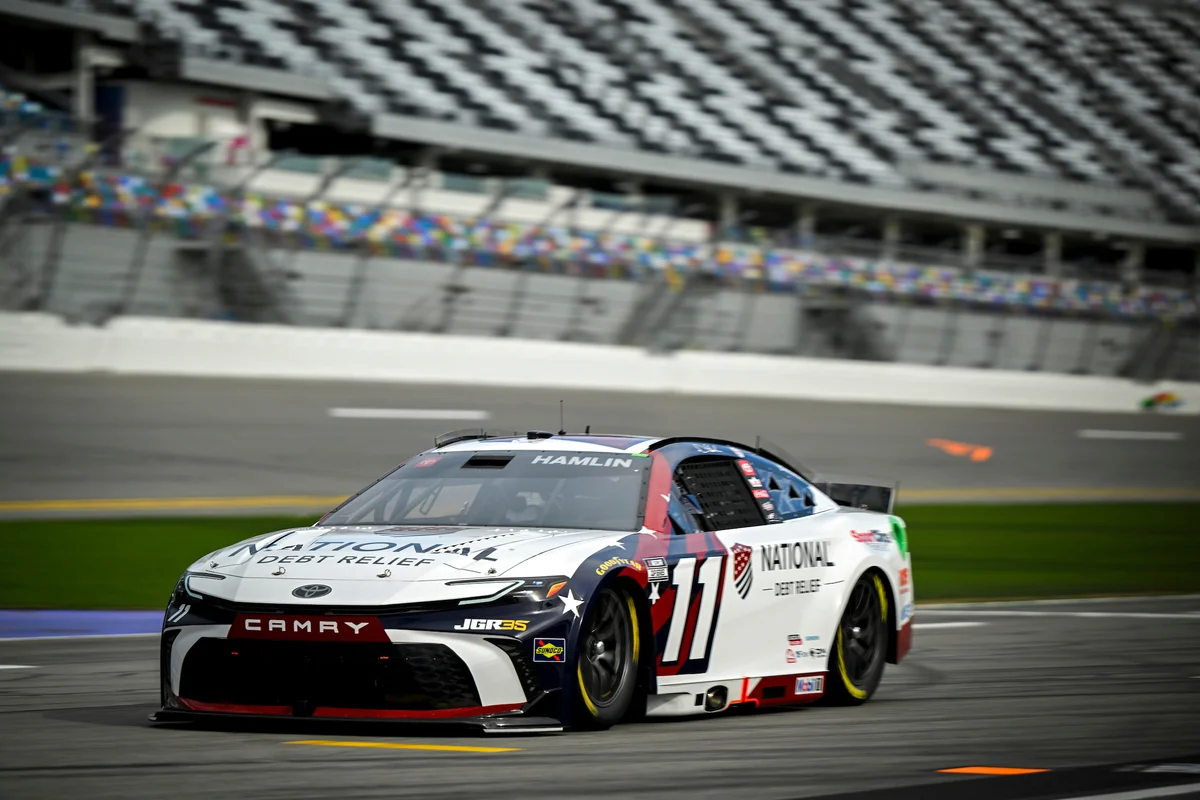
The Next Gen car, introduced for improved safety and manufacturability, has resulted in slower speeds at major superspeedways like Daytona and Talladega. Because of this, cars often run close together in dense packs, reducing on-track action and increasing the likelihood of major crashes, as seen at the end of this year’s Daytona 500, and prompting both fans and competitors to voice concerns.
Hamlin described the trade-off between safety and entertainment, noting,
“As long as (NASCAR’s) insurance company is OK with it, you’re going to have to speed up the cars because right now we’re so planted in the racetrack that we could just run in this really tight pack.”
— Denny Hamlin, Team Owner
Potential Testing and Timeline for Change
Recently, Hamlin met with NASCAR officials to suggest a test package that could potentially be tried in a future Clash exhibition race at Daytona. If the approach proves successful, partial or complete implementation could be considered before 2028, potentially transforming the race known as “The Great American Race.”
Mixed Reactions from the Garage and Pit Road
Support for Hamlin’s plan is not unanimous among leading figures. Reddick’s crew chief, Billy Scott, was skeptical that any technical tweaks could fundamentally change the way teams approach fuel mileage.
“I doubt there’s a fix to it because we’re just going to figure out the next way to exploit it, and I don’t know that it needs to be fixed,”
Scott remarked, comparing the nature of strategic racing to the classic board game:
“It would be like asking if you need to change how chess is played.”
— Billy Scott, 23XI Racing Crew Chief
The team dynamic has shifted heavily toward pit stop tactics, as technical regulations leave less room for car modifications. Teams now focus on pit road maneuvers, minimizing full-throttle laps to save fuel, and strategically timing their refueling stops. This has in turn led to slow, processional racing during long stretches, sometimes dulling the experience for drivers and fans alike.
Reflecting on the strategy-heavy race, 2023 Daytona 500 winner Ricky Stenhouse Jr., who finished second this year, said,
“On one hand, it’s good because our strategy worked out perfectly,”
but admitted the racing dulled at times:
“We stuck to it. It was brutal riding around there for a while. Not sure what the Toyotas were doing, but I think that made the race pretty boring there for a while for the fans. It was chaos after they pitted.”
— Ricky Stenhouse Jr., NASCAR Driver
Moving Beyond Fuel-Saving Hassles
Hamlin’s vision is to make races about performance and nerve, not just economy runs.
“You won’t see any fuel saving,”
Hamlin explained, envisioning a Daytona 500 decided on the edge of control:
“You’re just going to see people hanging on. That would be the only fix.”
— Denny Hamlin, Team Owner
Billy Scott, however, finds satisfaction in the strategic elements, stating,
“Everybody is trying to react off each other and figure out a way to get in the front at the right time, and that depends on whether cautions fly. … To me, from where we stand, that’s a very enjoyable part of it.”
— Billy Scott, 23XI Racing Crew Chief
Future of Daytona: Will NASCAR Embrace Change?
The debate over Hamlin’s proposal exposes a deeper divide in the NASCAR paddock between purists who value strategic chess and those, like Hamlin, who advocate for more daring racing. Any move to test or implement the Denny Hamlin Daytona 500 plan would require extensive coordination between NASCAR, teams, and safety stakeholders, given the increased risks of higher speeds and less stable vehicles. If Hamlin’s suggestions gain traction, Daytona International Speedway could soon see a return to more unpredictable, thrilling races that place a premium on skill and courage, transforming the Daytona 500 once again and leaving a significant mark on the future of superspeedway competition.