
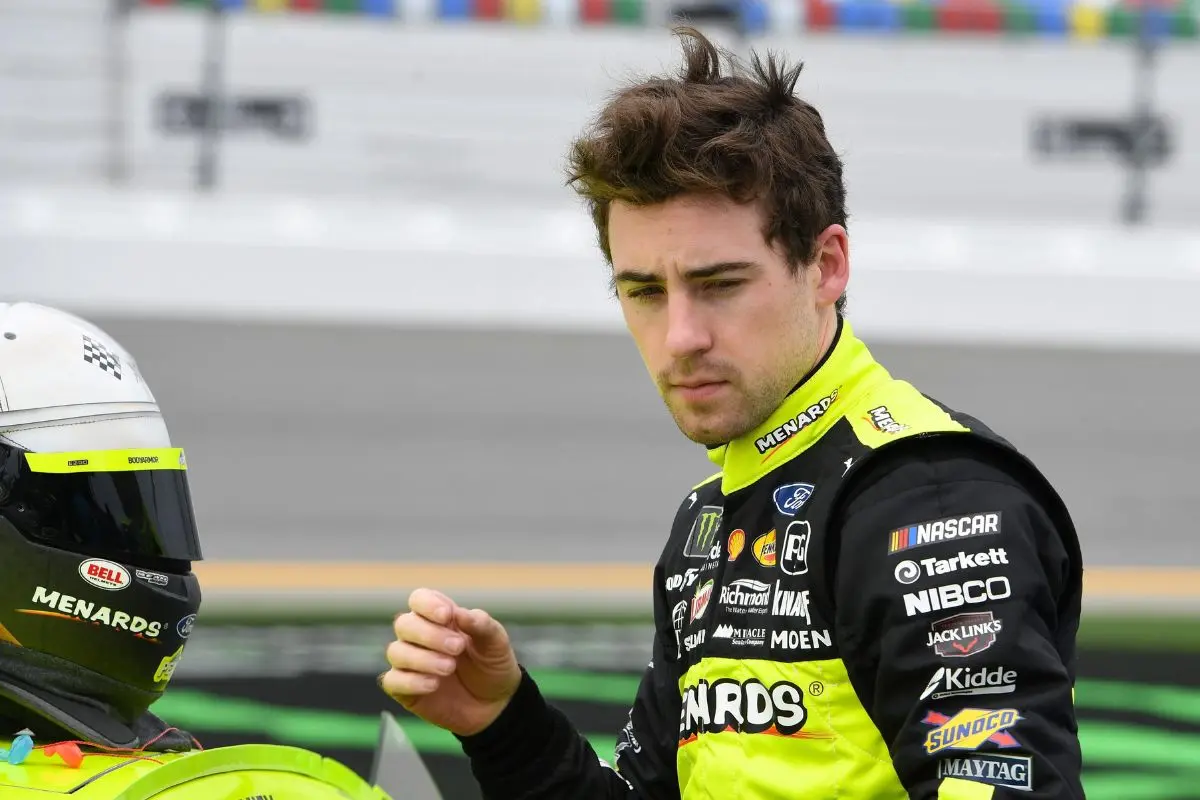
NASCAR now paying drivers for publicity has raised eyebrows among fans and drivers alike. Ryan Blaney recently exposed the controversial plan, shedding light on how NASCAR’s new policy could change the way drivers engage with fans. While some see it as a smart move to increase exposure, others question the impact on the sport’s authenticity. With big names like Chase Elliott already embracing the shift, will this new strategy truly help or hurt NASCAR’s image in the long run?
Key Highlights
- NASCAR’s new policy offers drivers financial incentives for increased media engagement and publicity efforts.
- The Driver Ambassador Program allocates an annual budget between $10 million and $20 million for media participation.
- Compensation for drivers varies from tens of thousands to around $1 million, based on their media involvement.
- Concerns arise about the potential loss of authenticity among drivers due to corporate-driven messaging.
- Ryan Blaney highlighted the shift towards media engagement as part of NASCAR’s strategy to enhance visibility and audience reach.
Chase Elliott’s Dominant Start to the 2025 Season
Chase Elliott has launched the 2025 NASCAR season with a commanding performance, showcasing his skill and resolve right from the outset. His victory at the Clash at Bowman Gray Stadium marks a formidable start, as he clinched the win from pole position.
Elliott dominated the event by leading 171 out of 200 laps, demonstrating a mastery of both speed and strategy. This achievement follows a tumultuous 2024 season, where he managed to return to Victory Lane and secure a seventh-place finish in the standings.
Elliott’s drive to capitalize on this momentum is evident in his assertive driving style and tactical decisions on the track. Beyond the immediate race results, Elliott’s approach reflects a calculated focus, emphasizing precision in execution and adaptability to the competitive environment.
His ability to maintain such a high level of performance positions him as a formidable contender, setting a high bar for his peers in the 2025 NASCAR season.

Ryan Blaney Reveals the Reason Behind Chase Elliott’s Increased Media Presence
As the 2025 NASCAR season gets underway, Ryan Blaney has offered insights into why Chase Elliott is embracing a more visible role in media engagements.
Historically, Elliott allowed his racing achievements to communicate his skill on the track. However, Blaney explained that recent policy changes within the NASCAR organization have introduced substantial financial incentives for drivers who actively participate in promotional activities.
“The best way I can put it is, imagine if your boss came to you and said, “Hey, can you work overtime? We’re not going to pay you for overtime, though, but go do it out of goodwill.” You’d have some reservations about it. But if your boss said, “Hey, we’re going to pay you overtime—go work overtime,” you’d be like, “Well, yeah, I’ll take it.” Chase is a great example—he’s out there doing ten times more than what we would normally do. And this applies to everybody.” – Ryan Blaney
This shift encourages drivers like Elliott to engage with media more frequently, aligning with the evolving expectations of the sport.
Blaney highlighted several key factors influencing Elliott’s increased media presence:
- Financial Incentives: NASCAR’s new policies provide monetary compensation, motivating drivers to undertake promotional duties.
- Driver Ambassador Program: This initiative places drivers at the forefront, promoting the sport to a broader audience.
- Peer Participation: Influential drivers like Elliott are seen collaborating with others, such as Bubba Wallace, enhancing their visibility and further emphasizing NASCAR’s tactical direction.
How NASCAR’s Driver Ambassador Program Changes the Game
Although NASCAR has traditionally focused on racing ability to maintain its fan base, the introduction of the Driver Ambassador Program (DAP) represents a tactical shift towards enhancing the sport’s visibility through media engagement.
With an annual budget ranging from $10 million to $20 million, the DAP incentivizes drivers to actively participate in promotional activities, offering compensation from tens of thousands to approximately $1 million per driver based on their involvement.
This initiative aims to strengthen NASCAR’s presence amid fierce competition for television ratings, potentially attracting a broader audience.
For high-profile drivers like Chase Elliott, participation in the DAP could serve as a conduit for drawing in casual fans, capitalizing on their existing popularity.
Conversely, some skepticism exists, as highlighted by Jeremy Mayfield’s assertion that the program may serve as a mechanism for NASCAR to control its public image.
“NASCAR’s going to start paying the drivers, I guess, to say good things about the sport. Some kind of marketing deal to reward drivers for doing great things on social media. Maybe I’m wrong, but I’m pretty sure I’m right about that.” – Jeremy Mayfield
Yet, the DAP undeniably shifts the paradigm, intertwining athletic skill with tactical media participation.

Mark Martin’s Criticism of NASCAR’s Corporate Influence
Mark Martin, a retired NASCAR veteran, offers a critical perspective on the growing corporate influence within the sport, shedding light on a notable shift in how drivers engage with their audience.
His critique emphasizes how corporate interests may be muting the personalities of drivers, thereby stripping the sport of its traditional fervor. Martin’s concerns are rooted in observations that drivers are increasingly silent, both in media engagements and social media interactions.
“I know you see it; the drivers have pretty much gone silent. I mean, even, you know, they don’t… say much on social media anymore. It seems to me like NASCAR Media or PR does. You know, you can tell those posts that they post on their stuff. They’re advertising when the race is, whatever. But, you know, I don’t know exactly why.” – Mark Martin
He suggests that corporate-driven messaging has overshadowed the genuine voices of athletes, which once fueled the sport’s vibrant culture.
Martin’s insights are encapsulated in three key points:
- Diminished Authenticity: Drivers are perceived to be aligning with corporate narratives, reducing their personal expressions.
- Lack of Bold Personalities: The sport is missing outspoken figures like Tony Stewart, who unabashedly contributed to its excitement.
- Generational Talent: NASCAR needs a new wave of talent that can remain authentic amidst corporate demands.
“We need Tony Stewart. Tony Stewart did not give a damn. He was so good they could not crush him. It would have crushed me… But we need a guy that is so talented, a guy on the level of Kyle Larson, which is not Kyle’s style, but we need a guy with that level, generational talent to come in and just be real, you know.” – Mark Martin
Will NASCAR’s New Approach Help or Hurt the Sport?
How will NASCAR’s new strategy of financially incentivizing driver engagement impact the sport’s future? The introduction of monetary incentives for driver publicity aims to improve the marketability of NASCAR’s stars. However, this approach raises concerns about authenticity.
While NASCAR desires increased fan engagement, the financial motivation may lead drivers to adopt a more polished, less genuine persona, potentially alienating long-time enthusiasts who cherish unfiltered personalities.
According to Martin, the essence of NASCAR lies in its authentic, relatable drivers, and this move might compromise that authenticity. The success of this initiative will largely depend on how drivers balance these incentives with maintaining their true selves.
If drivers can engage fans without losing their authenticity, NASCAR might see an expanded audience base. However, if they lean too heavily on corporate-driven interactions, the sport could risk losing its unique appeal, potentially alienating dedicated fans who value genuine connections.

News in Brief: NASCAR Now Paying Drivers for Publicity
NASCAR’s Driver Ambassador Program, highlighted by Ryan Blaney’s disclosures, is reshaping the sport by incentivizing drivers for media engagement. While Chase Elliott’s increased presence benefits his brand and NASCAR’s visibility, critics like Mark Martin argue it compromises the sport’s authenticity by prioritizing corporate interests.
The program’s potential to improve fan engagement and commercial success must be weighed against concerns of diluting racing’s traditional values, leaving the sport at a crossroads between innovation and preserving its heritage.
ALSO READ: Ross Chastain Opens Up About Ryan Blaney’s Sneaky Tactics That Held Him Back at Bowman Gray

