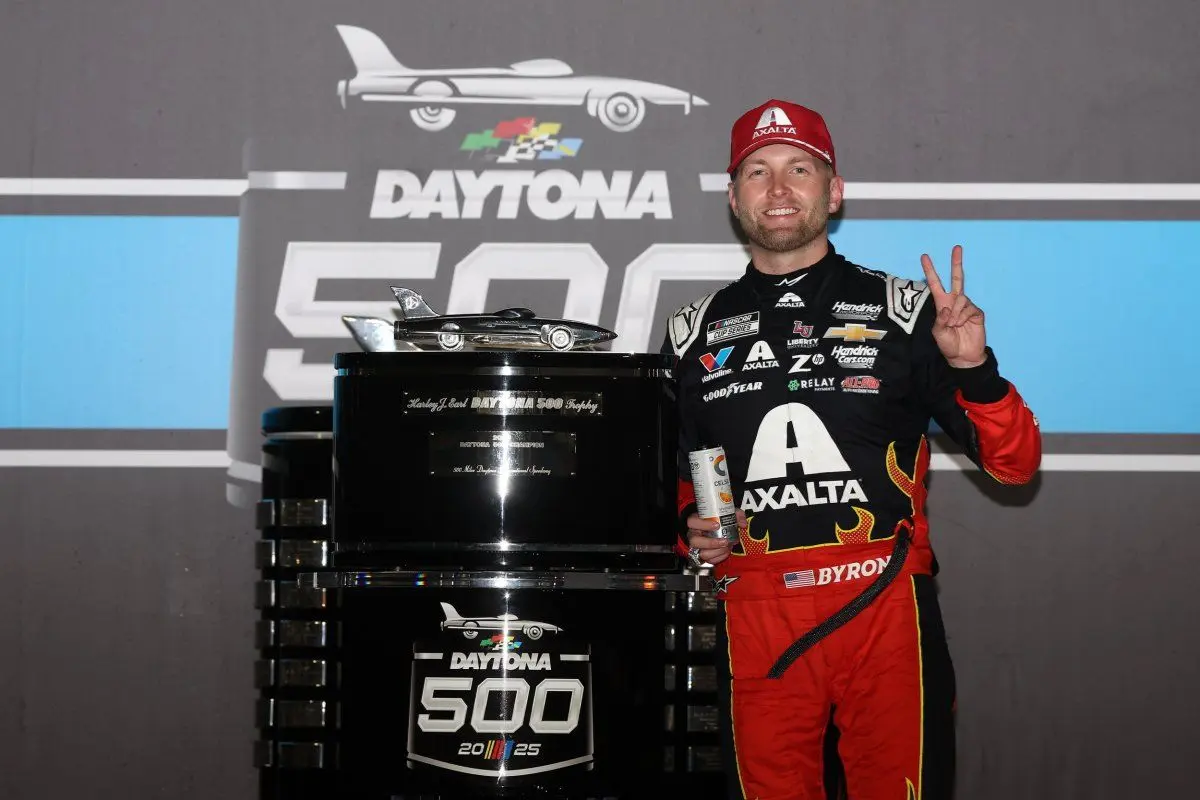
William Byron wins Daytona 500 without dominating the race, but many fans are left wondering if luck played a bigger part than skill. The race ended with a shocking twist as the leaders crashed, pushing William Byron to the front. His victory, achieved without controlling the race, has sparked debate. Some argue it was a well-timed strategy, while others feel it was more about being in the right place at the right time. Was it truly a win of skill or just a “lottery” victory?
Key Highlights
- Byron’s win demonstrates the unpredictable nature of superspeedway racing, where strategic positioning can lead to victory despite not leading most laps.
- The last-lap wreck among leaders highlights the chaotic environment, allowing Byron to capitalize and secure his win.
- Superspeedway victories often result from a mix of skill, tactical decisions, and fortunate timing rather than race-long dominance.
- Recent trends show drivers with limited season success winning, raising questions about the role of luck versus skill.
- NASCAR must balance excitement with skill-based legitimacy to maintain fan engagement and race integrity.
Superspeedway Racing and the Daytona 500
In the high-octane world of superspeedway racing, the Daytona 500 stands as an electrifying demonstration to speed and strategy. Fans crave the adrenaline rush of pack racing, where cars hurtle around the track at 200 mph, locked in fierce bumper-to-bumper combat.
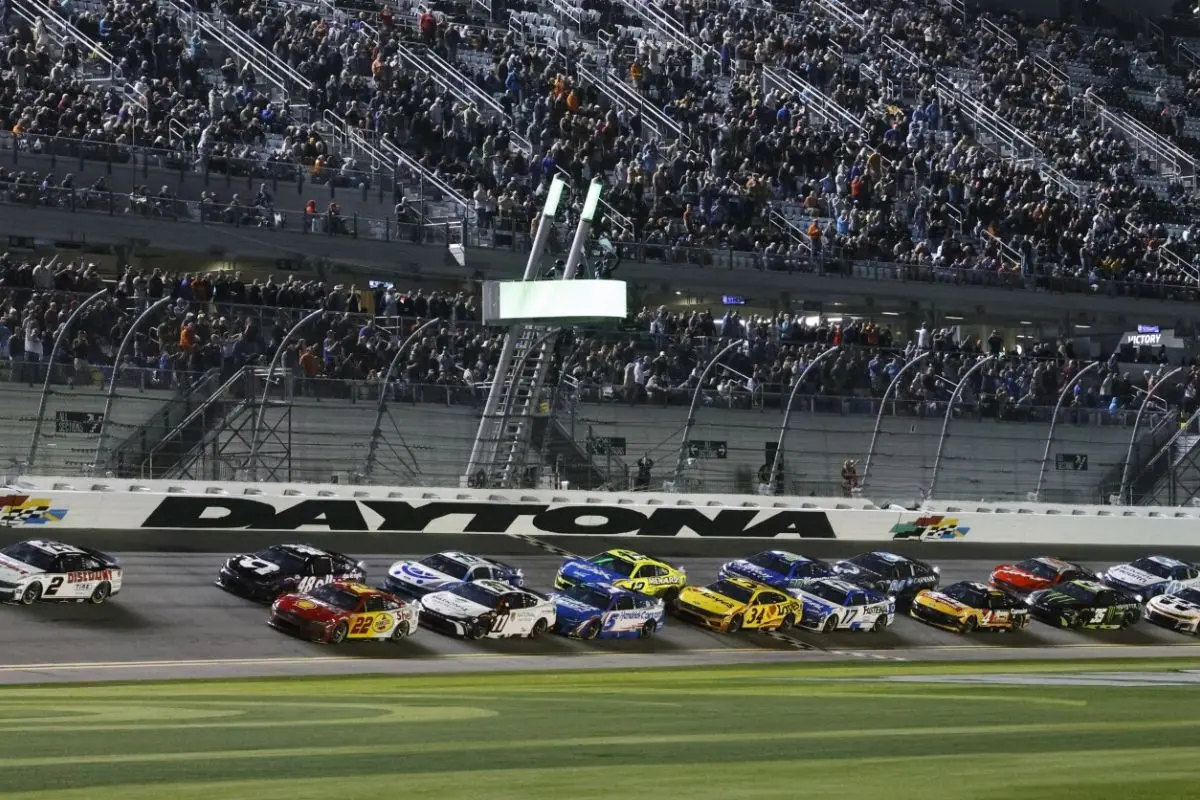
It’s a spectacle that promises drama and tension with every lap. Yet, beneath the exhilarating facade lies a chaotic battlefield, where drivers engage in a perilous dance on the razor’s edge. Each competitor must navigate a treacherous chess match, where a single miscalculation can trigger the infamous “Big One,” transforming hopeful contenders into mere bystanders in a flash.
The Daytona 500 not only tests physical stamina and driving skill but also demands a cerebral approach to strategy. Drivers must blend courage with caution, anticipating every move and counter-move.

This iconic race exemplifies the brutal beauty of superspeedway racing, where precision and resilience are paramount, and fortunes change in an instant.
William Byron’s Surprising Victory
While the dust settled on the chaotic finale of the Daytona 500, William Byron found himself in an unexpected and thrilling position—victory lane.
Beginning the last lap in seventh place, Byron witnessed a dramatic turn of events as the leaders succumbed to a heart-stopping wreck. This twist of fate catapulted him to the forefront, illustrating the unpredictable essence of superspeedway racing.
A last-lap wreck propelled Byron from seventh to victory, showcasing the wild unpredictability of superspeedway racing.
Bob Pockrass aptly noted Byron’s frank reaction to this unanticipated achievement, highlighting the irony of his win: a race not dictated by dominance but by survival.
“William Byron says he really didn’t know how to react when he won the Daytona 500 … because he was seventh at the beginning of the last lap and found himself in victory lane after the leaders wrecked.” – Bob Pockrass
Fast Thoughts with @BobPockrass: “I didn’t know what to think about the Daytona 500, and wondered if I was alone—until I realized the winners felt the same.” pic.twitter.com/kdWRAf5Tcm
— FOX: NASCAR (@NASCARONFOX) February 17, 2025
Rudy Fugle, Byron’s crew chief, found humor in the circumstances, acknowledging their team’s lack of control throughout the race. However, Byron’s tactical positioning and steadfast focus allowed him to seize this golden opportunity.
“They really weren’t, you know, the dominant car. Obviously, they weren’t somebody who had controlled the race.” – Bob Pockrass
The Decline of Daytona 500 Victory Legitimacy
The spectacle of the Daytona 500, once hailed as the pinnacle of NASCAR racing, now grapples with a crisis of legitimacy. In recent years, the prestigious race has crowned winners such as Ricky Stenhouse Jr., Austin Cindric, and Michael McDowell—drivers who struggle to capitalize on their victories throughout the season.
William Byron’s recent success, achieved without dominating the event, raises questions about the race’s authenticity as a measure of skill.
The modern era of racing, characterized by spec cars and fuel strategies, appears more a lottery than a genuine test of racing ability.
“NASCAR has honestly ruined their greatest race. It’s not about who does the work and has a fast car anymore. Its rules created for 30 car pack racing which in turn created a crashfest at the end. It’s now just who survives the crashes not the best car.”
“The Daytona 500 has turned into a lottery of luck.” – NASCAR fans reaction
Even seasoned drivers like Denny Hamlin dismiss the race’s chaotic nature, acknowledging its unpredictable, crash-filled outcomes. As Byron’s win is dissected, some will commend his tactical placement, while others will dismiss it as a ‘Mickey Mouse’ victory.
The Future of NASCAR and the Balance of Excitement and Legitimacy
How does NASCAR navigate the tightrope between thrill and authenticity, especially when each race could become a spectacle of chaos? The balance between exhilarating unpredictability and preserving the integrity of competition remains a pressing challenge.
As fans yearn for unforgettable moments and drivers push their limits, the sport teeters on the edge of becoming a mere spectacle.
The future of NASCAR hinges on its ability to maintain this equilibrium:
- Unpredictable finishes: Fans crave the adrenaline rush of last-minute surprises, where anything can happen.
- Driver safety: The heart-stopping moments must not come at the cost of drivers’ well-being.
- Victory legitimacy: Wins should be celebrated for skill, not luck or disaster.
Striking this delicate balance will define NASCAR’s path. The thrill of the unexpected must coexist with the sport’s authenticity, ensuring that victories are earned through skill rather than chaos.
Ryan Preece’s Nightmare and the Safety Concerns in NASCAR
NASCAR’s quest to balance thrill with authenticity takes a dramatic turn with Ryan Preece’s recent ordeal, emphasizing a terrifying reality.
At Daytona, Preece faced a nightmare eerily similar to his harrowing crash just two years prior. His car, again airborne, flipped violently, echoing a past that NASCAR thought it had paved over. Preece’s sentiment, a cocktail of relief and frustration, highlights a pressing issue: “We’re getting really close to somebody not being able to walk away.”
“Yeah, I don’t know if it’s the diffuser or what that makes these cars like a sheet of plywood when you walk out on a windy day. But when the car took off like that, it got real quiet. All I thought about was my daughter.” – Ryan Preece
The crash not only blemished his RFK Racing debut, ending in a dismal 32nd place, but also reignited concerns about NASCAR’s safety measures.
The aerodynamic design, likened to a wind-battered sheet of plywood, raises questions about vehicle stability. Preece, haunted by the specter of past crashes, wonders how many more such escapes he might endure, as the specter of danger looms large, casting a shadow over the sport’s future.

News in Brief: William Byron Wins Daytona 500 Without Dominating
William Byron’s unexpected Daytona 500 win highlights the thrilling unpredictability of superspeedway racing, where strategy often trumps sheer dominance. Despite debates over the race’s legitimacy, this victory emphasizes NASCAR’s ongoing struggle to balance excitement with authenticity.
Meanwhile, Ryan Preece’s harrowing experience serves as a clear reminder of the sport’s inherent dangers, prompting urgent discussions about safety improvements. As NASCAR evolves, the tension between spectacle and genuine competition remains a central challenge.
ALSO READ: Jeff Gordon Stunned as William Byron’s Shocking Daytona 500 Win Makes NASCAR History!