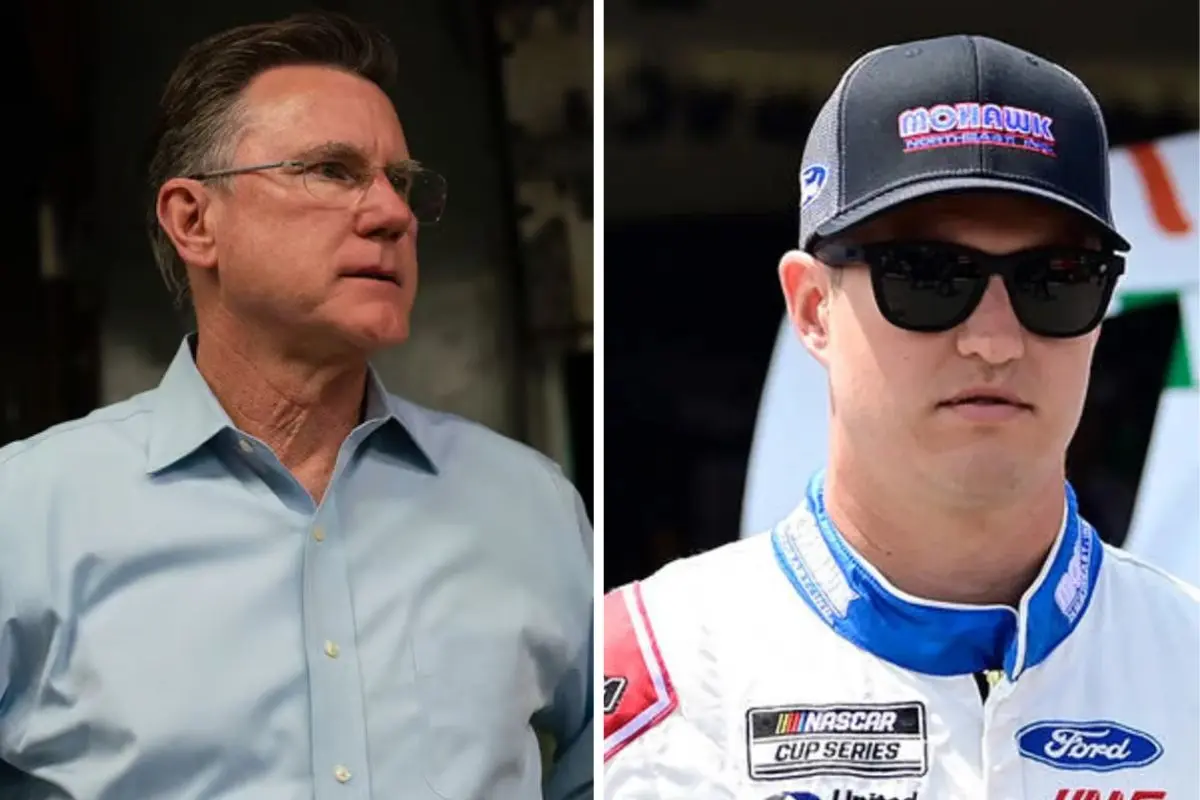
Elton Sawyer defends NASCAR’s safety standards after Ryan Preece‘s terrifying flip at Daytona. But did everything work as it should? While officials stand by their safety measures, drivers raise concerns about the risks of airborne crashes. Ryan Preece’s wreck, echoing past incidents, adds to the debate. As safety remains a hot topic, the balance between speed and protection is under scrutiny. What comes next for NASCAR?
Key Highlights
- Elton Sawyer affirmed NASCAR’s safety mechanisms worked as intended during Ryan Preece’s crash.
- Sawyer’s defense focused on the crash’s unpredictability, which doesn’t necessarily reflect on safety standard failures.
- He emphasized the effectiveness of existing safety measures and their role in minimizing injury.
- Sawyer acknowledged ongoing reviews of the incident to explore potential safety improvements.
- NASCAR’s response underscores a commitment to maintaining and enhancing driver safety protocols.
The Pattern of Ryan Preece’s Crashes at Daytona
As the dust settled on another tumultuous race at Daytona, the haunting pattern of Ryan Preece’s crashes emerged as a poignant reminder of the enduring unpredictability of motorsport.
His latest airborne incident, echoing past calamities, emphasizes a perplexing symmetry in his encounters with Daytona’s high-speed circuit. In the 2023 Coke Zero Sugar 400, with just five laps remaining, Preece’s vehicle violently barrel-rolled across the infield grass, eventually erupting into flames—an event that prompted NASCAR to repave the grass, aiming to prevent such terrifying spectacles.
Yet, the recurrence of Preece’s airborne mishap in the Daytona 500 highlights the complex interplay of speed, precision, and fate that defines the sport.

The Daytona 500 Crash and Immediate Reactions
The echoes of Ryan Preece‘s tumultuous experiences at Daytona set the stage for another heart-stopping moment during the Daytona 500, where the specter of danger once again loomed large.
With five laps remaining, Cole Custer’s collision with Christopher Bell catalyzed a chain reaction, sending Preece’s #60 car airborne. The crash was a glaring reminder of the inherent risks drivers face, and as Preece took that terrifying flight, his thoughts gravitated towards his daughter, highlighting the personal cost of these perilous pursuits.
Another look at Ryan Preece's scary wreck. #NASCAR #DAYTONA500 pic.twitter.com/nQ2RcqGUNY
— FOX: NASCAR (@NASCARONFOX) February 17, 2025
Preece’s airborne crash spotlighted the stark dangers and personal sacrifices in racing. In the aftermath, the motorsport community turned its focus to safety, sparking a dialogue that resonated with urgency.
Voices like Denny Hamlin and Kevin Harvick articulated concerns, channeling the collective unease.
The Dangerous Dynamics of Ryan Preece’s Crash
When Ryan Preece’s car took to the skies at Daytona, it wasn’t just a spectacle of metal and speed; it was a chilling reminder of the ever-present dangers that lurk in the world of motorsports.
The dynamics of this crash were particularly unsettling, as the car’s airborne path defied typical expectations. Instead of a swift descent onto all four wheels, the vehicle executed a perilous flip, akin to a motorcycle’s wheelie gone awry, before violently colliding with the outside wall.
This unnerving sequence highlighted the unpredictable nature of high-speed racing, where even the most advanced engineering can sometimes falter.

NASCAR’s Response and Ryan Preece’s Criticism
In the wake of Ryan Preece’s harrowing crash, the NASCAR community is faced with a crucial moment of reflection and action, as safety remains at the forefront of every stakeholder’s mind.
Elton Sawyer stands firm in his belief that the safety mechanisms performed as intended during Preece’s alarming flip. Citing the car’s response to aerodynamic forces, Sawyer emphasizes the rigorous post-incident analysis by NASCAR’s dedicated teams.
“We’ll send our folks over there this morning to start looking through that, working closely with Ryan and the team and the folks at RFK to see what we can learn. And then we will, if there (are) things that come out of that. That we can implement going forward as we’ve done in the past, we will continue to do that.”
“The front stayed up for a while, but once the car started to turn, the air started to see the side of it. I’m not an aerodynamicist (and) I don’t claim to be, but I know the guys in the back will dissect that. We’ll go over this morning, in this particular case, our team at the racetrack, Eric and his team, and Brandon Thomas and the team looked at the car (and) felt like all the safety stuff did what we needed it to do.” – Elton Sawyer
However, Ryan Preece, having twice been thrust into perilous situations, voices a compelling dissent. He argues for heightened safety measures, especially on Superspeedways, advocating for urgent reforms to prevent future tragedies. Preece calls for urgent safety reforms on Superspeedways to avert future tragedies.
Preece’s firsthand experiences amplify his call for swift action, highlighting the precarious balance between competitive thrill and driver safety.
Why NASCAR Must Act Before It’s Too Late
Urgency surrounds NASCAR’s decision-making as the echoes of past tragedies serve as a solemn reminder of the inherent risks within the sport, and the pressing need for reform cannot be overemphasized.
Despite advancements with the NASCAR Next-Gen car, the specter of cars going airborne looms, as evidenced by the harrowing incidents involving Michael McDowell and Josh Berry. These moments, though resulting in miraculous escapes, highlight a vulnerability that cannot be ignored.
Ryan Preece, reflecting on his own near-tragic experience, voices a profound concern shared by many in the NASCAR community. His plea is not born from fear alone but from a deep-seated responsibility towards his family and fellow drivers.
“I’ve got a two-year-old daughter, and just like a lot of us, we have families. So something needs to be done because cars lifting off the ground like that. That felt worse than Daytona in ’23.”
“We keep beating on a door hoping for a different result. And I think we know where there’s a problem at Superspeedways. I don’t want to be the example of when it finally does get somebody, I don’t want it to be me.” – Ryan Preece
The call for action is clear: NASCAR must investigate the root causes of these airborne occurrences, transcending temporary solutions like shark fins, to foster an environment where safety innovations preempt, rather than react to, potential catastrophes.

News in Brief: Elton Sawyer Defends NASCAR’s Safety Standards
In reflecting on Ryan Preece’s harrowing crash and the subsequent discourse on NASCAR’s safety protocols, it becomes evident that these events serve as a poignant reminder of the sport’s inherent risks. The courage of drivers like Preece, combined with the ongoing commitment of NASCAR to prioritize safety, highlights the delicate balance between thrill and security. As the sport evolves, it remains essential to honor these moments, pushing for advancements that protect those who bravely compete on the track.
ALSO READ: NASCAR Fans Troll Ryan Preece After His Latest Crash Suggesting Daytona Has a Curse on Him