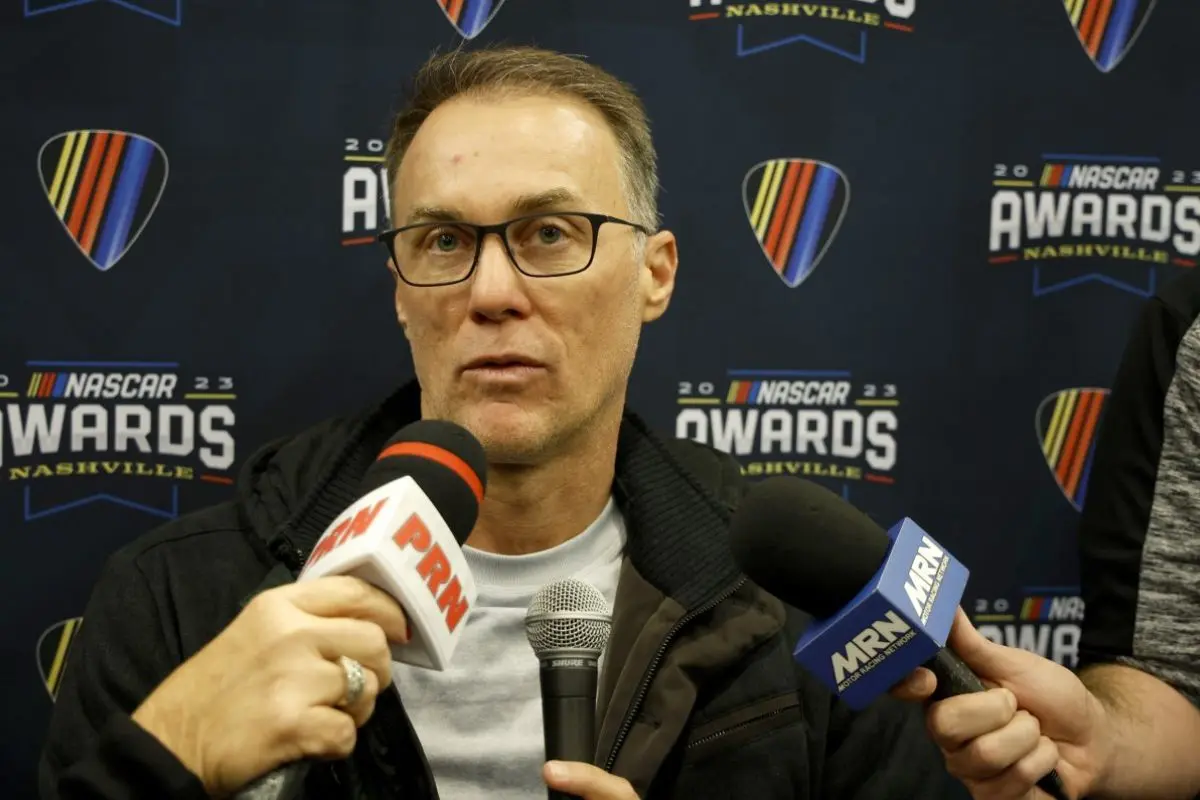
NASCAR’s accountability crisis is back in the spotlight after a heated moment from Kevin Harvick. His latest comments raised serious questions about how the sport handles key decisions. With tensions already high, his words have sparked fresh debate about consistency and fairness in officiating. This isn’t the first time concerns like these have surfaced, but the timing and intensity of his remarks make them impossible to ignore. What pushed Kevin Harvick to speak out so strongly?
Key Highlights
- Kevin Harvick criticized NASCAR’s lenient officiating after chaotic collisions at Martinsville.
- Harvick believes current rules encourage reckless driving and compromise safety.
- He called for stricter regulations to uphold NASCAR’s core values.
- Lack of penalties at Martinsville highlighted the need for more accountability.
- Harvick advocates for Cup veterans in Xfinity to mentor young drivers.
The Lost Accountability of NASCAR’s Past
In the constantly changing landscape of NASCAR, accountability, once a cornerstone of the sport, appears to have faded into the annals of its storied past.
During the early 2000s, discipline was synonymous with figures like Kevin Harvick, who often found himself under the scrutinizing gaze of NASCAR authorities such as Mike Helton, Jim Hunter, and Bill France Jr. These enforcers wielded rulebooks with an iron grip, ensuring drivers adhered to a strict code of conduct.
Today, however, the immediacy of penalties has diminished, giving rise to concerns over race control efficacy. Modern events frequently unfold in chaotic spectacles, unchecked by the rigorous oversight that once maintained order on the track.
The current leniency contributes to a growing need for stringent race control, a sentiment echoed by veterans who recall an era where accountability was paramount, urging a return to disciplined stewardship to prevent the pandemonium now prevalent in the sport.

Martinsville’s NASCAR Xfinity Race Sparks Controversy
The echoes of NASCAR’s disciplined past reverberate through the present turmoil, as the Martinsville Xfinity Race descends into disarray, symbolized by the chaotic finish of the US Marine Corps 250.
With Austin Hill clinching an unexpected victory, the success was overshadowed by the barrage of wrecks that plagued the event. In the aftermath, a chorus of criticism emerged from NASCAR luminaries, including Mike Joy, Christopher Bell, and Kevin Harvick, challenging the integrity and safety of the race.
The race’s climactic laps were tainted by a succession of collisions, each one intensifying the growing controversy surrounding NASCAR’s regulatory framework.
Critics argue that the leniency in enforcing rules has fostered an environment where reckless driving prevails, undermining both the competitive spirit and the safety of the sport.
Kevin Harvick’s Frustration with Modern NASCAR
Kevin Harvick voices his mounting frustration with the current state of NASCAR, criticizing the modern regulatory environment that he believes is eroding the core values of the sport.
Harvick argues that the lenient officiating, characterized by an absence of immediate, on-the-spot penalties, is detrimental to the integrity of racing. He contends that such laxity fosters an environment where young drivers, like Sammy Smith, develop reckless habits, unchecked by the consequences their actions warrant.
“This DONE committee would like to talk about some penalties, and we would like to have our penalties issued during the race.”
“Right there, if that were any short track in the country, 8 car would have gone to the end of the lead lap and we would have had an immediate penalty for rough driving and causing an accident.” – Kevin Harvick
This lack of accountability was evident when Smith displayed no remorse after colliding with Taylor Gray, a scenario Harvick views as symptomatic of a broader issue within NASCAR.
“You saw Sammy Smith’s comments after the race and things that he said. It’s like they don’t even really care. They don’t even really care what they say. They don’t care what they do.”
“I know when I was their age, I would do the same things, but my a– would be in the trailer getting my a– reamed out by Mike Helton with Jim Hunter standing outside the door laughing and Bill France Junior wanting to know when I was going to get suspended because made a mockery out of our show,” Harvick recalled. “And that’s what that was. It was an absolute disaster.” – Kevin Harvick
Harvick asserts that the sport’s foundational principles of discipline and respect are being compromised, as new entrants are not held to the rigorous standards once demanded.
He insists that restoring stringent regulations is crucial to preserving the competitive spirit and ethical framework that defines NASCAR’s legacy.

The Absence of Cup Veterans in NASCAR Xfinity
Why have Cup veterans vanished from the Xfinity Series grid, and what impact has this exodus had on the development of young drivers?
The departure of seasoned Cup drivers from the NASCAR Xfinity Series has left a gaping void in mentorship opportunities, resulting in a shift towards aggressive tactics among nascent talents. Without the guiding presence of veterans, the younger cohort, seeking for recognition, often resorts to forceful actions, leading to frequent on-track wrecks.
Kevin Harvick advocates for the return of full-time Cup drivers to the lower series, asserting that their participation would instill discipline and impart invaluable racing expertise to emerging drivers.
“Without all the Cup drivers in the field and racing against all these young guys, there’s nobody to teach them. So they just go out and run over each other all the time and then they just keep running over each other.” – Kevin Harvick
This absence not only deprives Xfinity competitors of learning through competition against elite drivers but also undermines the nurturing of a resilient and skilled generation of racers.
Harvick emphasizes the necessity for NASCAR to enforce stringent regulations to curb reckless driving, preserving the integrity of the sport and ensuring a robust developmental pipeline.
“I’d love to see NASCAR drop the hammer and put these guys in a position to where they can officiate these things in the trucks and Xfinity on the spot.”
“You spend somebody out, you go to the back… We’re going to put you to the back of the lead lap and on Wednesday we might do something else.” – Kevin Harvick
Denny Hamlin’s Martinsville Masterclass & Cup Race Recap
Having orchestrated a commanding performance at Martinsville, Denny Hamlin highlighted his tactical skill, leading to a resounding victory that accentuated Toyota’s competitive edge with a sweeping 1-2-3 finish.
Hamlin’s adept navigation of the track and calculated pit stops emphasized his mastery of race dynamics, leaving competitors struggling to keep pace. This performance not only symbolized individual success but also reinforced Toyota’s formidable presence within the NASCAR circuit, showcasing their engineering expertise and tactical insight.
Chase Elliott, under immense strain, exhibited resilience, securing a strong finish despite the competitive heat.
Meanwhile, William Byron, Austin Cindric, and Josh Berry encountered notable challenges, hampering their race day performances and highlighting the volatility intrinsic to the sport.
This Martinsville race, rich in drama and technical excellence, sets the stage for future competitions.

News in Brief: Kevin Harvick Exposes NASCAR’s Accountability Crisis
In the aftermath of Martinsville’s chaotic Xfinity race, the once revered discipline of NASCAR seems adrift, as veterans like Kevin Harvick lament the erosion of stringent regulations that once governed the sport.
The absence of seasoned Cup drivers in Xfinity further exacerbates this decline, leaving races vulnerable to reckless abandon. As Denny Hamlin’s masterclass performance stands in sharp contrast, the call for a return to accountability and rigorous enforcement of rules grows ever louder, demanding NASCAR’s immediate attention.
ALSO READ: Ty Dillon Wrecked Kevin Harvick and Sparked One of NASCAR’s Most Explosive Feuds