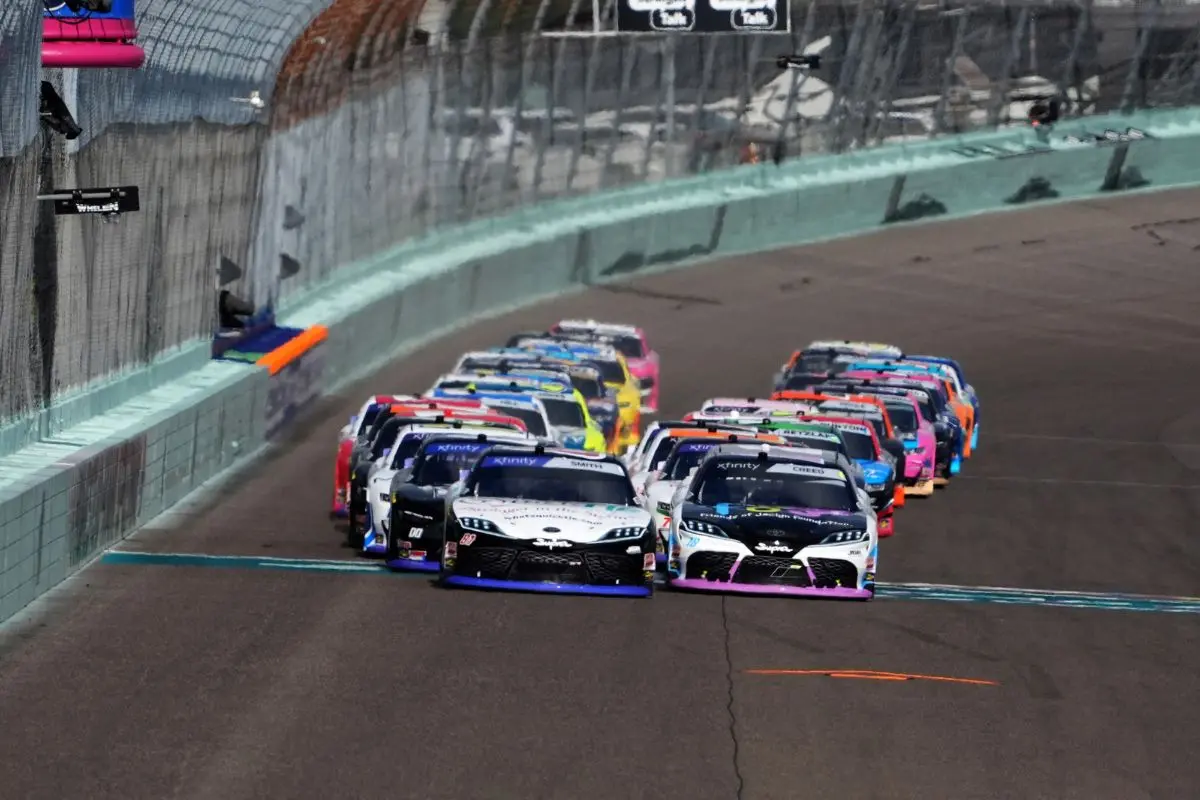
NASCAR’s first commissioner reveals bold international vision, signaling a major shift in how the sport could grow. Steve Phelps, now holding a newly created role, is focused on expanding beyond familiar tracks. His strategy includes global opportunities that could reshape competition. With strong leadership and ambitious plans, he is steering the organization toward uncharted territory. Changes are coming, but how far will they go?
Key Highlights
- Steve Phelps emphasized international expansion as a crucial element for NASCAR’s future growth.
- Phelps highlighted the importance of integrating the Next Gen car for competitive balance in NASCAR.
- He addressed safety concerns, including improvements following Kevin Harvick’s feedback and Joey Logano’s crash.
- Phelps discussed economic impacts on NASCAR manufacturers, including tariffs.
- He confirmed future developments planned for the Fontana racetrack.
Steve Phelps Becomes NASCAR’s First Commissioner
Steve Phelps has been appointed as the inaugural commissioner of NASCAR, marking a remarkable evolution in the sport’s governance structure. This newly established role aligns NASCAR more closely with the organizational models of major professional leagues, reflecting a tactical move towards a unified leadership framework.
Phelps, a seasoned executive within the sport, brings a depth of experience to this position, having previously served as NASCAR’s president. His appointment signifies a critical moment for NASCAR as it navigates the complexities of a multi-stakeholder environment, distinct from traditional stick-and-ball sports.
Unlike leagues with a singular commissioner overseeing team owners, NASCAR must consider the intricate dynamics among teams, manufacturers, and a passionate fan base. Phelps discussed the subtleties of his new responsibilities on the “Hauler Talk” podcast, emphasizing the importance of balancing these varied interests to foster growth and innovation within the sport, ensuring NASCAR’s continued evolution and success.

The Role and Vision for NASCAR’s Future
Under the newly defined role of commissioner, Steve Phelps envisions NASCAR’s path as one marked by tactical growth and cutting-edge competition. Tasked with governing the sport, Phelps aims to strengthen collaboration among NASCAR’s diverse stakeholders.
This vision for the future is rooted in a calculated approach that balances maintaining the sport’s core essence with embracing modern advancements in racing technology and global outreach.
“How we are governed is different from stick-and-ball sports.”
“[NFL Commissioner] Roger Goodell has 32 owners that essentially are his owners and entrust him to run the sport. It’s a closed system. Ours is different. There are lots of stakeholders that are part of it.” – Steve Phelps
The concept of a commissioner role emerged from Steve O’Donnell, now serving as NASCAR’s president. Phelps, having secured backing from CEO Jim France and executive vice chair Lesa France Kennedy, is entrusted with steering the sport through its next evolutionary phase.
With a focus on enhancing competition, Phelps also seeks to amplify NASCAR’s presence on the international stage, thereby broadening the sport’s reach and appeal. His leadership promises a harmonious blend of tradition and innovation, setting a dynamic pathway for NASCAR’s future.
“When you have 77 years of history and you don’t have a commissioner, I appreciate them understanding the change.” – Steve Phelps
NASCAR’s Growth and Standing Among Major Sports
Building on the foundational strategies outlined in Steve Phelps’ vision for NASCAR’s future, the sport has seen notable growth, positioning itself prominently among major sports leagues. Since 2019, NASCAR’s path has been upward, evidenced by rising television ratings and fortified media partnerships, which have considerably improved its visibility and appeal.
The increase in charter values reflects the sport’s burgeoning economic stature, drawing parallels to the NFL, MLB, NHL, and PGA Tour.
“It’s a time that our sport has experienced growth.”
“There was a time when we had some significant declines. But it’s a time since 2019 that looks different and feels different, and if you’re in this sport, it feels good right now. The competition is amazing. The ratings are strong. We’ve got new media partners. Charter values are soaring. We’ve got wind at our back. OK, now what? That’s really what it was. Whether it’s international growth or just the opportunities afforded to us with my elevation.”
“Those types of things help put us shoulder to shoulder with every other major sport, which I believe we are,” Phelps said. “But within the media and sports arena, we’re looked at that way of shoulder to shoulder with Major League Baseball, the NHL, Major League Soccer and the PGA Tour.” – Steve Phelps
Phelps’ tactical insight has been particularly evident during the pandemic, where his leadership facilitated NASCAR’s early return to racing. This proactive approach highlighted the crucial role of collaboration within the sport, showcasing a model of resilience and adaptability.
The newly established commissioner role has opened avenues for cutting-edge opportunities, cementing NASCAR’s place in the competitive landscape of major sports. As NASCAR continues to harness these gains, its growth path remains robust and promising.

International Expansion and Long-Term Planning
Recognizing the importance of broadening its global footprint, NASCAR has set its sights on international expansion, a tactical priority championed by Steve Phelps. As the initial commissioner, Phelps has identified international growth as crucial, aligning with NASCAR’s tactical vision for the future.
“I had four to five texts from commissioners from other sports that said, ‘We’re rooting for you,’ And for the first time, I actually believed them.”
“Our sport, when things are really hard, we do things really well. The sport is at its best when it comes together. That’s why I push for collaboration every single chance I get. Because we’re just better together than we are apart.” – Steve Phelps
The organization currently operates series in Brazil, Mexico, Canada, and Europe, and is actively evaluating models for further extension. This includes exploring avenues such as private capital investment to fuel expansion.
“International expansion is fertile ground for us. What that looks like, we’re studying now. We have series in Brazil, Mexico, Canada and Europe. Is that the right model to continue expansion that way, or should we think more broadly of what it’s going to look like that looks different than that? We’re exploring all of those things.”
“The opportunity to partner with stakeholder groups is a real opportunity as well, including race teams. There’s been discussion about, is there private capital that could help us internationally? Maybe. Could I see a scenario of racing in Mexico City and somewhere else south or north of the border? Maybe. There’s lot to think about what that’s going to look like.” – Steve Phelps
To guarantee a robust and sustainable approach, Phelps emphasizes the necessity of long-term planning. He has initiated plans to improve collaboration with team owners through an advisory council.
This council includes notable figures like Justin Marks, Heather Gibbs, and Brad Keselowski, who will contribute to tactical discussions. Their collective expertise is expected to guide NASCAR in making informed decisions, guaranteeing the sport’s global expansion aligns with its core values and long-term objectives.
“It’s going to require us to be very thoughtful about what those opportunities are and making sure we communicate that appropriately at the right time. One of the things we put in place in the charter agreements, the race team wants to have a seat at table. We created an owner advisory council with Justin Marks, Heather Gibbs and Brad Keselowski. We want to make sure they are sitting in the three- to five-year planning meetings now of what the sport looks like in the future. Not next year but in 2030. Our ownership thought it was important to create this. It’s not a voting board, but it’s an important group.” – Steve Phelps
Key Topics from the “Hauler Talk” Podcast
While the “Hauler Talk” podcast covered a range of vital topics, Steve Phelps, as NASCAR’s commissioner, emphasized several key issues that are shaping the future of the sport.
Central to the discussion was the integration of the Next Gen car, which Phelps highlighted as a significant factor in enhancing competitive balance. He also recounted a critical lunch with Kevin Harvick, where safety improvements were the primary focus, emphasizing NASCAR’s commitment to driver safety.
Joey Logano’s concerns following his airborne crash at Talladega were addressed, illustrating the ongoing dialogue between NASCAR officials and drivers regarding safety protocols.
Additionally, Phelps discussed the future of the Fontana racetrack in California, indicating potential developments that could redefine its role within the NASCAR circuit.
The conversation also touched on the potential impact of tariffs on NASCAR manufacturers, an important economic consideration that could affect the cost structure and international trade dynamics of the sport.

News in Brief: NASCAR’s First Commissioner Reveals Bold International Vision
Steve Phelps’ appointment as NASCAR’s initial commissioner marks a crucial moment in the sport’s history, setting a tactical direction focused on international expansion and long-term growth. His vision, as discussed on the “Hauler Talk” podcast, emphasizes enhancing NASCAR’s global standing and integrating creative practices to guarantee sustainability and competitiveness. By addressing key challenges and leveraging opportunities for growth, Phelps aims to reinforce NASCAR’s position among major sports, fostering a dynamic and inclusive future for racing enthusiasts worldwide.
ALSO READ: Steve Phelps’ New Role at NASCAR Faces Criticism from Long-Time Fans