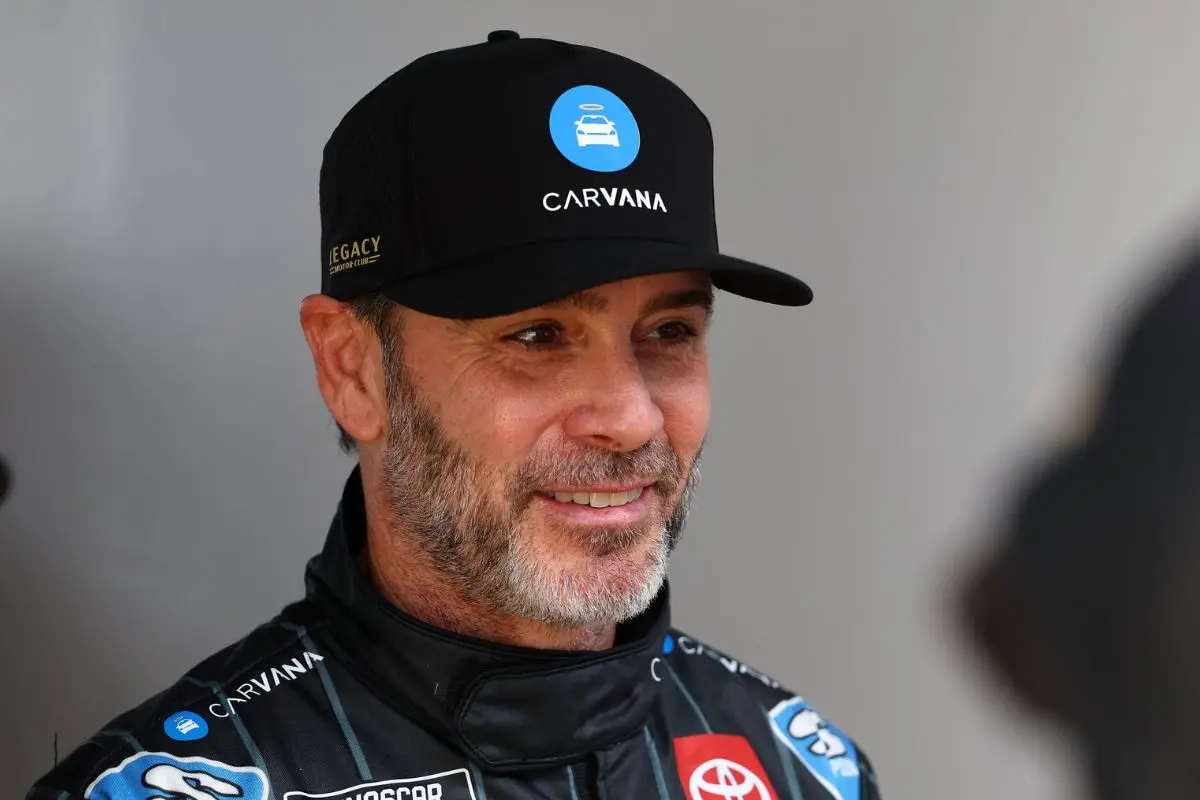
Jimmie Johnson’s bold move has put NASCAR’s charter system under intense scrutiny. With prices soaring to $55 million, new teams struggle to compete. Meanwhile, legacy teams enjoy financial advantages, deepening the divide. Denny Hamlin reveals the staggering cost of running a car, while team owners battle NASCAR over revenue. A legal fight looms, and the sport’s future hangs in the balance. Will this system drive teams away, or can a fair solution be found?
Key Highlights
- Jimmie Johnson highlights competitive disadvantages for new teams due to skyrocketing charter prices now reaching $55 million.
- Legacy teams acquired charters at no cost, unlike new entrants facing increased financial barriers.
- NASCAR regulations limit the number of cars new teams can field compared to legacy teams.
- The financial foundation for teams with charters has strengthened, benefiting established teams.
- Ongoing debates focus on equitable distribution and access to charters for emerging teams.
Charter System and Its Role in NASCAR’s Future
In examining the charter system and its role in NASCAR’s future, one must consider its substantial impact on the financial stability of teams within the sport. The charter system, designed to provide financial assurance, has seen a considerable increase in value, with charters appreciating from $40 million to an estimated $50–$55 million. This growth signifies a strengthening of the financial foundation for teams holding these charters.
However, legacy teams hold a distinct advantage in acquiring charters, which can impact the competitive balance within NASCAR. Notably, Jimmie Johnson, a respected figure in the sport, has shared insights on the perceived fairness of the charter system. His perspective highlights ongoing debates regarding equitable distribution and access to charters.
“We are not a league like the NFL or NBA. We’re private contractors, and charters give us some of that structure that other leagues have. The goal is to create long-term value and a competitive product on the track.” – (Jimmie Johnson)
The system’s evolution will likely continue to shape the economic landscape of NASCAR, influencing how new and existing teams navigate the increasingly competitive and financially demanding environment of stock car racing.
 Cook Out Clash” width=”1200″ height=”800″ srcset=”https://slicksandsticks.com/wp-content/uploads/2025/01/NASCAR-Stars-to-Watch-at-the-Cook-Out-Clash.webp 1200w, https://slicksandsticks.com/wp-content/uploads/2025/01/NASCAR-Stars-to-Watch-at-the-Cook-Out-Clash-300×200.webp 300w, https://slicksandsticks.com/wp-content/uploads/2025/01/NASCAR-Stars-to-Watch-at-the-Cook-Out-Clash-1024×683.webp 1024w, https://slicksandsticks.com/wp-content/uploads/2025/01/NASCAR-Stars-to-Watch-at-the-Cook-Out-Clash-768×512.webp 768w, https://slicksandsticks.com/wp-content/uploads/2025/01/NASCAR-Stars-to-Watch-at-the-Cook-Out-Clash-630×420.webp 630w, https://slicksandsticks.com/wp-content/uploads/2025/01/NASCAR-Stars-to-Watch-at-the-Cook-Out-Clash-150×100.webp 150w, https://slicksandsticks.com/wp-content/uploads/2025/01/NASCAR-Stars-to-Watch-at-the-Cook-Out-Clash-696×464.webp 696w, https://slicksandsticks.com/wp-content/uploads/2025/01/NASCAR-Stars-to-Watch-at-the-Cook-Out-Clash-1068×712.webp 1068w” sizes=”auto, (max-width: 1200px) 100vw, 1200px” />
Financial Disparities Between Legacy and New Teams
While the charter system has provided a structured framework for financial stability within NASCAR, it has also highlighted substantial financial disparities between legacy teams and new entrants.
“You have to buy the charter. There are some leasing opportunities where you can lease a charter for a year, but ultimately the goal is for ownership and to support the teams that commit to the sport, and the demand is what’s gonna create the increase in enterprise value. And for some of them who started for the teams that were with NASCAR from the beginning, they were gifted the charters.” – (Jimmie Johnson)
Legacy teams such as Joe Gibbs Racing (JGR), Hendrick Motorsports, and Penske Racing have benefited from initial charter allocations without financial burden, receiving them at no cost. In contrast, nascent teams are compelled to purchase charters, with prices now escalating to $55 million, creating a formidable barrier to entry.
“I think our new high watermark is at 40$ million a charter. We had three charters transacted at 40$ million and a few more cents, but there were fewer assets attached. Now that we have our new charter agreement. I think you are gonna see 45, 50, 55, the charters are gonna continue to rise.” – (Jimmie Johnson)
This financial imbalance is further exacerbated by NASCAR’s regulations that limit new teams from expanding to four cars, a privilege that legacy teams exploit to enhance their competitive advantage.
“I think if NASCAR could start now with a clean sheet of paper, it could be less confusing, but you have all these grandfather issues that continue to trickle on.” – (Jimmie Johnson)
Jimmie Johnson has addressed these “grandfather issues,” emphasizing the entrenched competitive disadvantage faced by teams like Legacy Motor Club (LMC).
Sponsorship and Financial Challenges for Teams
Despite the structured framework provided by NASCAR’s charter system, teams continue to face considerable sponsorship and financial challenges that impact their sustainability and growth.
Sponsorship remains a vital lifeline for NASCAR teams, yet securing consistent funding is an increasingly arduous endeavor. Denny Hamlin’s disclosure of the $18 million cost to field a car emphasizes the financial demands teams confront yearly.
“It costs us $18 million to put a car on the racetrack.” – (Hamlin)
Compounding these challenges is the revenue distribution whereby teams receive only 35–39% of NASCAR’s total revenue. This allocation exacerbates financial strains, forcing teams to optimize sponsorship deals to bridge the funding gap.
Since 2016, financial instability has led to the survival of merely seven of the original 19 teams, highlighting the harsh economic environment within the sport.
Teams are compelled to innovate financially, constantly seeking new corporate partners to offset mounting operational costs. This precarious financial landscape emphasizes the urgent need for tactical financial planning and robust sponsorship acquisition strategies.

Dispute Between NASCAR and Team Owners
A contentious dispute has arisen between NASCAR and its team owners, centering around the proposed changes in revenue distribution that have sparked considerable debate within the sport.
NASCAR’s proposition to increase revenue allocation to 28% for teams has been met with resistance from notable entities, including 23XI Racing and Front Row Motorsports, both of which have rejected the new agreement.
This discord has escalated into legal action, with teams filing a lawsuit against NASCAR, accusing the organization of monopolistic control over the sport.
The lawsuit highlights the deepening rift between the governing body and its stakeholders, who argue for a more equitable financial framework. In defense, NASCAR has countered these accusations, claiming that the teams have sought to “coerce and extort” more favorable financial terms.
Legal Battle and Future Implications
How will the legal battle between NASCAR and its team owners shape the future of the sport? The court’s decision to grant an injunction allowing 23XI and Front Row to race in 2025 sets a notable precedent.
As the case heads to trial in December 2025, NASCAR’s threat to eliminate charters if forced to renegotiate highlights the tension between the league and its teams. Brad Keselowski’s warning about the potential consequences of teams gaining more financial power adds to the ongoing dispute.
- Court injunctions: The legal system’s role in influencing racing team operations.
- NASCAR’s threats: Potential removal of charters if renegotiations occur.
- Financial dynamics: Teams seeking greater financial control.
- Long-term effects: Possible restructuring of the charter system and its impact on the sport’s governance.
 Daytona 500‘s Most Unlucky Drivers” width=”1200″ height=”800″ srcset=”https://slicksandsticks.com/wp-content/uploads/2025/01/Daytona-500s-Most-Unlucky-Drivers.webp 1200w, https://slicksandsticks.com/wp-content/uploads/2025/01/Daytona-500s-Most-Unlucky-Drivers-300×200.webp 300w, https://slicksandsticks.com/wp-content/uploads/2025/01/Daytona-500s-Most-Unlucky-Drivers-1024×683.webp 1024w, https://slicksandsticks.com/wp-content/uploads/2025/01/Daytona-500s-Most-Unlucky-Drivers-768×512.webp 768w, https://slicksandsticks.com/wp-content/uploads/2025/01/Daytona-500s-Most-Unlucky-Drivers-630×420.webp 630w, https://slicksandsticks.com/wp-content/uploads/2025/01/Daytona-500s-Most-Unlucky-Drivers-150×100.webp 150w, https://slicksandsticks.com/wp-content/uploads/2025/01/Daytona-500s-Most-Unlucky-Drivers-696×464.webp 696w, https://slicksandsticks.com/wp-content/uploads/2025/01/Daytona-500s-Most-Unlucky-Drivers-1068×712.webp 1068w” sizes=”auto, (max-width: 1200px) 100vw, 1200px” />
News in Brief: Jimmie Johnson’s Bold Move
The escalating costs of NASCAR’s charter system, highlighted by Jimmie Johnson, emphasize considerable financial challenges within the sport, particularly affecting new and legacy teams differently. As charter prices reach $55 million, disparities widen, compounding sponsorship difficulties and operational hurdles.
The ongoing dispute between NASCAR and team owners reflects deeper tensions, potentially leading to legal battles that could reshape the sport’s economic landscape. These developments require tactical deliberations to guarantee a sustainable future for all stakeholders involved in NASCAR.
ALSO READ: Jimmie Johnson’s NASCAR Partner Faces Brutal 8 Billion Dollars Blow—Is Legacy Motor Club in Trouble?