
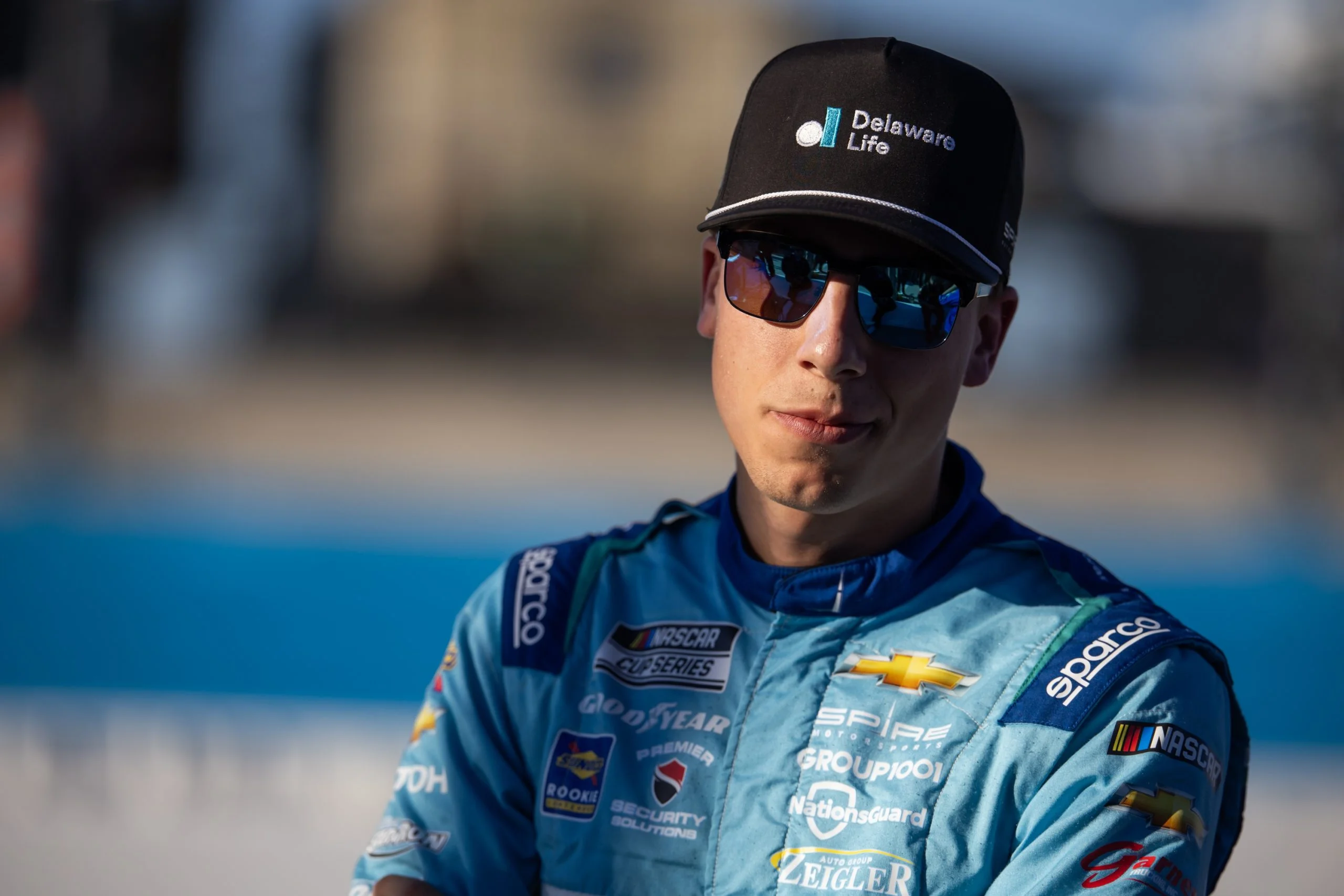
Carson Hocevar, known for his daring moves on the NASCAR track, has recently been at the center of controversy after an electrifying race at Talladega Superspeedway. The young driver’s aggressive style, criticized by veterans like Kevin Harvick, came under the spotlight as he maneuvered through intense clashes. These included a fierce battle between Cindric and Preece on lap 186 and a heated confrontation between William Byron and Kyle Larson on lap 174. With four cautions spanning 22 laps, the race at Talladega turned into a spectacle of skill and strategy, as drivers like Joey Logano and Zane Smith fiercely contested the lead.
This April, the Talladega Superspeedway became a theater of unpredictability, with 23 drivers exchanging the lead a staggering 65 times over 188 thrilling laps. Hocevar, a 22-year-old NASCAR Cup Series driver known for stirring up excitement, was instrumental in this chaos. He led the race in its critical stages, despite enduring a terrifying pit road crash with Josh Berry, Dale Earnhardt Jr.’s protégé. Though the incident could have derailed his efforts, the outstanding performance of Hocevar’s pit crew kept him in contention in a race eventually won by Austin Cindric, who edged out Ryan Preece by a mere 0.022 seconds in a nail-biting finish.
The pit road incident on lap 172 was gut-wrenching for spectators and crews alike. Amidst multiple drivers, including Kyle Busch and Chase Elliott, pitting under green, Berry overshot his pit spot and collided with Hocevar’s tire carrier. Miraculously, the crew member emerged unscathed from the ordeal. Berry, visibly shaken, took complete responsibility, triggering social media debates on pit road safety. While some fans advocated for stricter regulations, others praised the resilience of the crew member. Meanwhile, Hocevar’s team demonstrated their prowess, notably on lap 164, as they emerged first from pit road, ahead of renowned drivers like Ty Gibbs, Denny Hamlin, and Bubba Wallace.
Reflecting on the race, Hocevar expressed pride in his team’s performance.
“Yeah, I mean, I don’t know, were we leading? We were leading the pack. Yeah, I thought that was a good play,”
he noted, recalling his time in the lead around lap 115.
“Ultimately, coming with them, right, if the yellow comes out, you cycle the lead against the guys. Yeah, we knew, you know, we were able to execute really well on pit road. That was really big for us. Our pit crew did a really good job. Everybody did a phenomenal job. We had to change our element and do a lot of things and fight through a lot of adversity.”
His recollections capture the race’s relentless tempo, with 54 lead changes by lap 155 involving drivers like Ty Gibbs and Chase Briscoe.
Adding to the drama, a late-race encounter with Ross Chastain on lap 185 tested Hocevar’s composure. Amidst a three-wide battle for positioning, he remained unflustered.
“I mean everybody’s just trying to block lanes and just try to stall out, and I saw a quick hole and just filled middle, so I mean that’s just part of racing,”
Hocevar recounted.
“Just Ross (Chastain), I think, was just trying to get side-by-side with another car. Just good racing.”
His measured response belied the tension as Cindric, Preece, and Byron vied for the top position nearby. Positioned strategically in Stage 2 on lap 120 behind Wallace, Logano, Kyle Larson, and Cindric, Hocevar exemplified strategic foresight, especially after a helmet change during a lap 66 pit stop under caution.
The pressing question remains: does Hocevar’s assertive style indicate a resurgence of the raw, unpredictable NASCAR essence that fans crave? While some label him as NASCAR’s “next villain,” Hocevar showed signs of growth under pressure, hinting at possible future efforts to advocate for changes within the sport. Nevertheless, his current focus remains on expressing gratitude to his pit crew for navigating a race dominated by pit strategy, as shown by Preece’s successful pit on lap 171 and Briscoe’s daring fuel-only decision on lap 123. At Talladega, where each lap demands calculated risk, these victories are paramount.
However, despite the vibrant races, NASCAR faces dwindling enthusiasm. The engines may roar, but the passion seems to fade with half-empty grandstands and fans yearning for the electric atmosphere of yesteryear. The sport’s enchantment, exemplified by Jeff Gluck’s reminiscence of the 2004 Talladega race where Jeff Gordon’s victory thrilled spectators, now feels elusive. Hocevar candidly addressed this sentiment, highlighting how modern races lack the groundbreaking moments that characterized past thrillers, suppressed by commercialization and standardized next-gen vehicles.
“Social media and just the fact there isn’t much left that leaves you saying, ‘First time ever seeing something like that,’”
Hocevar commented on Gluck’s reflection. His insight underscores the repetitive nature of today’s races, overshadowed by sponsorships and orchestrated cautions. The nostalgia for legends like Dale Earnhardt and Gordon persists, as the raw, unpredictable charm of NASCAR struggles to keep pace with modern competitors like Netflix and other sports. Despite static TV ratings, the empty seats and waning fan enthusiasm tell the truer story.
Carson Hocevar emerges not only as a rookie poised to shake things up but also as a passionate racer urging NASCAR to heed the fans’ plight. As the engines roar, the core spirit of NASCAR remains lodged in the past, with many hoping for its resurgence. Hocevar, with his aggressive tactics and love for the sport, challenges NASCAR to revisit its roots before the indomitable heart of Talladega nights flickers out completely.

