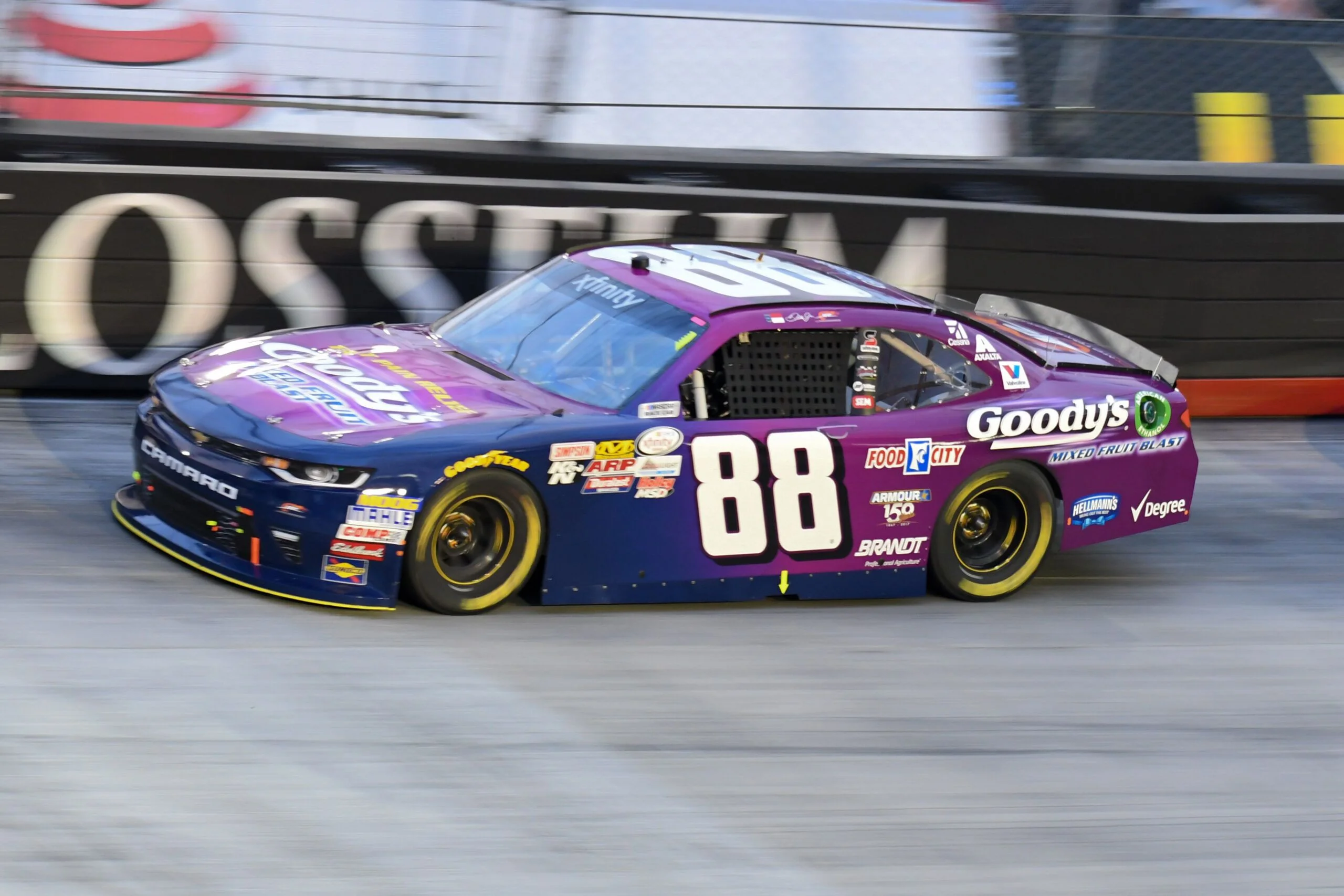
Dale Earnhardt Jr. has taken a strong stand in the ongoing debate surrounding the future of the NASCAR All-Star Race, as mounting criticism from fans threatens the continuity of this long-standing event. Since 1985, the All-Star Race has served as a highlight in the NASCAR Cup Series, offering a unique challenge without points on the line, yet recent controversies have led to growing pressure for the event to be removed, a move Earnhardt Jr. is determined to contest.
When speaking on his podcast, Dale Jr. Download, Dale Earnhardt Jr. voiced his frustration over calls to abolish the All-Star Race, arguing that its tradition and innovation make it irreplaceable. He questioned, “I’m like, why are we doing that? Why is that even a conversation?” Continuing in a candid tone, he insisted, “Why don’t we just fix it? The All-Star race is an awesome opportunity for us to try to learn something.” For Earnhardt Jr., the event provides a vital platform for experimentation, where teams and NASCAR itself can explore new ideas, test rules, and gather insights without the pressure of championship points.
The source of discontent among many fans, however, seems rooted in more than tradition. The recent implementation of the Promoter’s Caution, a rule enabling Speedway Motorsports and CEO Marcus Smith to throw a caution flag at any point under certain conditions, has especially unsettled the community. Critics describe this move as undermining the integrity of competition, giving one person excessive control, and diminishing the unpredictability so central to racing excitement. Additional frustration stems from perceived lack of meaningful stakes, confusing formats, and what some see as a lack of genuine action in the race itself.
Despite fan backlash, Dale Earnhardt Jr. maintains the importance of adapting rather than abolishing the race. In trying to address concerns and reignite fan excitement, NASCAR itself had floated the idea of a “Run what ya brung” format for this year’s All-Star event—a radical proposal that would have allowed teams to make whatever adjustments they wanted, provided safety standards were met. This format could have turned the race into a showcase of creativity and innovation, aligning perfectly with Earnhardt Jr.’s vision for the All-Star Race as a testbed for progress.
Nonetheless, the financial realities in the world of racing stalled this ambitious idea. Drivers like Denny Hamlin bluntly spelled out the logistical pitfalls, stating, “But I’m going to spend a million dollars just on parts and pieces that we haven’t even developed anything for yet. So, just in parts and pieces to replace all this that we’re going to modify, we’re going to spend a ton of money, and it only pays 1 million to win.” With the cost of building such a custom car potentially running over $2 million and a winner’s purse not offsetting the risk, most teams opted to forego the proposal, leaving fans and organizers grappling with how to spark excitement without sacrificing financial stability.
The heated debate over the All-Star Race’s future highlights deep divisions between the sport’s tradition, its evolving business realities, and the desires of its devoted fanbase. Dale Earnhardt Jr.’s passionate defense underscores what is at stake: not just the fate of a single event, but NASCAR’s willingness to innovate while respecting its roots. The outcome will likely shape how the sport balances experimentation, cost, and tradition moving forward, as both fans and insiders await the next chapter with a sense of unease and anticipation.