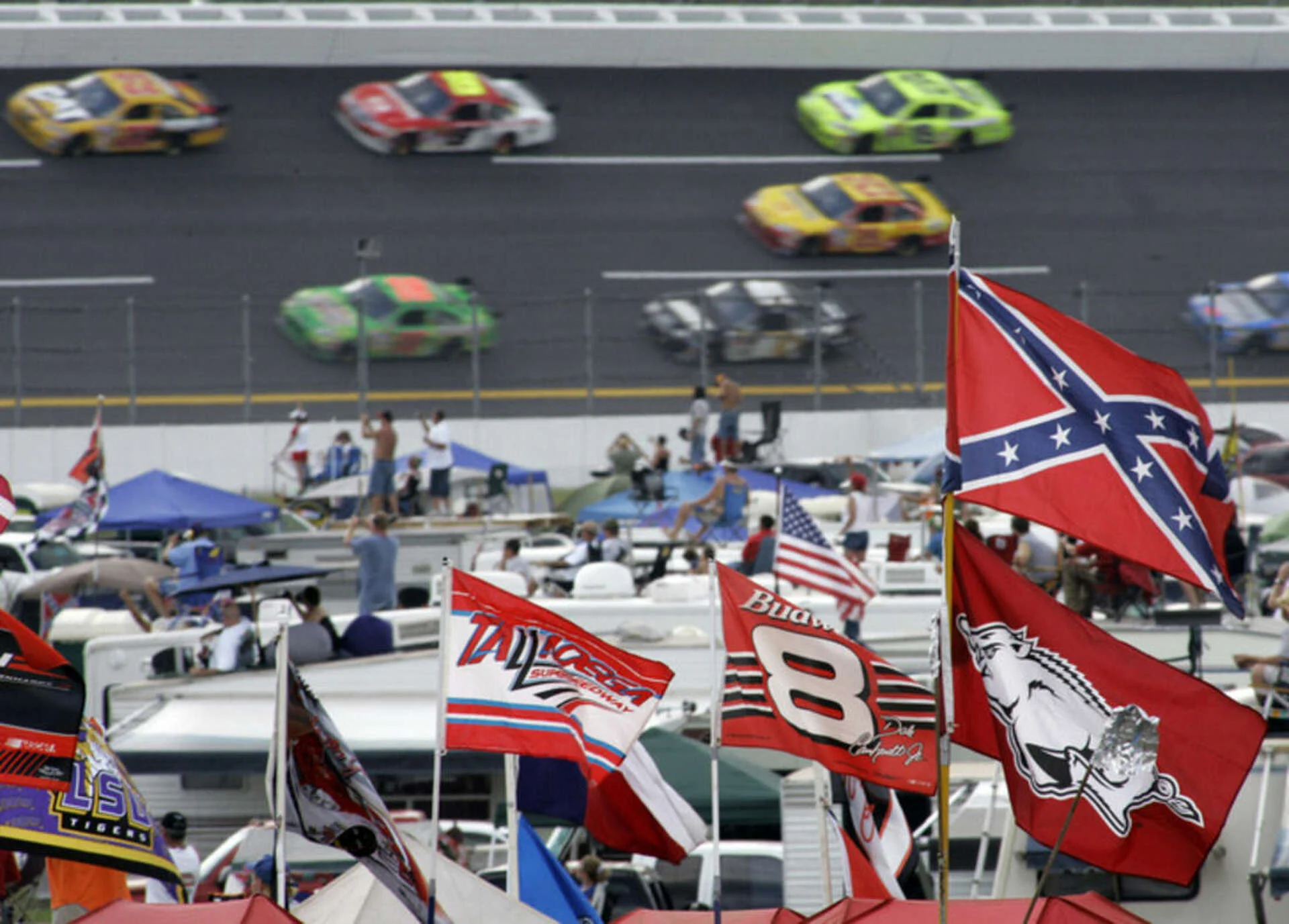
Dale Earnhardt Jr stance on Confederate flag in NASCAR has been a flashpoint, fueling controversy and debate across the racing community. When questions resurfaced in 2015, Earnhardt Jr did not shy away, firmly reiterating his opposition to the flag, just as his late father, Dale Earnhardt Sr, had years before. Both men, celebrated for their achievements on the track, took a hard stand against the divisive symbol, arguing that it held no rightful place in the sport, especially as attitudes in NASCAR evolved and fans from all backgrounds became more visible in the stands. Earnhardt Jr’s resistance, deeply personal and at times uncomfortable, cut through longstanding silence.
The legacy began with Dale Earnhardt Sr, who, after hearing from his African-American housekeeper about the discomfort caused by Confederate imagery, removed the flag from his property entirely. This moment deeply influenced Dale Earnhardt Jr, who in his 2001 autobiography recounted the pressure of confronting traditions that conflicted with his own convictions. He wrote,
As much as I brag about being a no-[B.S.]-tell-it-like-it-is-here’s-how-I-see-it kinda guy, I know that these are the fans that pay my salary, so I’m hesitant to tell him the rebel flag represents closed-minded, racist views that have no place in today’s society. Give ’em a straight answer and I may piss off the ‘rebels’ in the crowd… But I have my opinions and I don’t want to give a dishonest answer, either. I feel like the weight of the Civil War is resting on my shoulders.
This moment captures Dale Earnhardt Jr stance on Confederate flag in NASCAR perfectly—conflicted, frustrated, and weighed down by the expectations of an audience that, for years, normalized the flag’s presence. Even when facing public backlash or mixed reactions from fans, Earnhardt Jr chose honesty, saying,
I think it means something different to me than it does to y’all…
His acknowledgement of the controversy and willingness to speak against the grain marked a turning point for the NASCAR community.
Over the years, societal shifts began affecting not just racing, but broader American culture. The state of Mississippi held onto Confederate symbolism in its flag until 2020, indicating how slow the pace of change can be. Events at race tracks also reflected this tension; NASCAR, which previously promoted events tied closely to Confederate imagery, has steadily distanced itself, seeking to cultivate an environment more inclusive and welcoming to all fans.
The weight of Dale Earnhardt Jr stance on Confederate flag in NASCAR continues to resonate, intensifying debates about heritage, identity, and respect within the sport. By confronting the uncomfortable past and taking a public stand, Earnhardt Jr forced challenging questions into the public eye, stirring frustration and anger among traditionalists, but also pushing for much-needed change. The lasting impact is clear—future drivers and fans now face a world where these symbols are questioned, not accepted blindly, and where standing up for what is right comes with both personal risk and the hope of progress.