
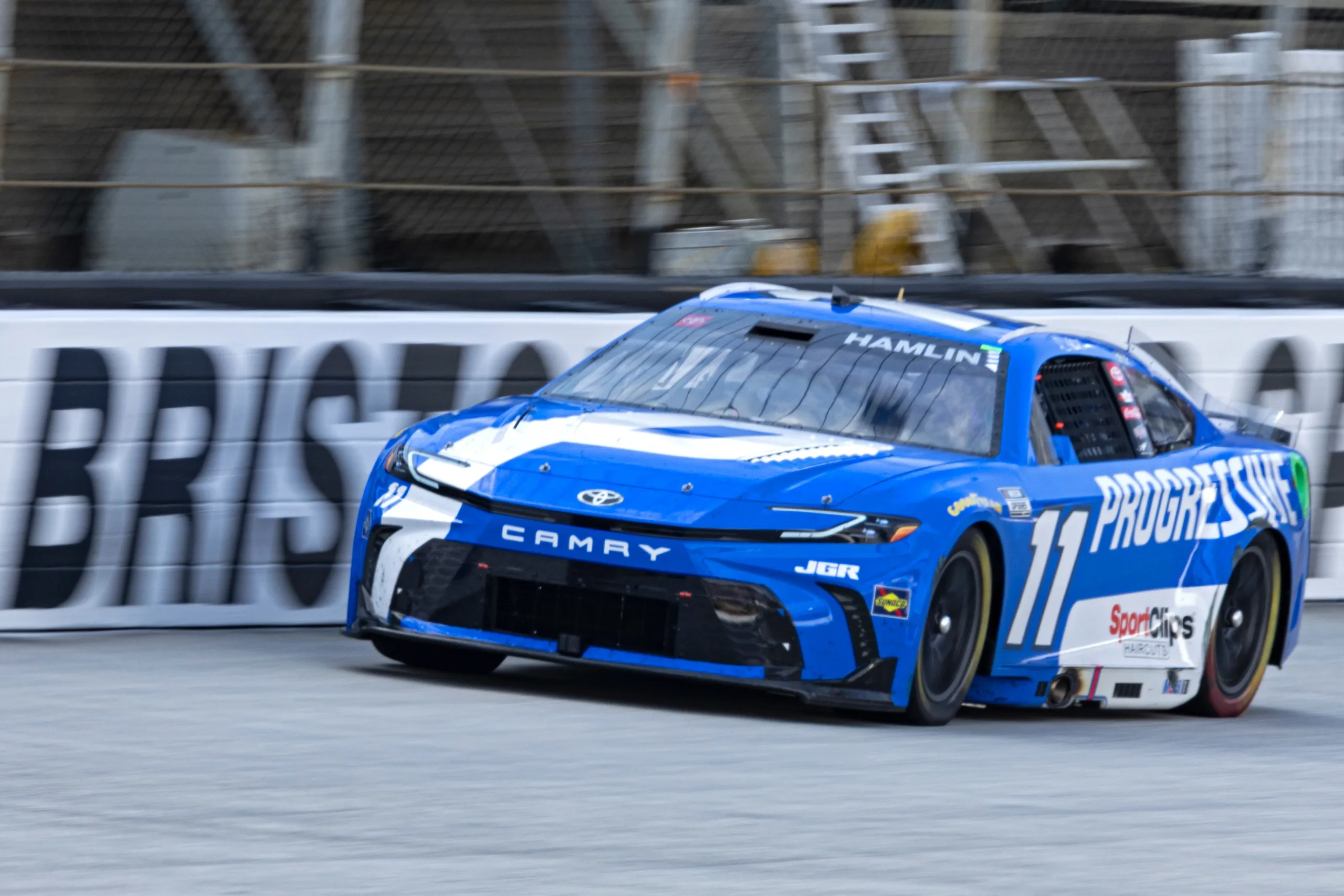
Denny Hamlin faced a terrifying moment on the track when his No. 11 Joe Gibbs Racing toyota/”>Toyota Camry burst into raging flames during a critical NASCAR event in Texas. The disaster unfolded quickly, with Hamlin frantically battling more than just his racing rivals—he contended with the searing heat, thick, suffocating smoke, and a cockpit suddenly alive with fire. The crisis was immediate and intense, captivating fans and fellow drivers who watched in stunned disbelief as the drama unfolded in front of a global audience.
Watching from the team bus, Denny Hamlin’s family, including his children and fiancée, endured agonizing moments as the flames threatened to engulf their loved one’s car. The emotional impact was searing, with Hamlin’s children shouting in terror, “Dad’s on fire,” their panic echoing the dire urgency of the situation. This heart-stopping ordeal left Hamlin racing not just against the clock, but against a disaster that might have ended far worse.
The fire that nearly overcame Denny Hamlin is not an isolated occurrence, but a symbol of growing concern within the sport. In recent races, multiple drivers, such as Ryan Blaney, have faced sudden and shocking engine failures, sparking a broader conversation about engine reliability and safety standards in NASCAR. Questions now circulate over whether enough is being done to protect those who risk their lives on the track with every lap.
These incidents carry a heavy emotional toll. For Denny Hamlin and others, the fear of catastrophic engine failure is now an ever-present shadow, creating an atmosphere of tension and frustration in the garage and on the starting grid. The pressure to perform, always high in NASCAR’s fiercely competitive environment, is now amplified by the unpredictable risk that the very machine meant to propel them to victory could become a blazing trap in an instant.
The broader NASCAR community is responding with calls for better oversight, improved regulation, and renewed attention to the financial and technical burdens facing teams. The recurring pattern of blown engines threatens not just the outcome of races, but the confidence of drivers and fans who have grown increasingly concerned about the frequency and danger of these fiery mishaps.
Denny Hamlin’s ordeal stands as a stark, unforgettable warning. His narrow escape has reignited urgent discussions about safety that cannot be ignored. In a sport defined by speed and risk, his experience has forced NASCAR to confront uncomfortable but necessary questions about its future and its obligations to those who willingly face danger each week for the thrill of competition.
As the smoke clears and Denny Hamlin recovers from this harrowing episode, the sport is left grappling with a sobering reality: the line between excitement and tragedy in NASCAR remains perilously thin. Fans and drivers alike hope that this latest incident will drive real change, protecting everyone who stakes everything for a shot at glory under the bright lights and roaring engines of professional racing.

