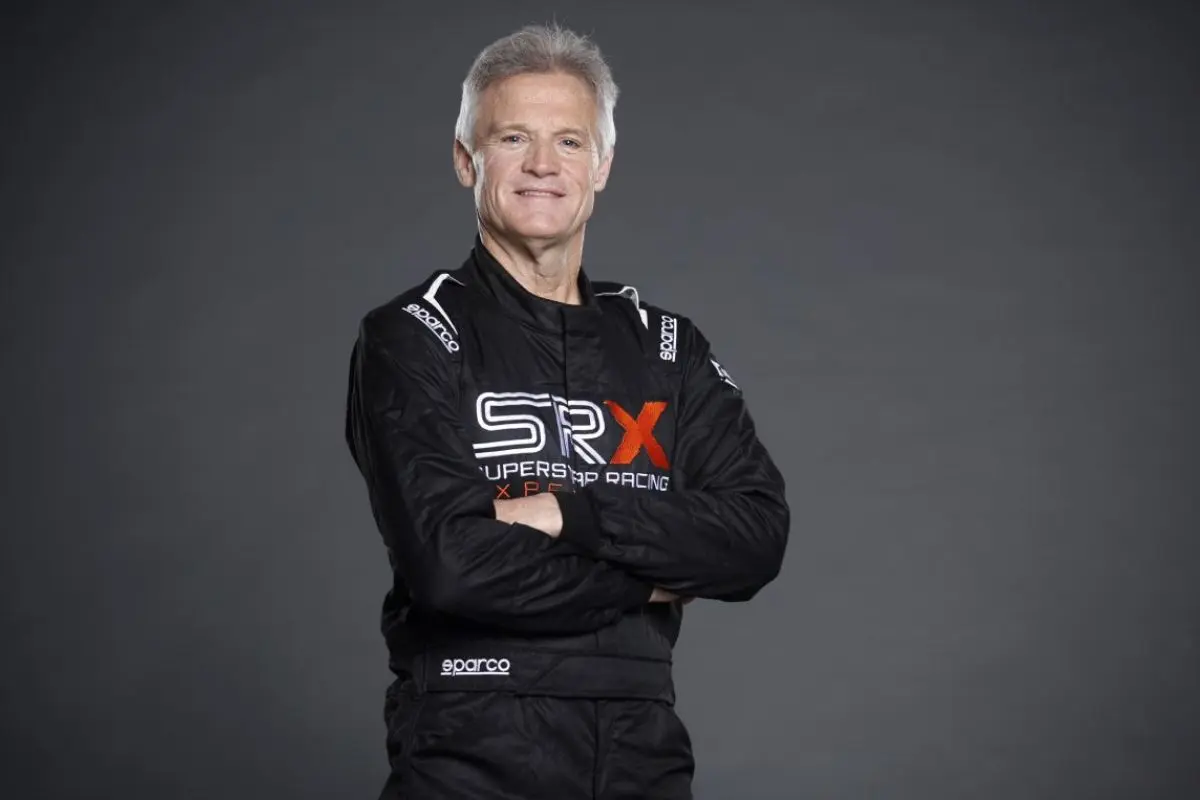
In a bold clash of NASCAR legends, Kenny Wallace sharply criticized Mark Martin’s opinion about the recent Kansas NASCAR race, igniting a spirited debate that has captured fans’ attention across social media. The disagreement unfolded shortly after Sunday’s 267-lap Kansas event, a competition dominated by Kyle Larson, where differing views from these respected former drivers sent waves through the racing community.
Both Kenny Wallace and Mark Martin have long been influential voices within NASCAR, usually backing each other’s perspectives and rarely seen on opposite sides of public debates. However, after the Kansas race, their views sharply diverged. The event at the 1.5-mile oval saw Kyle Larson, representing Hendrick Motorsports, command the race right from the pole position, leading 221 of the 267 laps and eventually securing his third victory of the season. This dominating performance sparked a wave of criticism and prompted fresh scrutiny of the race’s entertainment value from fans and insiders alike.
Chase Elliott, who initially built up strong momentum, fell behind after pit stop issues, while Christopher Bell and Ryan Blaney trailed in second and third place respectively. Despite the high-profile competition, the majority opinion following the race suggested a lackluster viewing experience marked by predictability and waning excitement. These sentiments were quickly measured when Jeff Gluck, a journalist for The Athletic, posted a poll on social platform X, asking followers, “Was Kansas a good race?”
The poll’s outcome indicated that only 58.5% of respondents considered Kansas a good race, a figure placing it lower compared to previous installments at the track and signifying a downward trend in fan engagement over recent weeks. Jeff Gluck’s summary highlighted this, noting Kansas ranked 14th out of 19 races held there, and specifically pointing out it was the first Next Gen Kansas race to fall under the 80% approval mark. According to Gluck’s analysis,
“The recent slump continues; first seven races had no races under 68% (including five races over 80%), and the last six races have all been under 59% (but Kansas was the best of those).”
Reacting publicly, Mark Martin stood by the race, reposting the poll with a confident stance:
“It was a good race. You could line them up tomorrow and get a completely different-looking race. You can’t make every race a three-wide finish.”
By challenging the widespread dissatisfaction, Martin encouraged fans to embrace each race’s different character, arguing that unpredictability does not always guarantee excitement or satisfaction in the outcome.
This perspective quickly drew polarized reactions, with some siding with the NASCAR Hall of Famer while others sharply disagreed. One notable response came from an X user, SuperstitionAZ, who politely countered Martin’s comments by highlighting issues such as tire wear and declining fan attendance compared to previous Kansas events:
“Respectfully disagree. Watching a single car simply dominate the race while those behind wait and watch for tires to wear isn’t entertaining. I recall the days when Kansas stands were full – not so anymore.”
This sentiment resonated with many fans calling for more competitive racing and fuller stands in the future.
It was at this juncture that Kenny Wallace stepped into the debate, making his position unmistakable. By reposting SuperstitionAZ’s reply, Wallace directed his criticism at Mark Martin’s take with a dose of sarcasm and humor:
“‘Some,’ the 20% even disagree with @markmartin!😂😂😂.”
The post quickly gained traction, amassing almost 7,000 views and intensifying the debate about what makes a NASCAR race truly entertaining.
The exchange between Kenny Wallace and Mark Martin has stirred considerable conversation throughout the NASCAR community, drawing attention to larger questions about the state of the sport. As fans and experts continue to voice their opinions, the debate centers not only on the Kansas race itself, but also on the evolving nature of competition and what audiences are seeking from future events.
The significance of Kenny Wallace openly challenging Mark Martin’s viewpoint underscores a shift in dialogue among racing icons, reflecting both the intensity of their passion and the changing expectations of the sport’s audience. With fan engagement and the unpredictability of races increasingly under scrutiny, this high-profile disagreement could influence how teams, organizers, and even broadcasters approach future competitions. As the dust settles from this fiery Kansas debate, all eyes remain on NASCAR’s next moves, and whether the constructive clash between Wallace and Martin might inspire needed innovation and renewed excitement for upcoming races.