
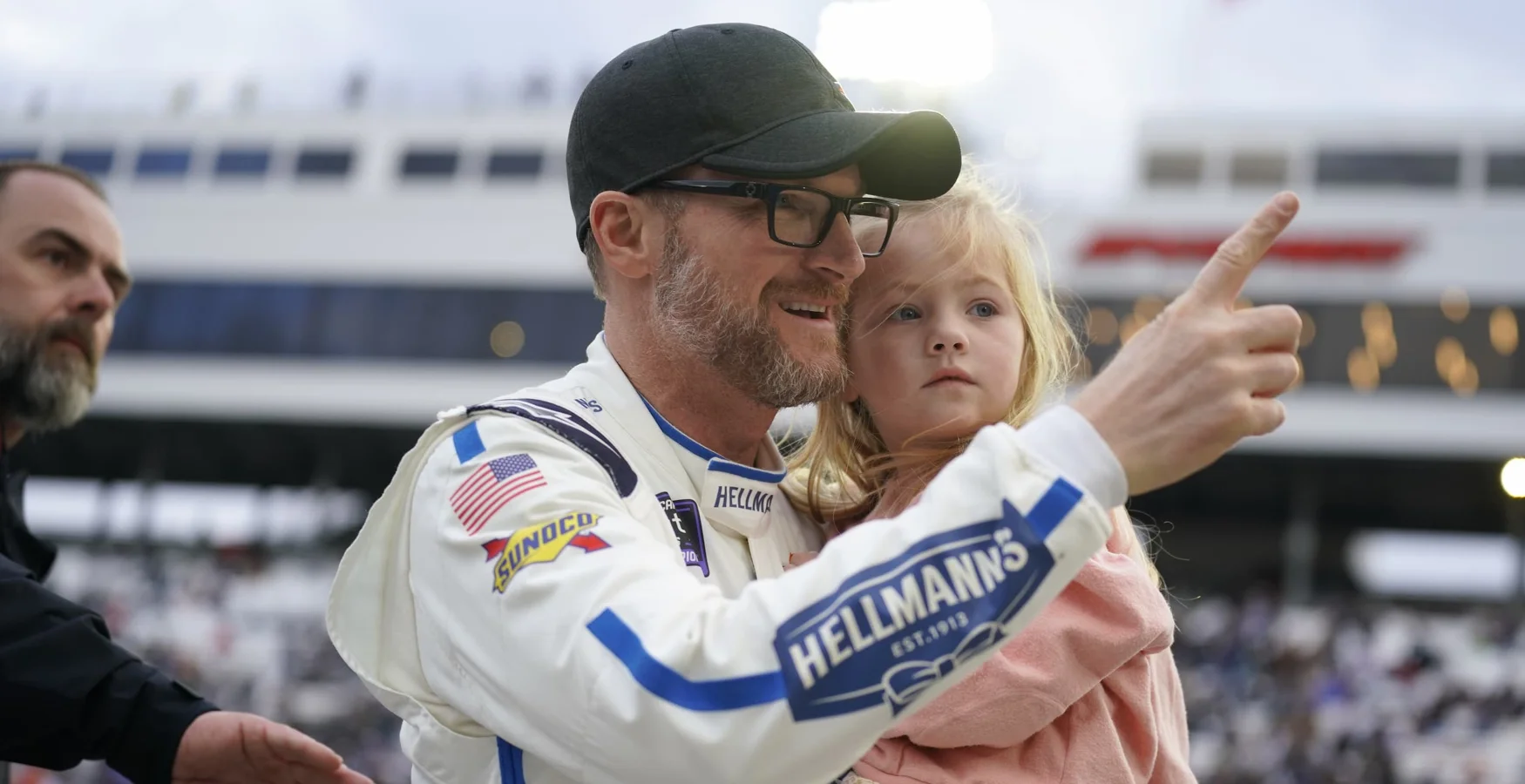
Dale Earnhardt Jr. has candidly shared the depths of his struggle following his father’s fatal crash during the 2001 Daytona 500, describing how the sudden loss left him numb and reckless in the aftermath. The story of Dale Earnhardt Jr. coping after father’s death highlights the enduring emotional impact on both his career and the NASCAR community.
A Rising Career Under the Watchful Eye of a Legendary Father
Before tragedy struck, Dale Earnhardt Jr. was swiftly rising through the NASCAR ranks. By 2001, he had already secured back-to-back championships in the Busch Series in 1998 and 1999, driving with the same aggressive, instinctive style for which his father, Dale Earnhardt Sr., was renowned. For many in motorsports, Junior seemed to embody his father’s legacy behind the wheel.
Despite his success, earning his father’s recognition was elusive. Dale Earnhardt Sr. reserved his pride for moments when his son won races, often failing to appear unless Junior stood victorious. This complex father-son relationship added weight to the moments they shared on the racetrack.
Their last race together at the 2001 Daytona 500 started with optimism as they began in sixth and seventh place. In a display of team loyalty, the elder Earnhardt protected his son and teammate Michael Waltrip’s positions, ensuring their strong run to the finish. As Waltrip and Dale Earnhardt Jr. secured the top two spots, Dale Sr. suffered a fatal crash on the final lap, his car colliding with the wall while shielding those behind him. The shocking loss sent Junior to the hospital, where he saw his father’s body behind a curtain—a moment that forever changed how he processed grief and racing itself.

Numbness and Turmoil in the Aftermath of Loss
In the days following Dale Earnhardt Sr.’s death, Junior became what many called the emotional anchor for his family and team, even as he felt empty inside. Friends and family described him as steadfast and calm during the most trying times, but he later disclosed that he experienced only a deep numbness, not the outward signs of grief one might expect.
Junior’s struggle manifested in an inability to recall key moments after the crash. He did not remember the journey back to Kannapolis, North Carolina, nor the family gathering at his grandmother’s house. While those around him looked for signs of mourning, none saw him break down in tears. He focused on appearing strong, suppressing his emotions beneath the surface.
Just a week after his father’s passing, NASCAR was back in session at Rockingham. Dale Earnhardt Jr. got into an accident just 23 seconds into the race—not out of sadness, but because apathy had overtaken him.:
“I didn’t care if I died. I didn’t want it to happen, but I was miserable in general all the time. I didn’t give a f***.”
—Dale Earnhardt Jr., NASCAR Driver
Two months later, at a practice in California, another crash forced him to confront his downward spiral. That incident became a wake-up call, prompting Junior to recognize the need to address his grief and regain a sense of purpose and care for his own survival.
Meanwhile, Dale Earnhardt Jr. also faced mounting legal challenges stemming from his father’s will, which left everything—including the racing team, various properties, and even Junior’s own car—to Dale Sr.’s wife, Teresa. Junior found himself not just battling emotional devastation, but also fighting to keep his racing career afloat amid family and business turmoil.
Resilience and the Lingering Effect of Trauma
Dale Earnhardt Jr.’s willingness to speak openly about his struggles has offered fans a rare glimpse into the vulnerability that even the most celebrated drivers can experience. His story reveals the unseen battles that follow tragedy, particularly for those lauded for their strength.
The events at Daytona and all that followed left a lasting mark on NASCAR and the Earnhardt family. As Dale Earnhardt Jr. continues to share his experiences with grief, loss, and the journey toward healing, his openness has helped reshape the conversation around mental health in racing and among fans worldwide. The journey of Dale Earnhardt Jr. coping after father’s death remains both a cautionary tale and a testament to the enduring human spirit when confronted with unimaginable sorrow.

