
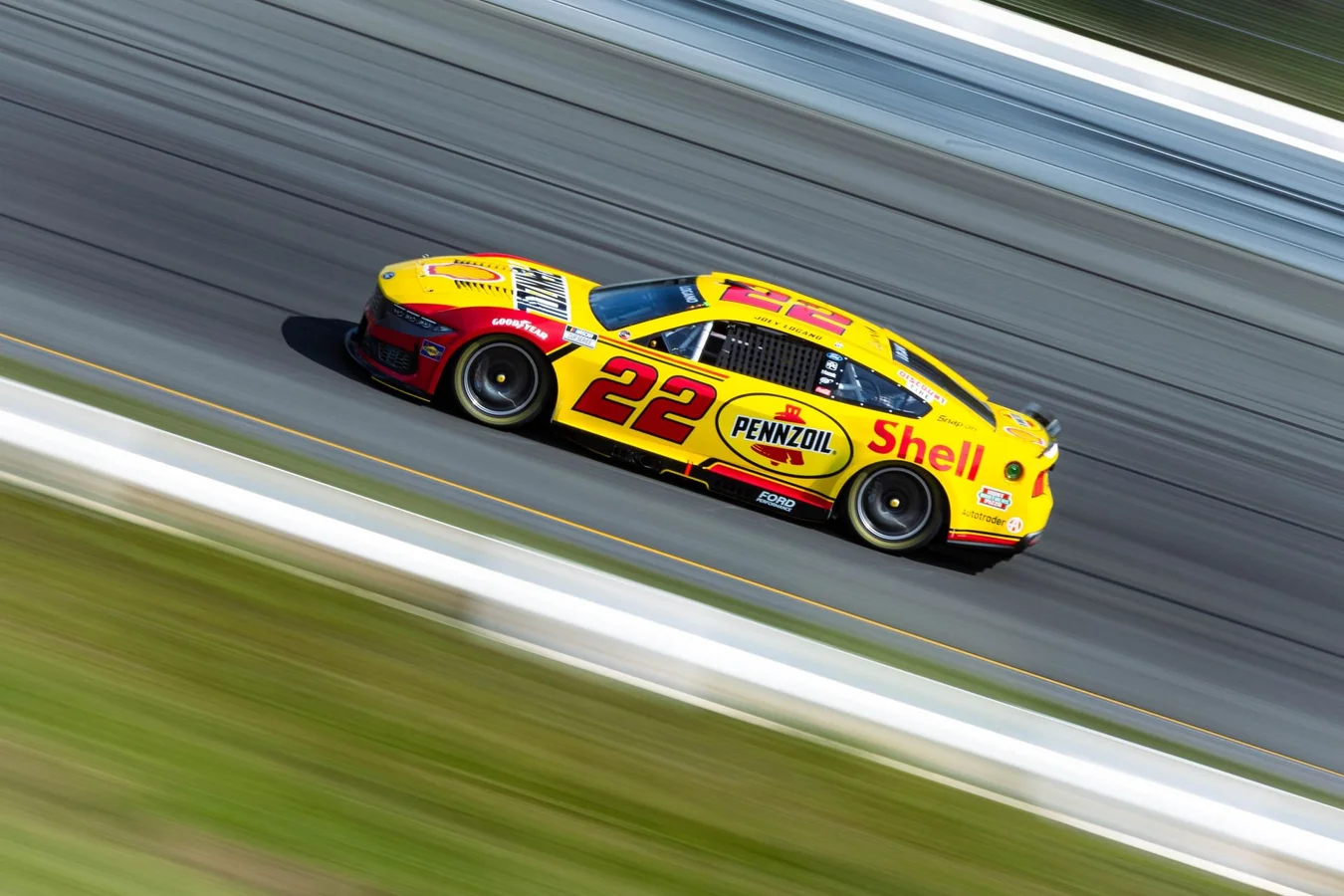
Joey Logano on NASCAR road course changes has become a heated point in the motorsport world as Logano aligns himself with Brad Keselowski in voicing concerns over NASCAR’s increasing number of road course races. Their remarks highlight a broader debate within the NASCAR community, where drivers, teams, and passionate fans are questioning whether this shift is diluting the essence of stock car racing and alienating long-time supporters.
Drivers Call Out the Surge in Road Course Races
Brad Keselowski, a key figure as both co-owner and driver for RFK Racing, recently remarked,
“Too many road courses in NASCAR,”
ahead of the Sonoma Raceway weekend. For years, road course events were rare exceptions in the NASCAR Cup Series calendar, serving as unique tests of driver skill among the more common oval races. However, as many as seven road course races are expected next season, raising concerns that traditional ovals are becoming sidelined.
Joey Logano, the reigning series champion with Team Penske, shares Keselowski’s viewpoint, expressing eagerness for NASCAR to return to ovals after consecutive weeks on road courses. While NASCAR’s ambition for international growth is evident with successful ventures like the race in Mexico City, this shift is contentious. Dale Earnhardt Jr. captured the nostalgia felt by many, stating,
“If I had my way, our as-es would be racing South Boston and all kinds of fun little race tracks. But it ain’t happening.”
The tradition of tracks like Watkins Glen, which has now hosted 41 Cup races, underscores how deeply embedded such venues are in the series’ history, but also highlights the changing landscape.
Joey Logano’s Stand on Track Variety and Competition
Joey Logano emphasized his position in a recent NASCAR Live podcast appearance:
“I’m with him. Maybe it’s been a couple of weeks in a row. I’m like, ‘Alright, I’m good. Give me back an oval or something that we’re used to. Something that, as drivers, and maybe as race fans too, we’re used to watching.’ I’m good with going back at ovals. But I also say, I do like that we do different things every week. I say that all the time. NASCAR racing is awesome because we don’t have to do the same type of racing week in and week out.”
—Joey Logano, Team Penske Driver.
Logano has only one road course victory, achieved at Watkins Glen on August 15th, where starting 16th, he led just one lap that secured the win against Kevin Harvick. His appreciation for varied racing is evident:
“We go to all the different types of tracks, different disciplines of racing. That to me will always be attractive to me as far as being a racecar driver.”
—Joey Logano, Team Penske Driver. Nevertheless, the diversity introduced by road courses is not uniformly celebrated.
Fans Voice Frustration and Yearning for Oval Racing
The influx of road course specialists, such as Shane van Gisbergen—who dominated at both Sonoma and Chicago, leading 92 laps at Sonoma—has contributed to a perceived lack of competition by some. Many long-term fans and NASCAR purists consider these events less exciting and have made their dissatisfaction clear. One subscriber to a motorsports newsletter shared bluntly,
“Real simple! I have no interest in road courses. Boring. Mostly no competition.”
—Fan, Newsletter Subscriber. Another remarked,
“Why is NASCAR trying to reinvent a product that was already great?”
—Fan, Newsletter Subscriber. This feedback reveals a widening rift between maintaining traditional oval racing and adapting to new formats and global audiences.
Stock car racing enthusiasts, particularly those who remember NASCAR’s roots and glory days on ovals, are now feeling sidelined as the governing body adapts the schedule. This tension is also reflected on the grid, as the majority of active NASCAR drivers are not highly experienced in road course racing, leading to domination by specialist drivers and, at times, less competitive race fields. The fanbase remains divided, with many openly expressing their hopes for a return to the oval tracks that defined the identity of NASCAR.
Debate Persists Among Drivers Over NASCAR’s Direction
While some veterans lobby for tradition, other drivers have adapted to the series’ evolving makeup. Bubba Wallace, once openly critical, saying,
“I’d like less road course races,”
now admits,
“I’ve enjoyed the road course stuff, so I’m good with it.”
—Bubba Wallace, NASCAR Driver. This shift in attitude is becoming more prevalent as drivers work to remain competitive in the points standings, acknowledging the growing importance of road courses to their overall season performance.
Christopher Bell, driving for Joe Gibbs Racing and averaging a 14.0 finish on road courses, also accepts this new reality.
“I’m good with it. I don’t really know where we stack up. Are we right in line with what we’ve had the last couple [of] years? I like it. I think it’s enough now where the teams and the drivers have to take it seriously.”
—Christopher Bell, Joe Gibbs Racing Driver. He further underscores the importance for competitors:
“You have to be good at them if you want any chance at doing well in the season standings.”
—Christopher Bell, Joe Gibbs Racing Driver.
This willingness to evolve is likely a necessity, especially as NASCAR eyes further international events and seeks to broaden its audience beyond its American core. While the majority of races remain on ovals and classic venues like Dover and Daytona International Speedway in Florida attract significant attention, the dialogue around road courses is now central to the sport’s identity.
Authenticity Versus Evolution: NASCAR’s Dilemma
At the core, NASCAR’s move toward road course racing presents a conflict between honoring the history of iconic venues and embracing a strategy aimed at globalizing and modernizing the sport. Champions like Joey Logano, vocal team owners such as Brad Keselowski, and legendary figures like Dale Earnhardt Jr. contribute to the robust debate, ensuring all perspectives—from drivers to race fans—are represented. Meanwhile, organizations such as Team Penske, Joe Gibbs Racing, and RFK Racing continue adjusting their approaches, with eyes on both success on the track and connecting with an evolving audience.
For now, the balancing act continues. While traditionalists hope for a stronger return to oval racing, NASCAR’s leadership must weigh these wishes against the imperatives of growth, competition, and international reach. The sport stands at a crossroads—rooted in decades of heritage yet propelled by changing preferences, a new generation of stars, and expanding ambitions across the globe. Whether oval tracks or road courses come to define the next era of NASCAR may ultimately hinge on how well the sport honors its past while navigating its future.
Our Reader’s Queries
Q. Does Joey Logano have cerebral palsy?
A. Joey had a tough birth that caused bleeding in his brain, leading to Cerebral Palsy. Because of this condition, he needs regular physical therapy sessions.
Q. What medical condition does Joey Logano have?
A. When his hair didn’t return, Logano visited a doctor for a diagnosis. He learned he had alopecia areata, an autoimmune condition often affecting those under 30.
Q. What illness does Joey Logano have?
A. A stomach bug was the problem. Logano pushed on until the race finished, despite feeling unwell.
He told reporters from CBS Sports, “I had the Norovirus. I thought I was fine, but right before the race, I realized I wasn’t.”
Q. What disease does Joey Logano have?
A. Joey Logano, the current NASCAR Cup Series champion, mentioned that norovirus forced him to seek medical help at the Darlington Raceway after last week’s event. The Team Penske driver explained he had been feeling unwell all week before the 400-mile race, which took place in unusually warm 89-degree temperatures.

