
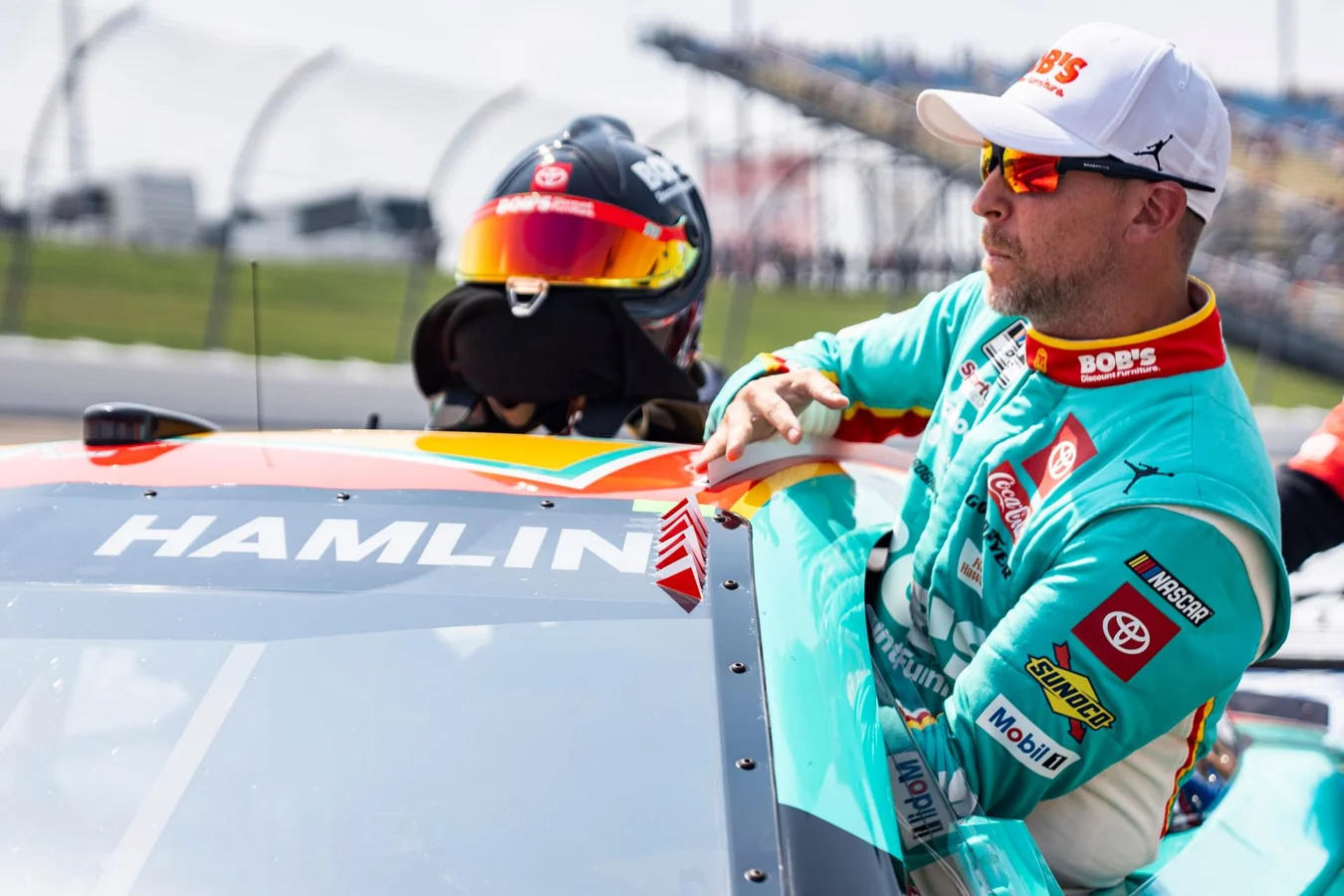
Denny Hamlin criticizes Dover All-Star race plans as NASCAR considers moving its prestigious exhibition to Dover Motor Speedway, raising widespread concern among drivers and fans alike. With the potential shake-up, questions circulate about the suitability of the track and the possible loss of important point-paying races at a fan-favorite venue.
Hamlin Challenges NASCAR’s Move to Dover
As speculation grows, Denny Hamlin, the veteran driver for Joe Gibbs Racing and 23XI Racing, has voiced major apprehensions about NASCAR’s rumored plan to host the All-Star race at Dover Motor Speedway. Speaking on the latest episode of his Actions Detrimental podcast, Hamlin drew attention to the strong attendance and exciting competition the track produces during point-paying events. Yet, despite these positives, he argues that transferring the All-Star event to Dover could harm both fans and teams due to the specific characteristics of the track.
Surely, they can’t be talking about replacing Dover’s point race, right? … We had such a great fan turnout when it was 120 degrees, it was like being on the sun…Again, hopefully they’re not thinking this one all the way through because this is not the best choice. Dover is just not an All-Star type of racetrack.
—Denny Hamlin, via Actions Detrimental.
Hamlin’s frustration stems partly from fears that the move might remove a valuable point race from the Dover schedule, a concern that extends into a broader debate about what races deserve prime slots. He underlines that Dover has drawn strong crowds—even in challenging summer conditions—and should not lose its staple events just to accommodate a showcase exhibition.
Another challenge highlighted by Hamlin is the suitability of Dover for the All-Star race format. The track has achieved a reputation for quality racing in standard-length events, but the unique characteristics of the All-Star event may pose problems. Dover notoriously takes 30 to 40 laps before tire rubber accumulates, which then enables side-by-side racing—something difficult to achieve during the short runs that define the All-Star format.
That track is one where it needs rubber on the racetrack to then widen out and then you can start making passes. But that doesn’t happen until 30 to 40 laps into a run, and the All-Star Race is made up of short runs. There’s just not going to be any passing…
—Denny Hamlin
For entertainment, which lies at the heart of the All-Star race’s appeal, limited opportunities for overtakes and duels in a condensed event could lead to lackluster competition, risking the $1 million showcase race not living up to its billing.
Concerns About Race Format and Team Fatigue
Denny Hamlin has also criticized the broader scheduling philosophy, noting that the current NASCAR Cup Series calendar is punishing for drivers and teams alike. As the season grinds on with only one mid-week break, Hamlin advocates not only for keeping Dover’s points races intact, but also for reconsidering the need for an All-Star weekend altogether.
Why don’t we just give the damn teams a week off? Like, they are running us through the grinder. It is a grind trying to get to the racetrack every single weekend. Definitely would enjoy another break, and I just don’t see the need of trying to force this.
—Denny Hamlin
With teams experiencing unrelenting demands, Hamlin believes that skipping the All-Star event would give much-needed relief. This sentiment taps into the persistent theme of physical and mental fatigue endured by pit crews, drivers, and support staff over a grueling season. In Hamlin’s view, the cost of forcing an exhibition at Dover may outweigh any intended benefits for entertainment or competitive spectacle.
The Debate Over Dover’s Future in NASCAR
The possibility that Dover could lose its point-paying race entirely has sparked lively conversations among fans and insiders, particularly with the All-Star race location in flux. NASCAR, according to Hamlin and others, is unlikely to host three annual events at the same track, meaning the introduction of an All-Star race at Dover could leave the historic venue at risk of significant downgrades.
I just hope there’s no way they could be going from two points races to none at Dover. The fan turnout’s been good there, I don’t know why you would do that. And then, you got to put in temporary lighting. Surely, we won’t run in the middle of the day in July. Who knows.
—Denny Hamlin
Hamlin’s remarks highlight practical obstacles as well, such as the complications of hosting an event in July and the need for temporary lighting—neither particularly ideal given the region’s summer heat and logistical issues. The reaction of other industry insiders and drivers has largely mirrored Hamlin’s frustration, reinforcing his stance that Dover is not a natural fit for the All-Star experience. Venues like North Wilkesboro have been suggested as superior alternatives for the exhibition, with calls to preserve Dover’s traditional calendar slot for regular season competitions.
Supporters of Dover have pointed to the venue’s consistent fanbase and the racing pedigree demonstrated during the Next-Gen era. Many argue that NASCAR’s attempts to experiment with the All-Star format should not come at the expense of the sport’s established venues or core customer base.
What’s at Stake for Fans, Drivers, and Racing
The outcome of this debate will have lasting consequences for NASCAR’s competitive landscape, fan engagement, and the logistical well-being of teams. Should Dover Motor Speedway lose a primary race, it could undercut the fan enthusiasm that has made Delaware a staple in the Cup schedule. Meanwhile, drivers like Denny Hamlin remain outspoken, insisting that any decision must balance showmanship, fairness, and the long-term interests of those who fuel the sport week in and week out.
As NASCAR weighs its options, the perspectives of seasoned figures such as Hamlin carry significant weight in shaping the future of the All-Star race and the iconic tracks that have defined Cup racing for generations.

