
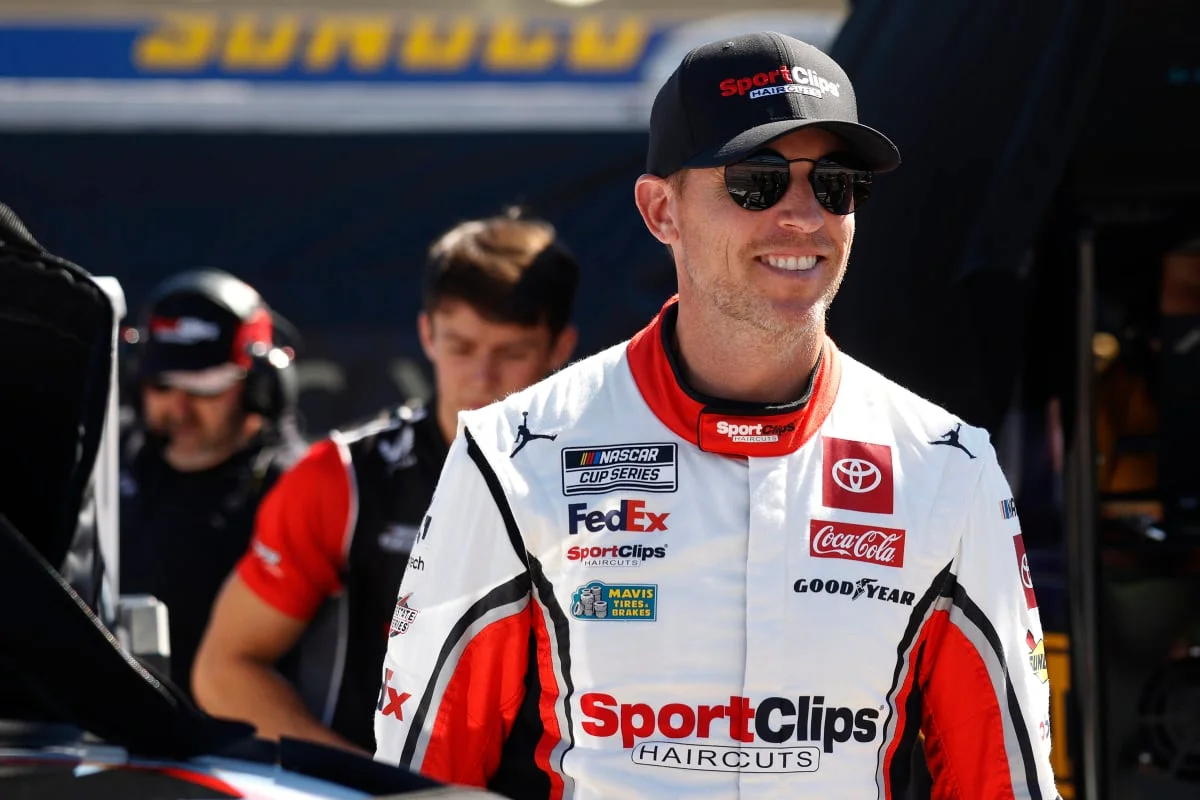
Denny Hamlin’s possible retirement is drawing attention as NASCAR debates significant rule changes, affecting how drivers like Hamlin might approach the rest of their careers. The conversation about Denny Hamlin retirement NASCAR rule change comes as the racing veteran approaches the final years of his time with Joe Gibbs Racing and faces both personal and professional questions about his future on the track.
Hamlin Weighs His NASCAR Future as Regulations Shift
Earlier in August, Denny Hamlin signaled the limited number of chances left in his racing journey, stating,
“I’ve only got two more chances at this — damn it.”
—Denny Hamlin, Driver. This comment came as Hamlin reflected on the two-year contract extension with Joe Gibbs Racing, confiding in fans that while he’s older than he intended to race, he remains focused on that elusive Cup Series championship. Although he once planned to retire by age 38, Hamlin has continued deep into his 40s, repeatedly hinting at retirement but not committing to a definitive end date.
NASCAR introduced rules in 2017, restricting Cup Series drivers competing in the Xfinity and Truck Series to just seven races per season, later reduced to five in 2020. Now, with executives floating the idea of raising this cap, seasoned drivers like Hamlin face a new landscape that could prolong or reshape their participation in different series. Still, the appeal appears limited for Hamlin as he nears the end of his racing years, suggesting the changing rules may not influence his personal trajectory as much as fans might expect.
NASCAR’s Rule Changes Create New Choices for Veterans
Before these limitations, Cup Series stars often dominated their younger counterparts, with drivers like Kyle Busch setting records—Busch still holds the highest win counts in Xfinity (102) and Truck (67). O’Reilly Auto Parts joining as a title sponsor is now prompting NASCAR to consider permitting Cup Series drivers to enter more Xfinity and Truck races, potentially reviving this pattern. Regular contenders, including Ross Chastain, Kyle Larson, and Christopher Bell, could further capitalize on increased opportunities in the lower series. Hamlin, however, seems unmoved by NASCAR’s reconsideration, despite his noteworthy 58 career Cup Series victories, which tie him with Busch for the most under Joe Gibbs Racing. Yet, by comparison, his 18 Xfinity and 3 Craftsman Truck Series wins are modest.
Discussing the barriers to further competition in the lower series, Hamlin expressed frustration about sponsorship hurdles, saying,
“I’d love to. Obviously, we let this one slip. But they need to find a sponsor. If JGR had the opportunity to put me in an Xfinity car, don’t you think they would do it? But they gotta go find a sponsor. They can’t afford to just put me in a car. That’s what’s crazy.”
—Denny Hamlin, Driver. Hamlin’s record goes back to 2004 when he entered both the Truck and Xfinity circuits, followed by his Cup Series debut a year later, all with strong ties to JGR. Despite a thriving career, he hinted at shutting the door on future lower-tier entries, sharing,
“I want my last one, but I’m retired for now.”
—Denny Hamlin, Driver.
Still, Hamlin’s comments reveal the complexity of his motivations:
“I mean, winning doesn’t mean that much to me. Does anybody wanna sponsor me? …I just wanna run one. But I just envy how the Xfinity cars draft. I love the spacing between the cars and how you can move. Uh, I wanna do it, just one more time.”
—Denny Hamlin, Driver. These conflicting feelings illustrate how sponsorship, championship ambition, and nostalgia all factor into Hamlin’s thought process as NASCAR evolves.
The Debate over Cup Drivers in Lower Series Intensifies
The topic of rule changes has reignited long-running debates among NASCAR insiders about whether it benefits the sport for elite Cup drivers to compete with lesser-experienced racers in lower-tier series. Dale Earnhardt Jr., representing team owners and industry veterans, explained the strain these developments may create for Xfinity and Truck outfits. He described the planning that goes into building teams and how dominant Cup-level drivers like Kyle Larson and Christopher Bell make it harder for low-budget teams to achieve success.
Dale Earnhardt Jr. highlighted how the earlier reduction in Cup drivers’ participation helped other teams find new success. He recalled,
“When Kyle Busch quit running 25 races a year, right? Or you know, Carl Edwards and all these other guys, when they stopped running all these races and winning half of them or more, teams like ours started winning races. To go backwards would be tough for us. I encourage competition, and I think it’d be good if they could run more, but there’s a balance.”
—Dale Earnhardt Jr., Team Owner. This argument underscores the ongoing uncertainty about whether increased Cup driver involvement is a step forward for the competition or a setback for emerging talent and team diversity.
The Broader Impact: What Lies Ahead for NASCAR and Denny Hamlin
As NASCAR considers a potential loosening of race participation rules for Cup veterans, both opportunities and frustrations loom. While notable names such as Kyle Larson, Christopher Bell, and Ross Chastain may benefit if the caps on lower-tier series appearances are raised, team owners and smaller outfits fear losing ground. Denny Hamlin, meanwhile, remains caught between his quest for a Cup Series championship, sponsorship realities, and a genuine love for racing—leaving fans and stakeholders guessing about when and how his career might close.
The ruling’s outcome will have ripple effects throughout NASCAR, shaping the balance between established stars and rising talent. For Hamlin, changes to the landscape may offer new possibilities, but with his contract end approaching and his own words considering retirement, the decision is uniquely personal. In the coming seasons, as NASCAR finalizes its approach and as Hamlin weighs his choices, the sport and its followers will continue to watch how this blend of regulation, opportunity, and individual ambition plays out.

