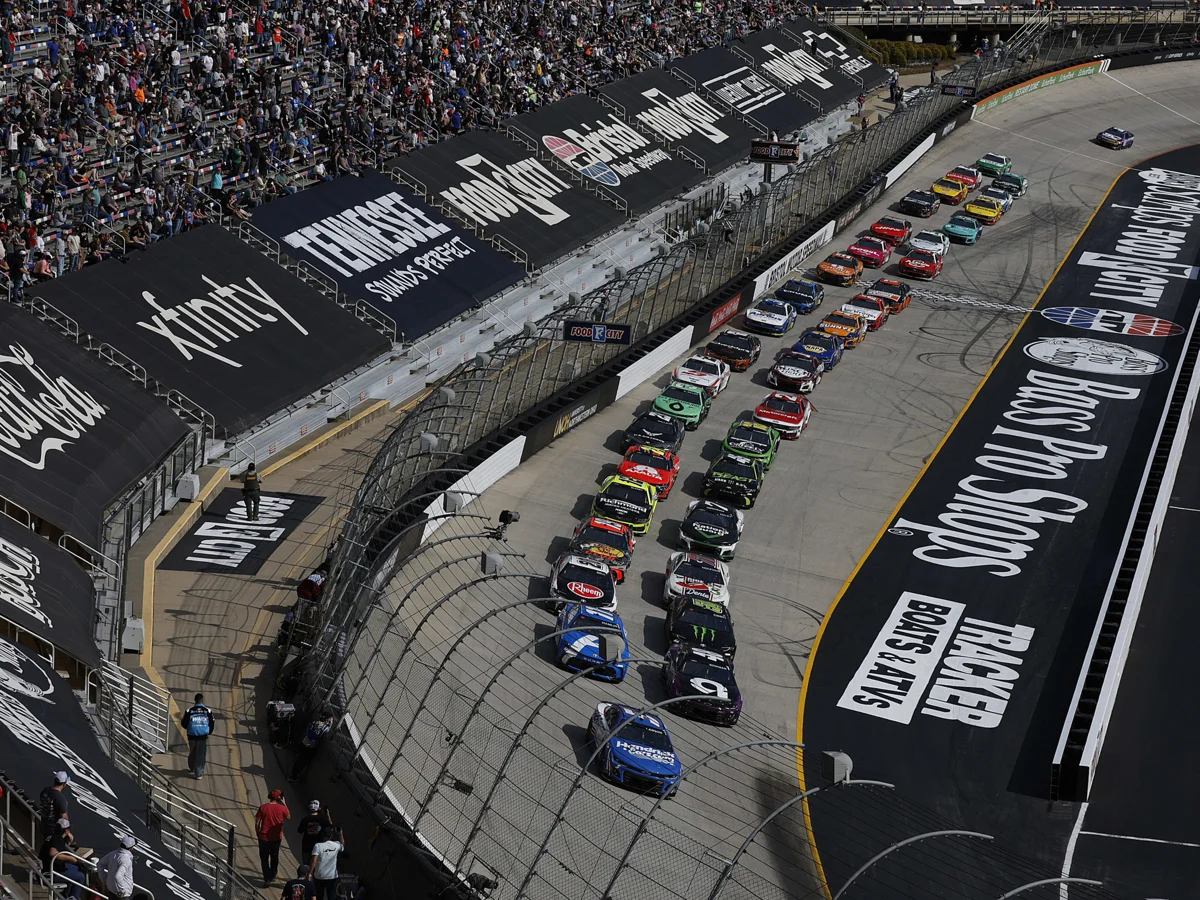
William Byron expressed his frustration with the tire performance provided by Goodyear during the Bass Pro Shops Night Race on September 13 at Bristol Motor Speedway, making clear his disappointment in a series of intense radio communications. The issue drew attention to Goodyear’s softer right-side tire compound, which struggled throughout the high-banked oval’s demanding race conditions and left Byron, along with other drivers and teams, searching for answers.
Goodyear Tire Selection Creates Unexpected Challenges
Goodyear, NASCAR’s sole tire supplier, introduced a softer right-side tire for the Bristol event, aiming to address the track’s low tire falloff. However, practice sessions saw teams pushing their tires past 70 to 80 laps, but when the main event began, tire degradation accelerated more than expected. AJ Allmendinger, starting from pole position, lost the lead after only 24 laps as his right-side tires wore down quickly, forcing him to pit from 12th to replace a damaged set. Meanwhile, Ryan Blaney adapted by changing strategy mid-race, moving through the field and winning Stage 1 after a decisive overtake of Ty Gibbs.
As tire issues impacted the field, William Byron began to lose ground, slipping from the top ten during the race. NASCAR reporter John Newby documented Byron’s radio exchanges, underscoring just how disruptive the tires were to both driver strategy and performance. Byron did not hold back in describing his frustration over the radio:
“These, these are bad. These are sh*t,” William Byron says. “I was obviously stuck up there, but these are terrible.” Rudy Fugle responds by saying that everybody will have to use every set of tires and that they will get through it.”
“This is f*cked, this is f*cked. Our right rears are f*cked,” William Byron complains. Rudy Fugle says his current lap times are fine and that he needs a few more laps before they pit. “This is your lap time, 17.60. We gotta keep going until we get an 18.0,” Newby further reported.
Playoff Implications for Hendrick Motorsports Drivers
Despite the tire troubles faced by Byron, his Hendrick Motorsports teammate Kyle Larson managed to progress to the Round of 12 in the playoffs regardless of a 24th place Stage 1 finish. Larson’s substantial playoff points, accumulated earlier, allowed him to move forward in the championship even on a challenging night. Byron entered the third playoff round ranked sixth, maintaining a 39-point cushion above the elimination cutline, making the outcome at Bristol critical for his championship aspirations.
Bristol’s Unique Atmosphere and Byron’s Race Record
Before the 500-lap main event, William Byron reflected on the unique feeling the Bristol Motor Speedway delivers with its close-set spectators and colosseum-like structure. Known as “the last great colosseum,” the venue provides drivers with a rare stadium-like intensity. Byron described his enthusiasm for Bristol’s atmosphere, especially when compared to more spread-out tracks like Pocono:
“It’s cool. I think it’s just a really unique place… kind of has that football stadium atmosphere, which is rare for us, I feel like. So, it just kind of gives you that little bit more adrenaline boost before the race than some of the places that are more spread out, like if you were to go to Pocono or something. It’s a little bit… the fans are really distant from you,” he said via NASCAR’s Instagram channel.
“So I would say just a much different feel here, like more of a stadium feel than other places we go,” he added.
Byron’s recent Bristol results have shown potential, with a sixth-place finish in the spring after starting from the 26th position, even as low tire wear often made overtaking difficult. Despite never claiming a win at Bristol’s half-mile concrete track, his best performances have been third-place finishes in both the 2021 and 2022 races.
Significance of the Tire Controversy and What Lies Ahead
The frustration voiced by William Byron centers the conversation around tire selection and durability at uniquely demanding tracks like Bristol. With tire performance playing a crucial role in strategy and race outcomes, teams and drivers will likely push Goodyear and NASCAR for more predictable and durable compounds. As the playoffs advance, tire management and adaptability remain key for Byron, Hendrick Motorsports, and all teams hoping to maintain their momentum through the next crucial rounds.