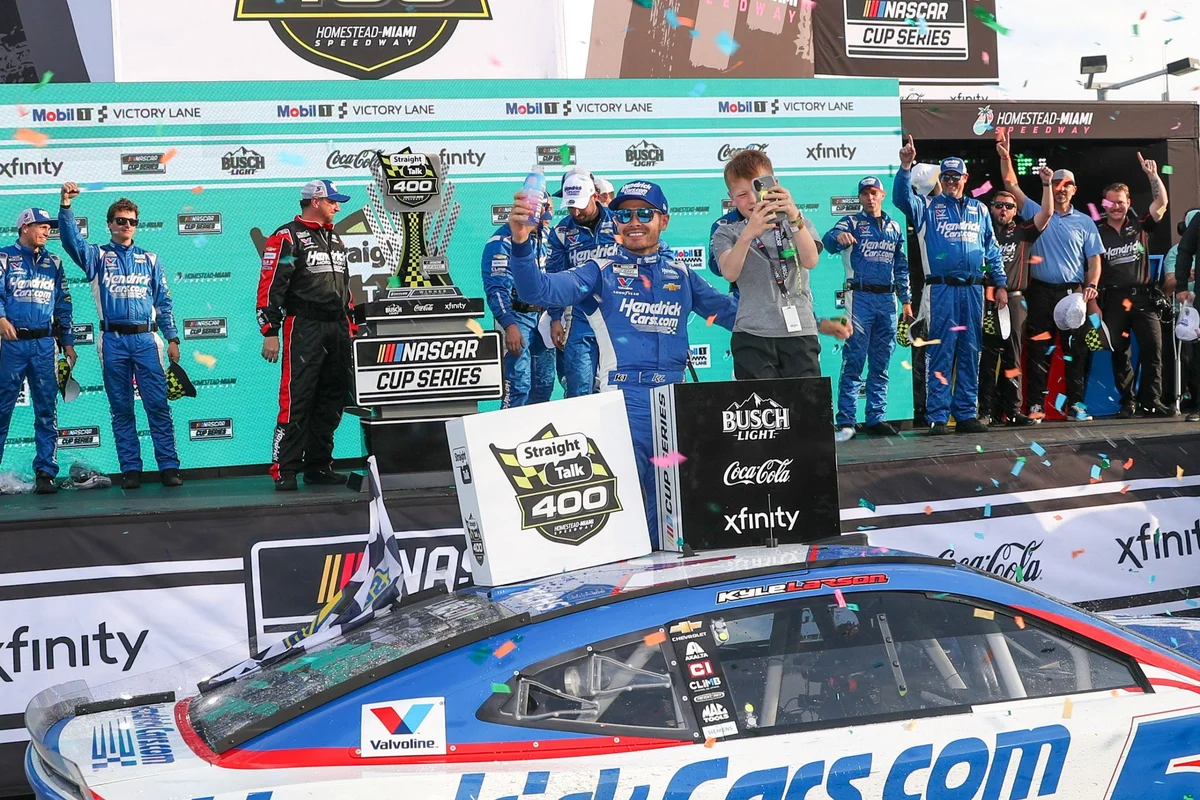
Kyle Larson High Limit Racing is poised to introduce a controversial franchise system to its sprint-car series, following the model made popular in NASCAR. After only a few seasons, co-owners Kyle Larson and Brad Sweet are seeking to change the landscape of sprint-car racing by offering team owners the chance to invest in franchise slots, but this move comes amid uncertainty and questions about timing and risks.
High Limit Racing’s New Direction: Franchising Takes Center Stage
The High Limit Racing series, established by renowned drivers Kyle Larson and Brad Sweet, began its journey in 2023 and drew heavy inspiration from NASCAR’s structure. As competition within the series intensifies, Sweet has proposed a franchise system, mirroring the Charter System familiar to NASCAR participants, where team owners buy the right to a permanent slot within the field. This move signals an effort to bring greater professionalism and consistency to sprint-car racing, a sport traditionally characterized by independence and race-by-race participation.
Sweet’s vision draws on the idea that team owners will purchase a fixed number of ownership slots, with each franchise acting not just as a simple right of entry, but as an asset that can later be sold or transferred. The introduction of monthly revenue sharing, drawn from High Limit Racing’s digital streaming and media earnings, also seeks to entice ownership commitment. This approach aims to offer stability and financial incentives, but it transplants a model from a larger, more established motorsport into a relatively new venture.
The Franchise System as a Strategic Investment
Brad Sweet is encouraging team owners to view the franchise system as a long-term investment, hoping they will see the value not only in potential profits but in securing a measurable stake in the sport’s future. He argues that the next phase for owners is to consider these franchises similar to business assets, with real-world market value and resale potential.
In his own words, Sweet emphasized:
“When the first one does sell, I think that will give some fans, a team owner, some perspective on what it means to have a business associated with future earnings,”
Sweet said.
“That’s really the value of a business is what it can potentially bring in in the future. And with a card on the high roller club, you can know what the next year is going to bring and you can sell that to the next car owner.”
– Brad Sweet, Co-owner, High Limit Racing
The expectation is that if a franchise is sold for a significant sum, it will demonstrate to other team owners and fans the potential for future profit, shifting the perception of sprint-car racing from a passion-driven sport to one with business opportunities. Sweet further explained:
“When you decide that, hey, I’m going to go a different direction or I’m going to retire or whatnot, you have something into the future,”
he explained.
“Obviously, this is early on, so we don’t know what the market demand and what those sale prices are necessarily going to be. But as the values show up in those earnings, as the guaranteed money goes up, those values are only going to go higher. So that’s what we want the team owners to understand and buy into and believe in.”
– Brad Sweet, Co-owner, High Limit Racing
Sweet asserts that while the initial stages are filled with uncertainty, sustained financial growth in the series could bolster franchise value, making participation more appealing over time.
Potential Problems and the Risk of Backlash
Despite the ambitious pitch, the franchise system has stirred debate among teams and fans. High Limit Racing, founded only in 2022, is still building its identity. Critics argue that switching to a franchise model so soon could upset the grassroots culture that characterizes much of sprint-car racing, where independence and flexibility are highly valued. This transition, some say, could alienate current team owners, particularly those with less capital to spend or those who wish to participate on a part-time basis.
The core concern stems from the unpredictability of revenue streams, especially given that the series is heavily reliant on ticket sales and has yet to establish a consistent streaming audience. The financial risks are clear: if the anticipated profits do not materialize, franchise values could stagnate or even drop, discouraging further investment. Larson and Sweet’s decision to pursue franchising at this stage, while well-intentioned, has been characterized by some observers as premature and risky.
Another factor casting a shadow over the proposal is the ongoing legal dispute facing NASCAR’s Charter System. NASCAR is engaged in a complex antitrust lawsuit related to its own franchise structure, prompting questions about whether High Limit Racing could face similar challenges down the line. This parallel raises additional uncertainties for both current and prospective team owners who are evaluating whether long-term investments in the series might carry unforeseen legal or financial exposure.
Traditional Sprint-Car Values in Question
Sprint-car racing has long thrived on a foundation of open entry, offering opportunities for independent teams to compete without major financial barriers. Larson and Sweet’s proposal marks a significant philosophical shift, drawing criticism from those who believe that such a model may erode the spirit of grassroots competition. The sudden introduction of ownership slots is viewed by detractors as an attempt to commercialize the sport at a time when stability has yet to be fully established.
Recent growth in the High Limit Series’ popularity cannot be denied. The series has managed to attract a dedicated group of racers and fans, and interest continues to rise. However, transitioning to a franchise model could result in discontent if it is seen as privileging larger, well-funded operations while leaving smaller teams at a disadvantage. The lack of clarity on revenue projections and franchise values compounds these concerns, as both supporters and critics are left with more questions than answers.
What Comes Next for Kyle Larson High Limit Racing?
The introduction of the franchise system by Kyle Larson High Limit Racing represents an aggressive effort to professionalize and stabilize sprint-car racing, but it is fraught with uncertainty. As the series attempts to grow its fan base and secure consistent revenue streams from digital media and ticket sales, team owners will be closely watching the outcomes of the first franchise sales. Should the system succeed, it could set a precedent for other emerging racing series looking to balance independence with business viability.
For now, all eyes are on Kyle Larson, Brad Sweet, and their ambitious plan for High Limit Racing. The coming months will serve as a crucial test of the sport’s adaptability and the willingness of team owners to embrace an unpredictable but potentially transformative new business model.