
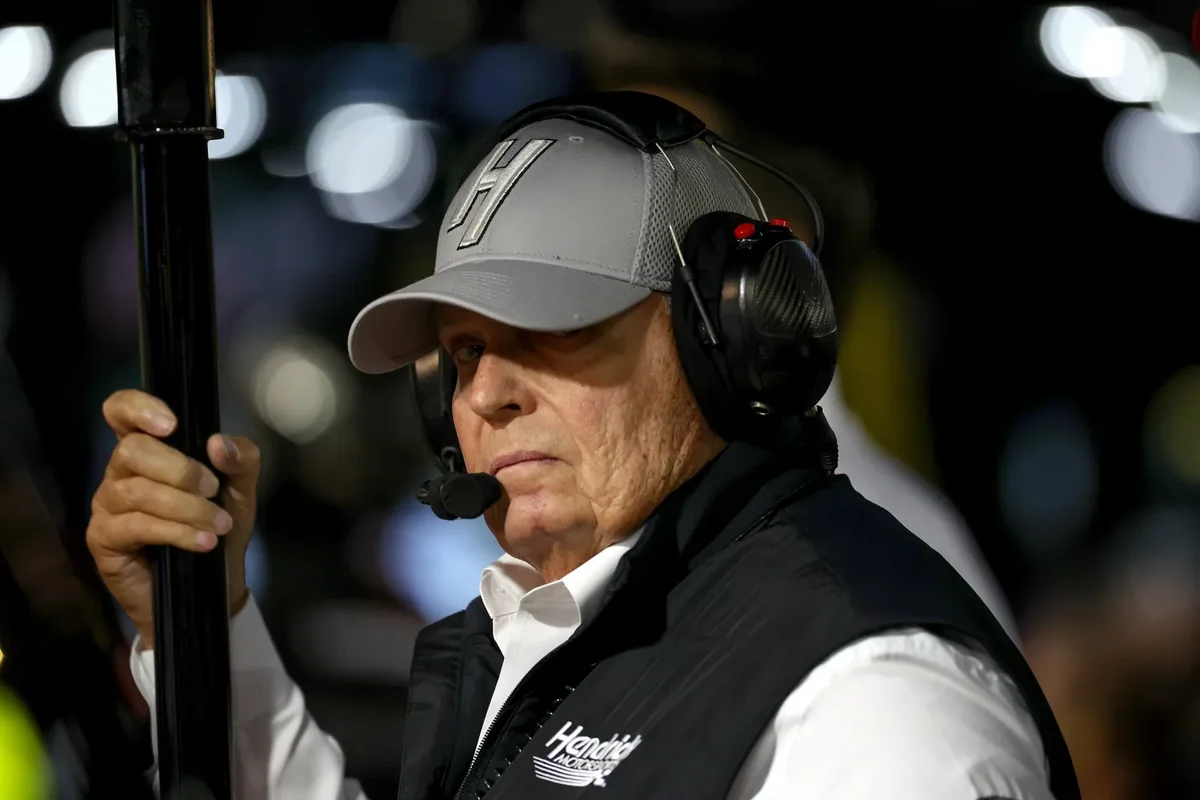
The highly anticipated Rick Hendrick NASCAR lawsuit trial is set to commence, drawing national focus as unresolved controversies from Hendrick’s history threaten to influence a courtroom showdown. With the legal battle centered around NASCAR’s charter system, revelations from past transgressions are now intersecting with the present, adding tension to an already fraught moment for the sport.
Background of the NASCAR Lawsuit and Rick Hendrick’s Involvement
The legal rows began in October 2024 when 23XI Racing and Front Row Motorsports launched a suit against NASCAR, citing violations of Sections 1 and 2 of the Sherman Antitrust Act. Their main allegation targets NASCAR for maintaining anticompetitive control, particularly through its operations of the charter system. This lawsuit unfolded while nearly all other Cup Series teams, totaling thirteen out of the fifteen in the top flight, watched the situation intensify from the sidelines.
Although Rick Hendrick, owner of the powerhouse Hendrick Motorsports and winner of 15 out of the last 30 championships, initially managed to avoid becoming directly embroiled, that immunity has faded. Now, the shifting legal spotlight finds him at its center, especially as the case proceeds toward its trial phase on December 1, 2025 in the Western District of North Carolina.
Legal History Resurfaces as Potential Evidence
An episode of ‘The Teardown’ podcast brought attention to the possibility that Rick Hendrick’s criminal background might play a role in the upcoming proceedings. Attorney Shannon McMinimee explained the legal precedent concerning witness credibility, noting:
“When a witness testifies to evidence of a prior crime that was a felony that carried more than a year or more of jailtime, to be admitted so that the jury can weigh the credibility of the witness,”
— Shannon McMinimee, Attorney
She elaborated further on pardons and their admissibility, adding:
“There is an exception related to pardons if the pardon happened more than 10 years ago. But it is specific to what the pardon was granted for. Was it a pardon where they found rehabilitation, or where they found actual innocence?”
— Shannon McMinimee, Attorney
Hendrick’s journey into the automotive world began early, but his path was impacted by a major legal hiccup in the mid-1990s. Amid claims of bribery involving American Honda Motor Co., Inc., Hendrick found himself at the heart of a kickback scandal. The allegations outlined that several dealers, Hendrick among them, were suspected of bribing Honda officials for access to franchises and restricted vehicles. Subsequently, Hendrick faced a 1996 federal indictment on charges of conspiracy, fraud, and money laundering, resulting in the loss of dealerships and a year-long confinement. President Bill Clinton issued a pardon to Hendrick in 2001, but the complex nature of pardons in the eyes of the law means his past could once again come under scrutiny, particularly as it relates to his credibility in the trial.
Key Decisions and Unrestricted Testimony at Trial
As the trial date approached, the legal tension escalated when Federal Judge Kenneth Bell ruled on November 11 that both Rick Hendrick and Roger Penske would be required to testify as witnesses, with no restrictions imposed on the subject matter of their depositions. Both tried to restrict the deposition topics, filing legal briefs with the intent to keep their testimony strictly to non-confidential matters and, importantly, to avoid appearing partial to either side. The brief stated they:
“agreed to give limited testimony regarding non-confidential matters at the trial of this case, but in a way that did not force them to ‘take sides’ in the lawsuit.”
— Brief by Rick Hendrick and Roger Penske
However, Judge Bell was categorical in rejecting their request for special treatment:
“The trial of this matter will be publicly and fairly contested under the relevant rules and law, without regard to the notoriety of the companies and individuals involved. No company or individual will be accorded special treatment.”
— Judge Kenneth Bell, U.S. District Court
This judicial stance ensures Hendrick, regardless of his status or history, will undergo the same level of scrutiny as any other party to the case.
The Lawsuit’s Impact on NASCAR and Its Community
As the NASCAR Cup Series prepares for this pivotal off-track confrontation, the lawsuit is shaping up as one of the defining events in the organization’s 77-year run. The process has already unveiled controversial evidence, including revealing personal communications and internal financial details, as well as exposing lasting rifts between executives at the highest levels. The legal battle’s fallout threatens to alter the landscape of NASCAR and its governance for years to come.
With the two-week trial period now underway in North Carolina, NASCAR co-owner and race-winner Denny Hamlin did not hold back his frustrations, stating:
“Our fans have been brainwashed with (NASCAR’s) talking points for decades. Lies are over starting Monday morning. It’s time for the truth. It’s time for change.”
— Denny Hamlin, NASCAR Driver and Co-Owner of 23XI Racing
This tension extends beyond the key players named in the lawsuit, fueling concern and debate throughout the sport. Teams, drivers, fans, and industry insiders are watching closely, recognizing the case’s capacity to reshape not just operational policies, but also NASCAR’s broad reputation and public trust.
What the Outcome Could Mean for NASCAR’s Future
The Rick Hendrick NASCAR lawsuit arrives at a time when the sport is already grappling with internal strife and external criticism. With a federal judge mandating full accountability for star team owners and permitting their unchecked cross-examination, the stage is set for possible revelations that could impact future regulatory decisions, commercial arrangements, and team dynamics across the board.
Should Hendrick’s past ultimately become a major factor, the ripple effects may prompt further questions about leadership and integrity at the highest levels of racing. As NASCAR’s community awaits the trial’s outcome, every member—from industry executives like Roger Penske and Rick Hendrick, to lifelong fans and rookie drivers—faces uncertainty about what comes next for America’s leading stock car racing enterprise.
The coming days may not just decide the trajectory of an antitrust challenge, but could also test the very foundation of trust and authority within NASCAR’s fiercely loyal ecosystem.

