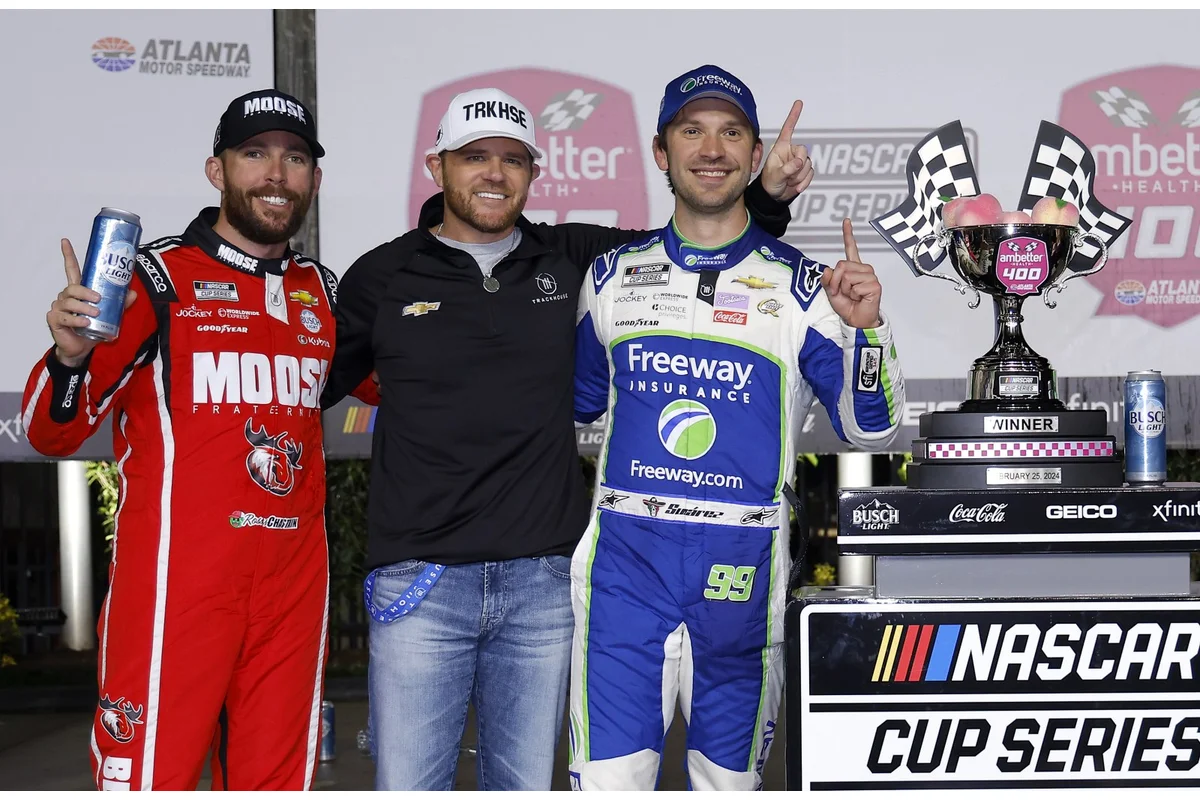
Trackhouse Racing NASCAR expansion drew widespread attention in 2022 when Justin Marks, owner of Trackhouse Racing, proposed a retro racing event that ultimately never materialized. Marks’ public suggestion inspired NASCAR to trademark the “NASCAR Classic” concept, yet fans never saw the event take place, leaving lingering frustration within the motorsports community.
How a Social Media Post Sparked a NASCAR Idea That Stalled
In 2022, Justin Marks floated the idea of a unique historic racing series, envisioning competition between restored cars from the sport’s prominent decades. His idea quickly gained traction among fans and prompted NASCAR to file a trademark for “NASCAR Classic,” demonstrating how swiftly the organization moved to secure both the name and its execution rights. Despite widespread enthusiasm, the event never came to fruition, and the concept remained dormant within the NASCAR franchise.
“What if we did the first ever NASCAR historic race event? 4 races: 70’s, 80’s, 90’s, 00’s. Let’s find all the restored, track-ready cars in the US. Get a bunch of legends to the event. And celebrate the decades of history. N Wilkesboro? The Rock? Charlotte? What do y’all think,”
Justin Marks wrote. – Justin Marks, Owner
On December 1, reflecting on the missed opportunity after a fan rekindled the discussion, Marks expressed his disappointment about the concept’s fate, noting that the most regrettable part was that the race never happened.
“2 days later. Worst part is we never saw the event.”
– Justin Marks, Owner
NASCAR’s Defensive Trademark Move and Ongoing Expansion
Following Marks’ post, NASCAR swiftly trademarked “NASCAR Classic,” securing not just the rights to racing events but also related television, radio, and digital properties. This legal move blocked any potential rival groups from adopting a similar name or launching a competing series, effectively locking down the rights to the classic racing event idea within the brand.
The trademark coverage extended to creating an online database that would highlight historical technical details and past rule books, serving as a resource for historians and fans interested in the evolution of the racing sport. Still, despite all the groundwork, NASCAR never initiated the actual event, leaving the fanbase’s curiosity unsatisfied.
Trackhouse Racing’s Broader Growth Strategy and Financial Caution
The period around this missed event saw Trackhouse Racing expanding into other motorsport arenas, including debuts in MotoGP and IMSA since entering NASCAR in 2021. These ventures signaled a wider ambition beyond stock car racing, even as the team remained cautious about their financial commitments within NASCAR itself.
Justin Marks recently discussed Trackhouse’s fiscal management during an interview, focusing on responsible spending and measured investment as central to their business model.
“There’s a lot of ways companies can spend money, and we just need to make sure as an industry that the price point of getting involved in NASCAR doesn’t outpace the value proposition. For us, we’ve been very successful at it just because we’ve been very authentic about our mission,”
Justin Marks told Adam Stern. – Justin Marks, Owner
The team’s MotoGP division began competing in 2024 with Aprilia RS-GP bikes, achieving an inaugural win at Phillip Island with rider Raul Fernandez, and finishing seventh in the championship standings. Industry reports suggest Trackhouse Racing MotoGP might switch manufacturers to Honda by 2027, pointing to continued adaptability and growth.
Looking ahead, Trackhouse Racing will participate in the 2026 NASCAR Cup Series season with rookie Connor Zilisch, established driver Ross Chastain, and Shane van Gisbergen, a specialist known for road courses, who returns for a second year.
Larger Industry Context: Legal Issues and Team Dynamics
The debate around intellectual property and the stalled NASCAR Classic event unfolded at the same time as other high-stakes disputes in the sport. On the same Monday Marks revisited his tweet, Cup teams 23XI Racing and Front Row Motorsports began their antitrust trial against NASCAR, accusing the organization and its CEO of monopolistic practices and challenging the updated charter system for teams. This broader climate of legal and competitive tension reflects ongoing challenges for racing teams as they navigate business realities in a tightly controlled motorsports environment.
The continued expansion of Trackhouse Racing into both domestic and international series, balanced by an emphasis on cost-value management, demonstrates an evolving approach to participating in NASCAR and the larger motorsports world. While the original dream of a decade-spanning NASCAR Classic race remains unfulfilled, the industry’s legal and commercial turbulence, along with ambitious growth plans, continue to shape the path forward for Justin Marks, his drivers, and the Trackhouse Racing organization.
2 days later. Worst part is we never saw the event. https://t.co/iPDAtdoi1J
— Justin Marks (@JustinMarksTH) December 1, 2025