
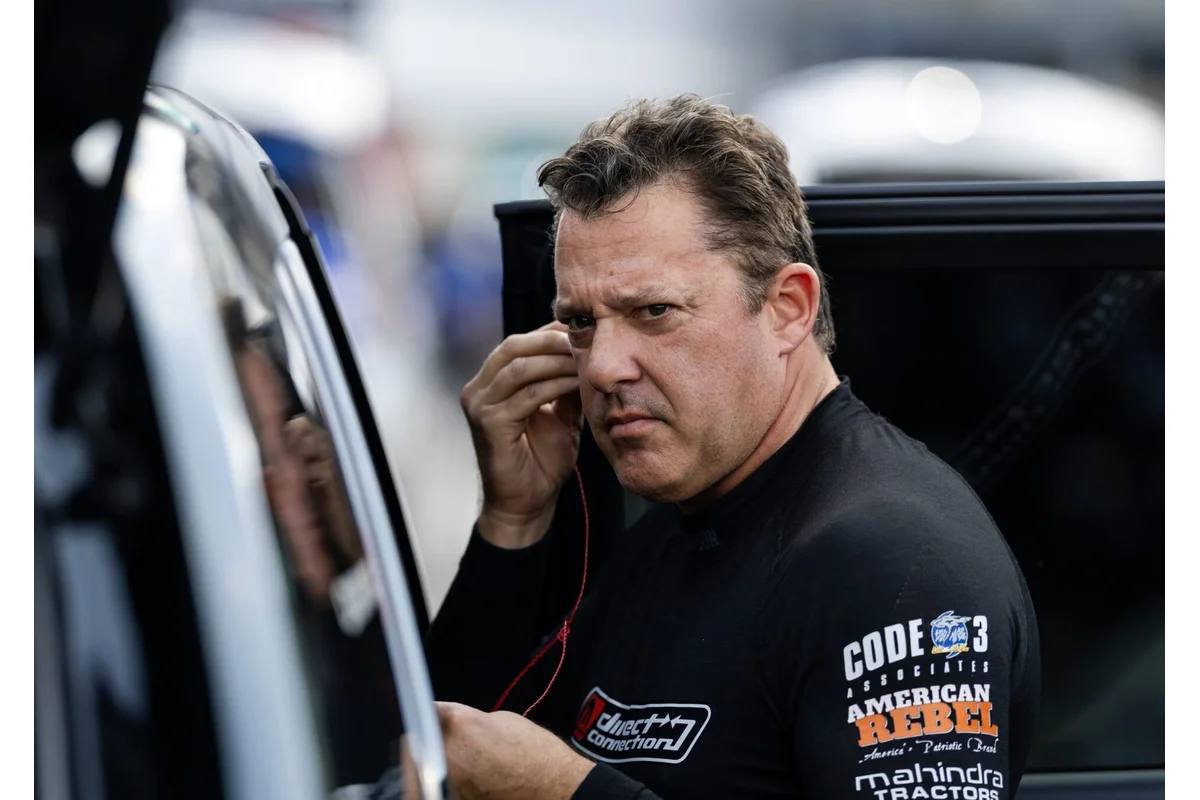
During the second day of the highly-watched antitrust trial, new details surfaced about how NASCAR took deliberate steps to prevent Tony Stewart’s SRX series from gaining a foothold in professional stock-car racing. The focus on the Tony Stewart SRX antitrust trial revealed calculated efforts by the organization to maintain its dominance as key decision-makers testified under cross-examination.
NASCAR’s Evaluation and Early Concerns About SRX
On the witness stand, Scott Prime, who serves as both Executive Vice President and Chief Strategy Officer for NASCAR, provided crucial insight into the company’s internal perspective on emerging competition. According to Prime’s testimony, NASCAR promptly recognized the Superstar Racing Experience (SRX) as a credible threat when it was first announced. Reports compiled by motorsports journalist Dalton Hopkins highlighted how NASCAR’s internal risk assessments raised concerns that the SRX series might entice drivers and teams to defect, using this rival league as leverage or as a potential path out of NASCAR’s ecosystem.
This usually unspoken anxiety underscored NASCAR’s acknowledgment of SRX as an innovative stock-car series powered by celebrity drivers, exciting short-track races, and a focus on broad, national television coverage.
Team Restrictions: How NASCAR Enforced the Goodwill Provision
In his sworn statements, Prime described how NASCAR relied on their charter agreement—the key document outlining Cup Series team participation—to impose direct limits. Among its rules was a so-called “goodwill provision” that, according to Prime, strictly forbade any chartered team owners from joining or collaborating with a competing stock-car league. This rule functioned as a protective barrier, blocking existing NASCAR teams from lending their support or reputational sway to Tony Stewart’s new venture. For SRX, this meant being denied the involvement, experience, and resources of some of the most influential figures and owners in the sport.
Track Contracts: The Sanction Clause Blocking Venues from Hosting SRX
The legal examination also extended to NASCAR’s ties with Speedway Motorsports Inc. (SMI), which controls key tracks across the United States. Attorney Jeffrey Kessler confronted Prime with records indicating that SMI considered hosting SRX races, recognizing their appeal for fans and the potential entertainment value. However, Dalton Hopkins reported that NASCAR’s contract with SMI contained a “sanction provision”—a rule that prevented SMI-operated venues from holding races for any rival stock-car series without NASCAR’s approval. As a result, SRX was effectively kept out of prime racing locations nationwide, making it even harder for the fledgling series to grow and attract attention.
Barriers to SRX’s Growth and What Lies Ahead
Together, the goodwill provision aimed at teams and the sanction clause targeting tracks formed a nearly insurmountable set of barriers to SRX’s expansion. Before SRX could establish real momentum, these contractual tools had already cut off much needed access to high-profile owners and premier venues. As the Tony Stewart SRX antitrust trial continues, the court weighs how NASCAR’s internal strategies may have shaped the future of stock-car competition, leaving fans and industry insiders anticipating what further revelations the proceedings will unveil.
Update for Scott Prime examination
Key notes:
– NASCAR drafted risks regarding SRX series, which included the possibility that NASCAR drivers and teams follow it as a way to break away from NASCAR– their mitigation was that NASCAR was protected by the charter agreement…
— Dalton Hopkins (@PitLaneCPT) December 2, 2025

