
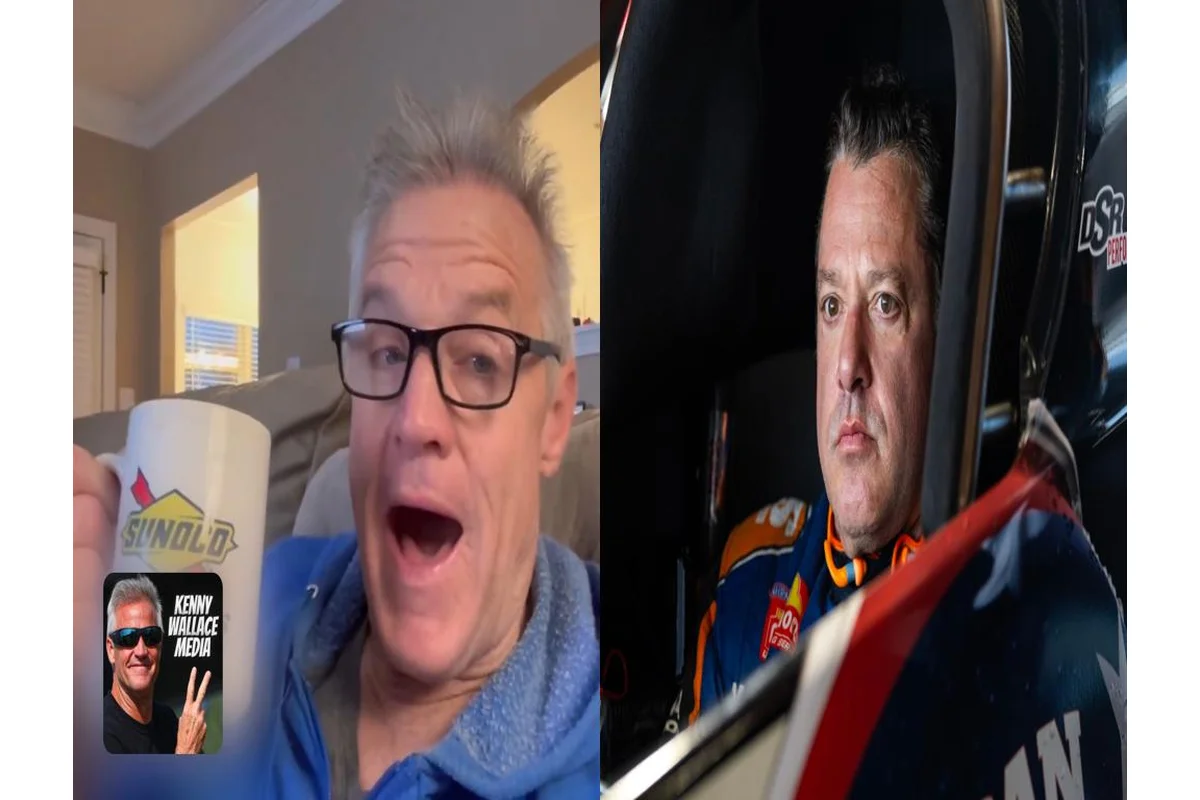
Kenny Wallace, a respected figure in racing, has weighed in on the escalating feud between NASCAR and Tony Stewart’s SRX Series after leaked internal messages exposed NASCAR’s deep concerns. Amid mounting tension caused by driver crossovers and contract negotiations, Wallace offered a candid reaction to the ongoing drama within the NASCAR and SRX dynamic, highlighting how the situation impacted major deals and competitive relationships.
Details Behind the NASCAR and SRX Conflict
The conflict intensified after an antitrust lawsuit brought by 23XI Racing and Front Row Motorsports, which outlined several complaints against NASCAR, including claims of unfair revenue distribution and efforts to dominate the stock-car racing world. The public unveiling of private conversations between senior NASCAR executives—specifically Steve Phelps and Steve O’Donnell—cast light on their reactions to SRX’s emergence and the challenges it posed. These messages illustrated how SRX, helmed by Tony Stewart and initially marketed as a platform for retired drivers, quickly evolved into a perceived rival when it began attracting current Cup Series stars.
Kenny Wallace’s Perspective on the Leaked Messages
Speaking with Chase Holden on his podcast, Kenny Wallace delivered an unfiltered response to the controversy revealed in the leaked texts. He explained the factors that motivated NASCAR to be protective of its standing, especially while negotiating sensitive media-rights agreements worth billions of dollars. The SRX Series, which started as a gathering for iconic names like Tony Stewart, Tony Kanaan, Bobby Labonte, Helio Castroneves, Ernie Francis Jr., Paul Tracy, Bill Elliott, Willy T. Ribbs, Michael Waltrip, and Marco Andretti, unexpectedly became a magnet for high-profile, active drivers.
“NASCAR was working on a contract. So SRX was supposed to be for us older retired drivers… Then all of a sudden Denny Hamlin, then our main drivers were going over there and they were on ESPN, their competitor. And the ratings were bigger than the Truck and Xfinity.”
– Kenny Wallace, NASCAR Veteran
Wallace elaborated that NASCAR executives felt threatened by their drivers’ participation in SRX, which was broadcast on ESPN and at times exceeded the viewership of NASCAR’s Truck and Xfinity Series, especially when stars like Denny Hamlin and Chase Elliott competed.
“The reason they want to put a knife in SRX is because their drivers were hurting them by going over there while NASCAR was negotiating for a billion dollar a year contract. So, I understood that one. I said, ‘Okay, I get that.’”
– Kenny Wallace, NASCAR Veteran
Active Drivers Shift the Competitive Landscape
The original vision for SRX, according to former Stewart-Haas Racing executive Brett Frood, was a competition for retired and inactive drivers, not a league aiming to compete directly with NASCAR. The SRX roster, at the outset, mirrored the concept of the classic IROC format and featured legends such as Willy T. Ribbs, Bobby Labonte, and Bill Elliott.
However, the dynamic changed when active Cup Series drivers, including Chase Elliott, Justin Marks, Kyle Busch, Daniel Suarez, Kevin Harvick, Ryan Blaney, Chase Briscoe, Brad Keselowski, Austin Dillon, and Ryan Preece, started joining races. Their participation elevated SRX’s profile and put further strain on relations between the two organizations.
“I thought this looked more and more like NASCAR,”
– Steve O’Donnell, NASCAR Executive
Steve O’Donnell testified that this influx of current stars made SRX resemble NASCAR’s own format, intensifying concerns within NASCAR’s leadership. Concurrently, teams represented by figures such as Michael Jordan and Bob Jenkins sought fairness during their own negotiations with NASCAR, even as some of their drivers appeared in SRX events, underlining the divided loyalties within the racing community.
NASCAR took concrete action by invoking exclusivity agreements with Speedway Motorsports to prevent SRX from securing venues, showing the depth of its unease over the shifting competitive landscape.
Ongoing Significance for Drivers and the Sport
The fallout from the SRX and NASCAR conflict continues to reverberate, affecting major contractual negotiations and the relationship between teams, drivers, and governing bodies. Kenny Wallace’s NASCAR SRX reaction underscores the broader frustration and agitation within the sport as organizations and personalities like Denny Hamlin and Tony Stewart navigate evolving alliances and media deals. With legal disputes and high-profile negotiations ongoing, the rivalry presents lasting implications for the business and perception of stock-car racing in the United States.

