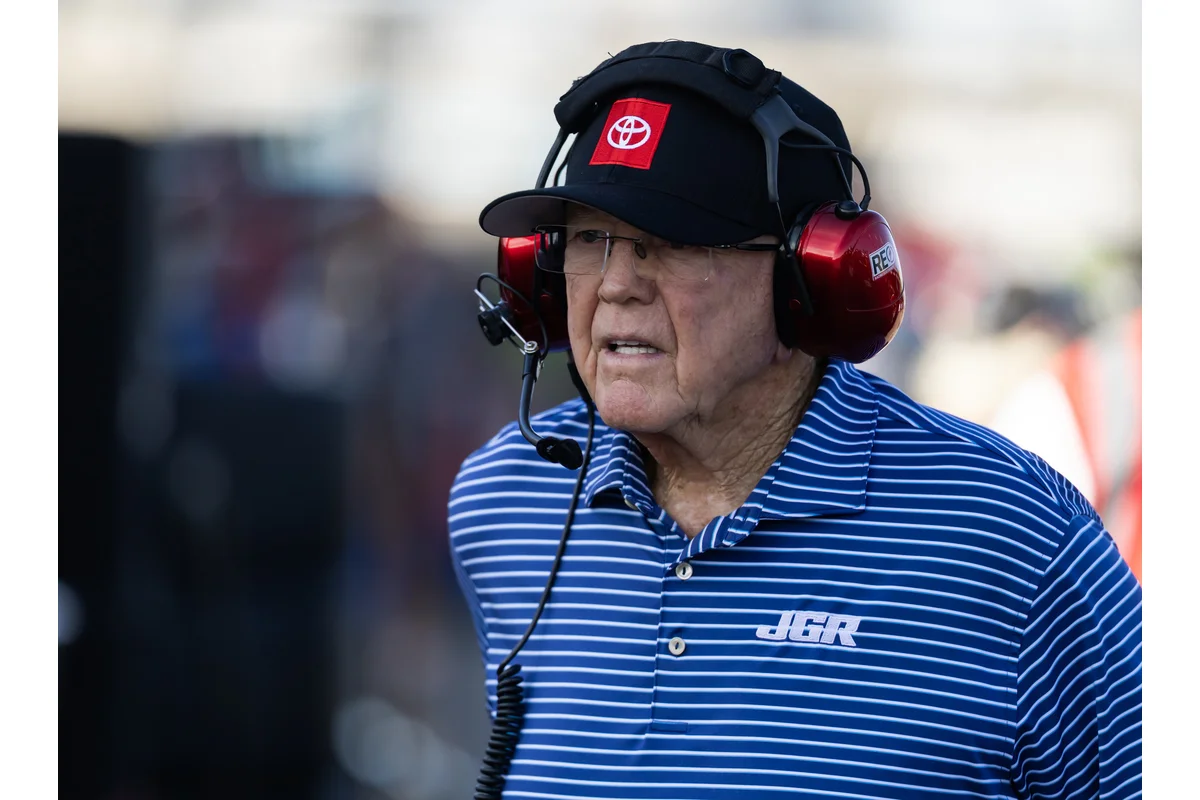
Joe Gibbs and fellow NASCAR team owners are currently engaged in a heated legal battle against NASCAR, centered around a $365 million dispute over the league’s revenue-sharing models. The Joe Gibbs NASCAR lawsuit, brought to court in December 2025, has spotlighted major tensions between the racing organization’s leadership, with Jim France and key team leaders at odds over financial and governance issues.
Evidence Challenges NASCAR’s Revenue Distribution Practices
The case escalated after a testimony from Edward Snyder, an economics professor with past experience working for the Department of Justice, who criticized NASCAR’s system for distributing revenue among its teams. According to Snyder, NASCAR’s teams receive less favorable payouts compared to their Formula 1 counterparts, falling behind in terms of fair compensation. His analysis suggested that 23XI Racing and Front Row Motorsports—both involved in the suit—are owed approximately $364.7 million due to these disparities.
This massive claim has garnered significant attention and added pressure to the ongoing proceedings. Joe Gibbs, joined by Richard Childress, Michael Jordan, and Bob Jenkins, are among the team owners voicing frustration over the terms of the new charter agreement signed in September 2024. They argue that the agreement’s terms disproportionately favor NASCAR’s leadership, stifling teams’ financial and managerial influence within the sport.
Jim France’s Courtroom Appearance Raises Eyebrows
The head of NASCAR, Jim France, recently appeared in court to answer questions regarding the organization’s practices and the specific accusations made by team owners. Notably, France remained tight-lipped under questioning led by Jeffrey Kessler, attorney for Michael Jordan and co-owners. When asked about a September 6 conversation with Joe Gibbs, France was evasive, stating:
“France says he doesn’t remember Joe Gibbs pleading with him on Sept. 6 to ‘don’t do this.’ France says he couldn’t see himself telling Coach ‘if I only get 20 charters back, I get 20 charters back.’ But did he deny it? ‘Im not sure I did,’”
— Matt Weaver, Journalist
This lack of clarity sparked discontent among many observers. In the courtroom, France repeatedly answered with “I don’t know” or “I don’t recall,” prompting a strong reaction from those following the testimony. According to further reporting:
“Jim France completed his initial examination from Jeffrey Kessler. By the end, Kessler subjected France to the same sequence where the questions were about what would happen if the charters werent signed by the deadline?
“If we didn’t get charters back, we wouldn’t have… pic.twitter.com/WDtfNeL5IG— Matt Weaver (@MattWeaverRA) December 9, 2025”
The consistent evasiveness of France’s responses became a subject of commentary on social media and sparked frustration among stakeholders. One observer noted:
“Plaintiffs have finished grilling Jim France, and I don’t think he’s going to be able to skirt the claims of being a “brick wall
in negotiations as I’m not sure and I don’t know were a constant theme of the testimony,” — Toby Christie
Veteran NASCAR journalist Jeff Gluck reinforced this impression by stating:
“Court is done for the day. I don’t think I’m underselling it to say Jim France’s testimony was shockingly bad so far. Just not good at all for NASCAR IMO.”
— Jeff Gluck
During questioning, France confirmed only that if teams chose not to sign the latest charter deal, they would lose access to charters. He also pointed out that negotiations continued for an entire year even after all options had already been offered, indicating the fraught dynamic between NASCAR and its teams.
Negotiation History Between Teams and Leadership Was Fraught
Before the official start of legal action, the Race Team Alliance (RTA), which represents multiple NASCAR teams, had engaged in two years of negotiations with NASCAR officials. The RTA, led in negotiations by Curtis Polk, co-owner of 23XI Racing, pressed for four main demands: increased revenue for teams, permanent charters, a substantial say in governance, and a share of any new revenue sources introduced.
Steve Phelps, acting as NASCAR’s commissioner, testified in court about the challenging nature of these discussions, saying:
“It was one of the most challenging and longest negotiations I’ve ever been part of,”
— Steve Phelps, NASCAR Commissioner
He continued, describing the RTA’s firm stance:
“The TNC never wavered off their four pillars. It was just the same thing, the same thing, and that was very frustrating.”
— Steve Phelps, NASCAR Commissioner
Despite such protracted talks, the outcome was an agreement under which teams receive a total of $431 million annually but are left without permanent charters and with no guaranteed influence over NASCAR’s rules and regulations. This failure to meet the teams’ core demands has been a central factor precipitating the current Joe Gibbs NASCAR lawsuit.
Looming Consequences for NASCAR’s Future
The ongoing legal conflict between Joe Gibbs, supported by prominent owners and the RTA, and Jim France’s NASCAR organization, has drawn intense scrutiny across the racing world. Observers note the tense atmosphere and the possibility of significant changes to NASCAR’s business and organizational model depending on the outcome of the suit.
The Joe Gibbs NASCAR lawsuit has illuminated deep divisions within the sport about revenue sharing, governance, and the future of competition. With the lawsuit continuing to evolve and major figures like Jim France and Curtis Polk at its center, fans, team owners, and industry insiders await further developments that could redefine the business landscape of American auto racing.
Jim France completed his initial examination from Jeffrey Kessler. By the end, Kessler subjected France to the same sequence where the questions were about what would happen if the charters werent signed by the deadline? "If we didn't get charters back, we wouldn't have… pic.twitter.com/WDtfNeL5IG
— Matt Weaver (@MattWeaverRA) December 9, 2025