
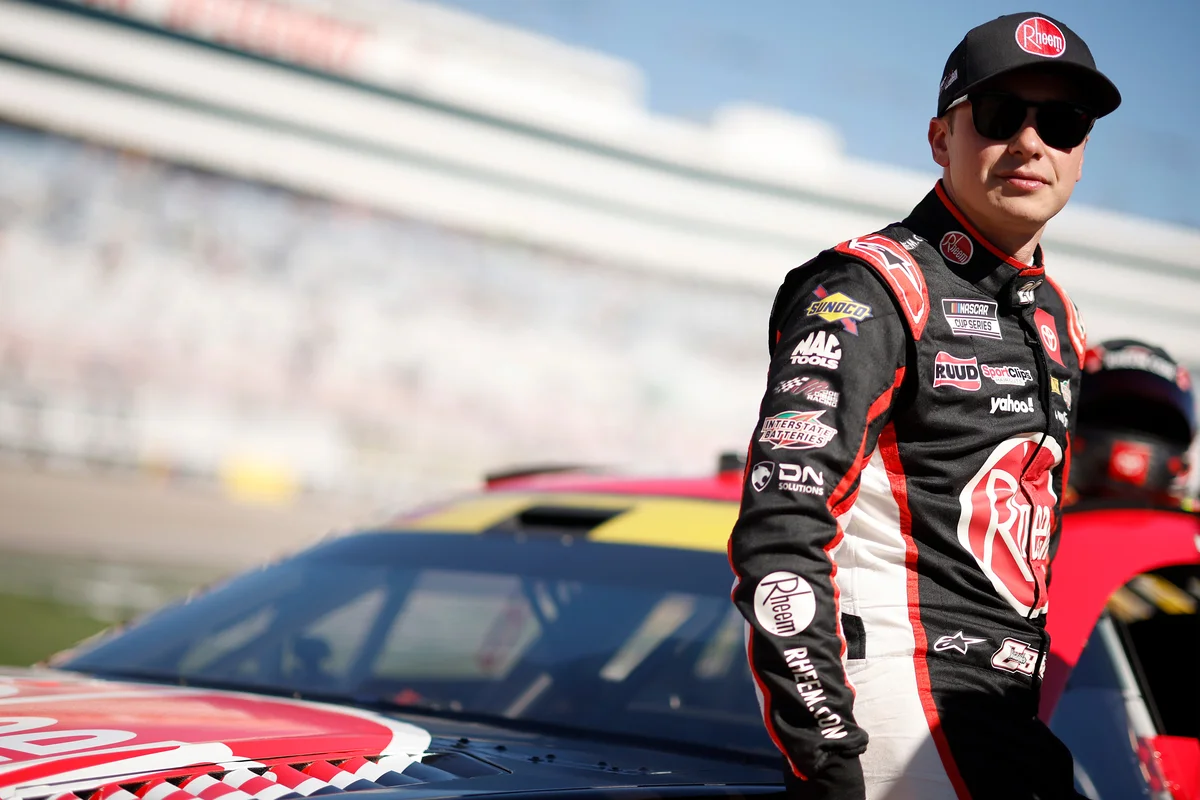
Kyle Larson, a celebrated figure in NASCAR and known for his adaptive skills, recently shared his thoughts on what makes Christopher Bell’s NASCAR driving style so unique. In a discussion on The Driver’s Project Podcast, Larson detailed how both he and Bell, with their extensive backgrounds in multiple racing disciplines, have developed a remarkably refined approach behind the wheel that distinguishes them from most other drivers in the series.
Larson, now a two-time Cup Series champion with Hendrick Motorsports, is recognized as one of the most versatile drivers in modern motorsports, having found success across NASCAR, dirt sprint cars, and midget races. Christopher Bell, competing for Joe Gibbs Racing, comes from a similar racing path, spending years in karting, sprint cars, and midgets before rising to NASCAR prominence. Both racers share a deep-rooted skill set honed through years of hands-on experience across various vehicles and surfaces, which has influenced their methods at the highest level of stock car racing.
Breaking Down the “Smoothest Hands” in NASCAR
During his podcast appearance, Larson delved into the telemetry and raw data available to NASCAR teams to illustrate how he and Bell differ from the rest of the garage. Looking at the detailed data, he highlighted how their driving inputs set them apart.
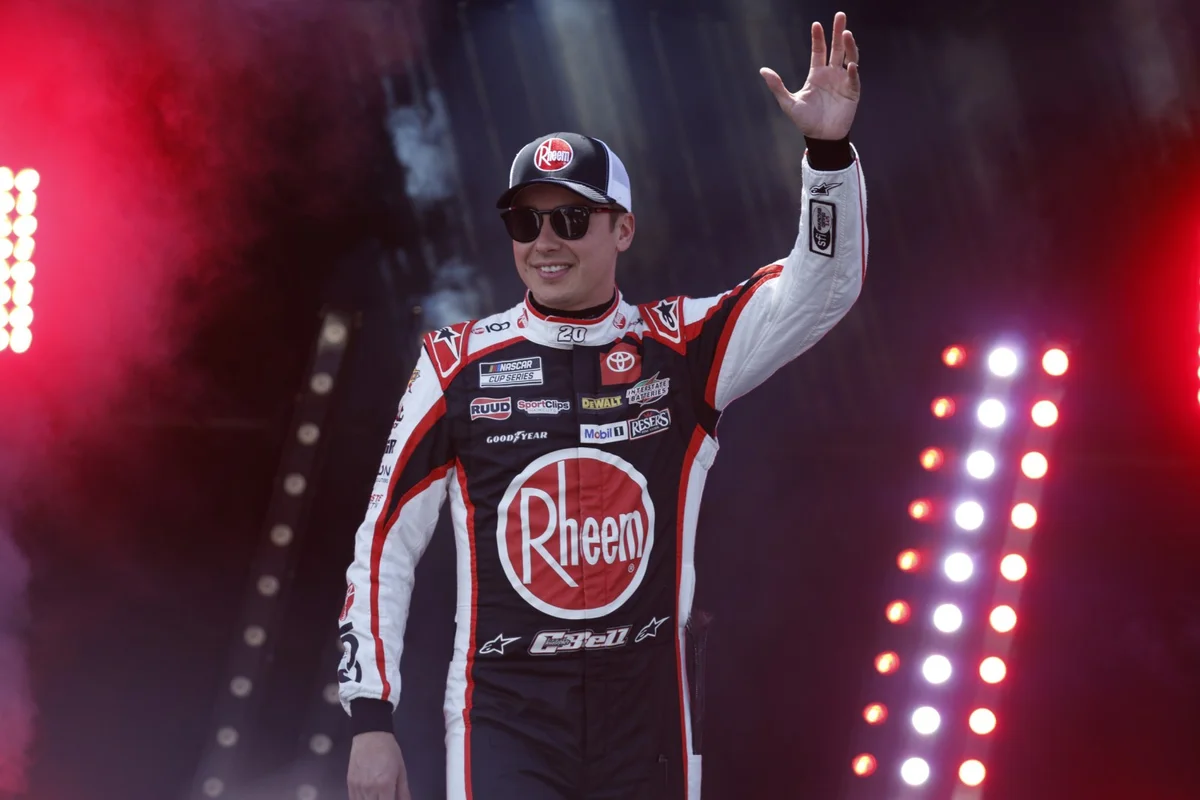
“We have all this data that we can look at I can see every driver’s data, telemetry, whatever—the squiggly lines of throttle, brake, steering, RPM, speed, whatever. Bell and I, I would say, have the smoothest hands in the garage. And I would assume it’s from our background.”
– Kyle Larson, NASCAR Cup Series Champion
Instead of the abrupt, jagged lines typical for many drivers’ inputs, Larson and Bell’s data paints a much smoother curve. This distinctive driving style, according to Larson, is a direct result of their formative years navigating challenging surfaces and car dynamics in sprint cars and midgets. Their control comes from learning how to maintain poise while navigating bumps, slides, and variable grip—skills that carry over into NASCAR’s rigorous environment.
“Ours will just be nice and round like a round little hill, and everybody else will be like jagged, and I don’t know why that is or if one’s better or not, but I just feel from our sliding, bouncing through holes, lots of shock travel, and tall sidewalls, we just learn a feel; we can kind of just get that down to a fine feel. I’m definitely glad I grew up racing the cars that I did.”
– Kyle Larson, NASCAR Cup Series Champion
Impact of Driving Backgrounds on 2025 NASCAR Success
The recent 2025 NASCAR Cup Series campaigns of both drivers reflect the value of their approach. Kyle Larson clinched his second career Cup title after placing third in the season-finale at Phoenix Raceway—a testament to his consistency and tactical execution throughout the year. Rather than dominating every week, Larson’s championship run was defined by maximizing opportunities, maintaining steady finishes, and avoiding significant mistakes.
By season’s end, Larson boasted three wins, one pole position, 15 top-five finishes, and 22 top-ten results, with an average finish of 13.1—evidence of his well-rounded performance. Meanwhile, Christopher Bell showcased his own mastery and control behind the wheel, achieving his best season yet. Bell finished the 2025 Cup season with four wins, 13 top-five results, and 22 top-ten finishes, recording an impressive average finish of 11.1 among full-time drivers. Although Bell missed the final Championship 4 cutoff, he closed the year in fifth place—solidifying his reputation for consistent, high-level driving in elite competition.
What This Elite Driving Style Means for NASCAR’s Future
The precision and smooth style exhibited by Christopher Bell’s NASCAR driving approach, as described by Kyle Larson, is not only a distinguishing feature of their personal success but also a trendsetter for how future drivers might train and develop. As technology continues to enhance data analysis in motorsports, styles like those of Larson and Bell may become even more appreciated for their ability to extract maximum performance with minimal wear and risk. Their journeys, marked by adaptability and technical finesse, suggest that the path through diverse racing disciplines can prepare drivers for both lasting success and championship runs in NASCAR.
The Driver’s Project Podcast Ep. 67 presented by @keizerwheels
Who are the smoothest drivers in NASCAR? Sprint car racers; @KyleLarsonRacin & @CBellRacing and the data backs that statement.
Full episode is available at the links 👇
YouTube: https://t.co/thZNVZ1oip
Spotify:… pic.twitter.com/gQg9gEpk6d
— The Drivers Project (@thedriversproj) December 8, 2025

