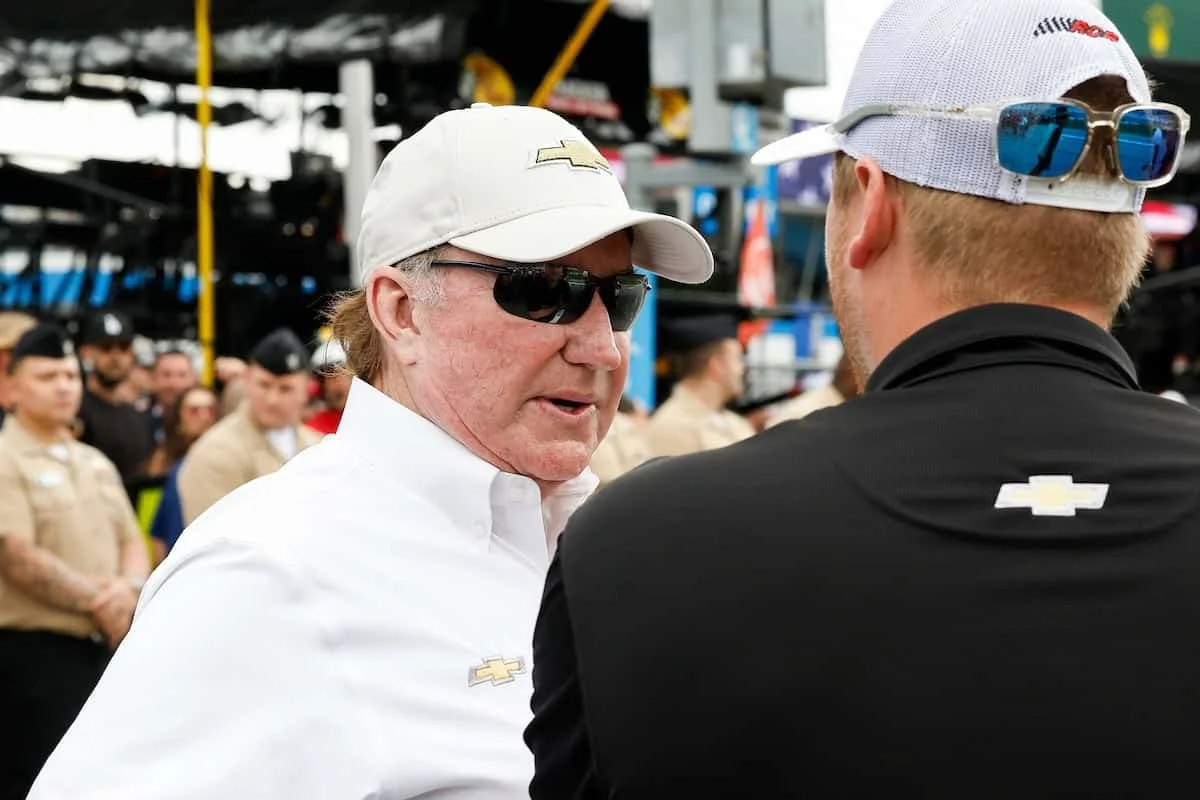
Richard Childress, a veteran NASCAR team owner, publicly criticized the current NASCAR charter negotiations, claiming he signed under extreme financial pressure in December 2025. The dispute, highlighted during a highly publicized trial, underscores growing tension between NASCAR leadership and team owners regarding the future of team equity and charter permanence.
Insider Messages and Leaked Communications Amplify Charter Dispute
Richard Childress NASCAR charter negotiations have become a central controversy after weeks of escalating legal drama. In late November, leaked messages between NASCAR Commissioner Steve Phelps and Chief Media & Revenue Officer Brian Herbst surfaced, revealing sharp criticism and disparaging language directed at Childress, including calling him “a stupid redneck” and worse. The fallout saw 23XI Racing and Front Row Motorsports naming Childress as a key witness in their lawsuit against NASCAR, catapulting him to the forefront of the sport’s internal power struggle.
The backdrop includes decades of Childress’s involvement with NASCAR, dating back to his team’s founding in 1969, and a complex, long-standing relationship with the France family, who established the racing organization in 1948. Despite years of mutual respect with the Frances, the current climate has strained those bonds, particularly as the trial reveals deep divides over financial structure and team ownership rights.
Testimony Reveals Feeling of Coercion in Charter Signings
Much of the recent conflict centers on negotiations for the NASCAR charters, which grant teams a stake in the series and, in theory, a share of long-term value. Childress testified that these discussions turned confrontational. He recounted an ultimatum delivered by Steve Phelps, where teams were told to sign or risk losing their charters entirely.
👉Richard Childress says teams were attempting to negotiate for a better deal when Steve Phelps called to say they had to sign or they’d lose their charters. 🗨️I would not have signed the charters if I financially didn’t have to. We’re a blue-collar organization, and we do what we’ve got to do.” 👉 Childress confirms Richard Childress Racing is losing money with its NASCAR Cup Series program,” journalist Joseph Srigley updated on X.
This direct pressure left Childress with little option, echoing the sentiments of Heather Gibbs, who had also described feeling like there was a “gun to the head” when agreeing to the terms. Childress pressed NASCAR’s attorney Christopher Yates in court to read specific statements clarifying that he believed charters should be permanent, and noted he had inserted such language into his own declaration before signing. He highlighted that the financial stress on Richard Childress Racing has been acute, despite operating profitable businesses outside of the Cup Series.
👉Asked if Charters provide teams with long-term equity, Childress says teams were worth ten cents on the dollar before, but the long-term equity is nothing compared to what it would be with permanent charters. 👉Childress testifies that both his engine company (ECR Engines) and his military company are profitable, but says “that money should be going into my pocket,
According to Childress, the current charter structure does not deliver anything close to true equity for teams. He attested that while ECR Engines and his military company both turn a profit, the funds have to support the struggling Cup Series operation instead of benefiting him personally. This view reflects the core concern among many team owners, who feel the system undervalues their contributions and fails to guarantee long-term viability unless charters become permanent assets.
Courtroom Drama Exposes Personal Attacks and Apologies
The trial’s intensity escalated after the derogatory leaked messages from NASCAR executives, which included severe insults about Childress’s intelligence and character. Childress’s camp threatened a defamation suit in response, though updates on potential legal action have yet to materialize. Under questioning in court, Steve Phelps asserted that, in general, he had shown respect for team owners but admitted he was “not proud of” his remarks about Childress and had since apologized.
Richard Childress has concluded his testimony. Afterwards, outside the courthouse, when I asked if he had anything to say regarding what Steve Phelps said about him in unearthed text messages, Childress declined comment,
— Jordan Bianchi wrote on X.
While Childress’s testimony brought renewed scrutiny to the league’s leadership, he has, for now, chosen not to address the personal aspect of the scandal in further detail. The tension between established team owners and top NASCAR executives, however, remains unresolved as the case continues.
Ongoing Impact and What May Come Next
The implications of Richard Childress NASCAR charter negotiations reach beyond one team or one owner. Childress’s outspoken stance and the revelations from this trial may influence future deals, pressure NASCAR to reconsider its approach to team equity, and potentially reshape the balance of power within the sport. For prominent figures like Dale Earnhardt and up-and-coming drivers linked to Childress’s team, the stability and value of Cup Series investments now hang in the balance. Other owners, including Michael Jordan’s 23XI Racing, are watching the fallout carefully, with some reportedly even considering drastic moves, such as a buyout of the France family’s long-standing rule.
As legal and financial negotiations continue, the uncertain outcome will undoubtedly shape NASCAR’s business landscape and could affect how fans, sponsors, and new investors view the integrity and future of stock car racing. For Childress, his testimony has cemented his role as a voice of discontent and a representative of teams fighting for greater equity and security within NASCAR.
👉Richard Childress says teams were attempting to negotiate for a better deal when Steve Phelps called to say they had to sign or they'd lose their charters.
🗨️"I would not have signed the charters if I financially didn't have to. We're a blue-collar organization, and we do what…— Joseph Srigley (@joe_srigley) December 9, 2025