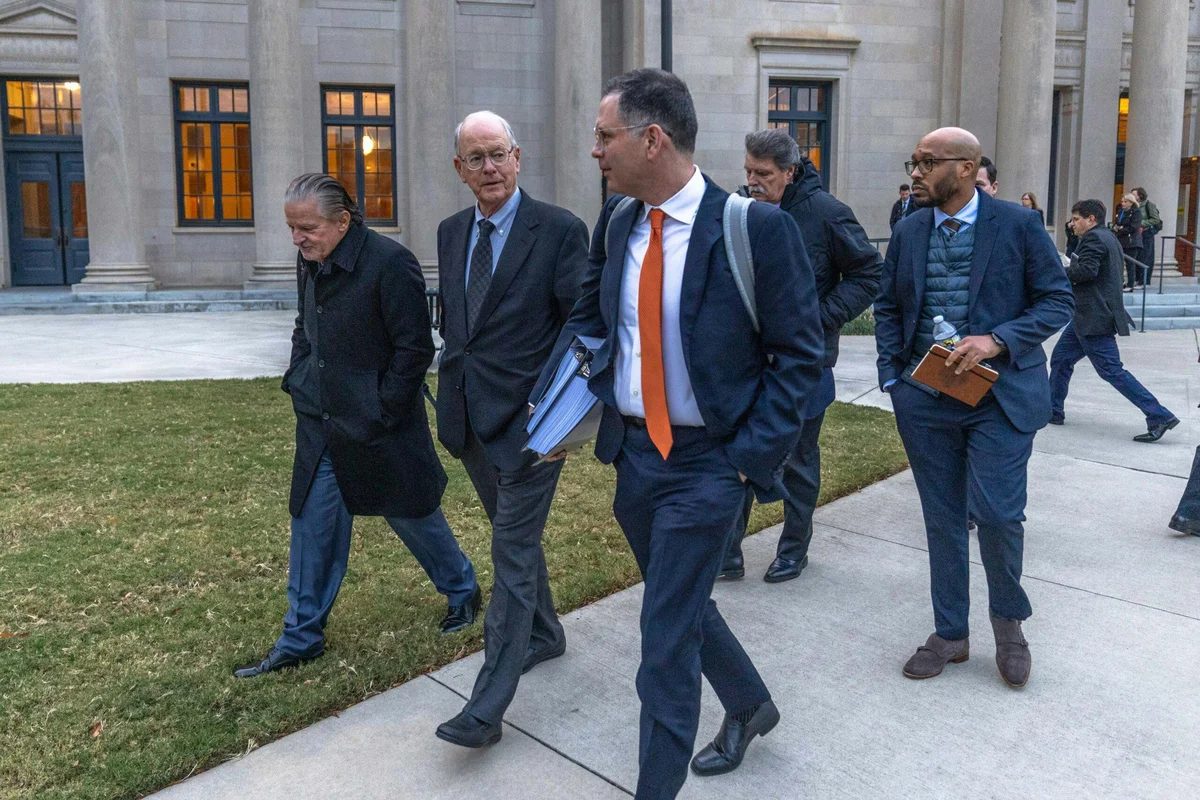
The NASCAR antitrust lawsuit intensified Tuesday as prominent figures, including Richard Childress, took the stand in federal court. The ongoing case, centered on the issue of permanent charters for teams, highlighted deep divisions between team owners and NASCAR’s leadership.
Testimonies Escalate Tension Over Charter Permanency
On the seventh day of the trial, team owner Richard Childress, along with NASCAR Commissioner Steve Phelps and Chairman Jim France, provided crucial testimony. Jim France confirmed that NASCAR remains under the France family’s control through trusts, with himself as the majority stakeholder. During questioning by plaintiffs’ lead attorney Jeff Kessler, the focus fell sharply on whether NASCAR would create permanent charters as part of the 2025 agreement—a central sticking point in this legal battle.
Permanency of charters, often mentioned in testimony, proved contentious. Jeff Kessler drew attention to a letter from Heather Gibbs of Joe Gibbs Racing, sent in 2024, which asked for ongoing charters. Richard Childress, representing Richard Childress Racing, described a similar plea earlier in the day. Renowned figures like Jack Roush, Rick Hendrick, and Roger Penske also submitted letters, reinforcing how vital permanent charters are for teams’ business stability and long-term planning.
NASCAR’s Management Defends Charter Structure
Chairman Jim France stated clearly,
We did not agree to evergreen or permanent charters, no,
France, Chairman/CEO. This insistence on temporary charters rather than guaranteed assets highlighted the gap between what team owners desire and what NASCAR’s leadership is prepared to offer. Whether this refusal constitutes anti-competitive conduct—a key issue in the antitrust suit—remains for the jury to decide unanimously.
Commissioner Steve Phelps testified that NASCAR proposed a compromise to extend each charter by seven years, following the expiration of the current broadcast agreement in 2031. He acknowledged the owners’ concerns, stating,
I know it’s something the race teams desired,
and later,
What we tried to find was a compromise.
He also explained that during the second seven-year period of the 2025 charter agreement, teams would receive no less revenue than the first term, noting,
They (the teams) wanted a floor,
Phelps, Commissioner. We gave them a floor.
Phelps outlined the conditions for introducing new charters:
if and only if a new OEM (car maker) comes in, and if and only if the other chartered teams decided not to bid for those charters.
Phelps, Commissioner. This policy seeks to protect the value of existing charters by limiting their supply.
Negotiating Council and the “Four Pillars” Demands
The four primary demands from team owners—more revenue, voting rights on cost increases, permanent charters, and a share in new business opportunities—have dominated negotiations. These representatives, including Jeff Gordon (Hendrick Motorsports), Dave Alpern (Joe Gibbs Racing), Steve Newmark (previously of Roush Fenway Keselowski Racing), and Curtis Polk (23XI), consistently advocated for these “four pillars” across two and a half years of talks.
Despite these efforts, teams settled for a $98 million increase in revenue above 2024 levels, with an average of $12.5 million per charter. NASCAR responded to governance concerns by launching an Owners Advisory Council, which gives owners a consultative role but stops short of granting actual voting or veto power. A New Business Committee was also established, designed to review possible opportunities on a case-by-case basis.
Dissent, Lawsuit Origins, and Ongoing Trial
Of the 15 teams involved, 13 accepted the 2025 charter agreement. However, 23XI and Front Row Motorsports declined to sign, instead filing the antitrust lawsuit at the heart of the current proceedings. Their claim alleges NASCAR’s refusal to issue permanent charters constitutes anti-competitive behavior, referencing the earlier 2016 charter deal and seeking damages.
The trial continues under Judge Kenneth D. Bell, who expressed hope that NASCAR may conclude its defense by Friday. Jim France’s cross-examination, overseen by outside counsel Chris Yates, is set to finish Wednesday, after which the plaintiffs expect to rest their case. Closing arguments from both sides will follow before the dispute is handed to the jury.
Financial Stakes and Leadership Perspectives
Jim France appeared steadfast under questioning, repeating that permanent charters were not an option and referencing evidence that suggested he entered talks determined to prevent teams from securing a greater portion of NASCAR’s revenue. Richard Childress admitted that the only reason he signed the 2025 revenue-sharing agreement was to prevent Richard Childress Racing from going out of business. Phelps, newly appointed as the first commissioner, explained that meeting the teams’ original demand of $720 million annually would have been unsustainable for NASCAR’s operations.
What’s Next For the NASCAR Antitrust Battle
The trial is poised to reach another critical phase as testimony wraps up and arguments close in the coming days. The jury will soon be tasked with ruling on whether NASCAR’s position on permanent charters represents a legitimate business policy or illegal restraint within the antitrust framework. The decision could reshape the governance and economics of the NASCAR Cup Series, affecting both long-established organizations and new entrants like 23XI. As the case continues to unfold, figures such as Richard Childress, Steve Phelps, Jeff Gordon, and Jim France remain central to a debate with ramifications for the entire stock car racing landscape.
23XI Racing and Front Row Motorsports v. NASCAR Megathread: Day 7
byu/dman6233 inNASCAR