
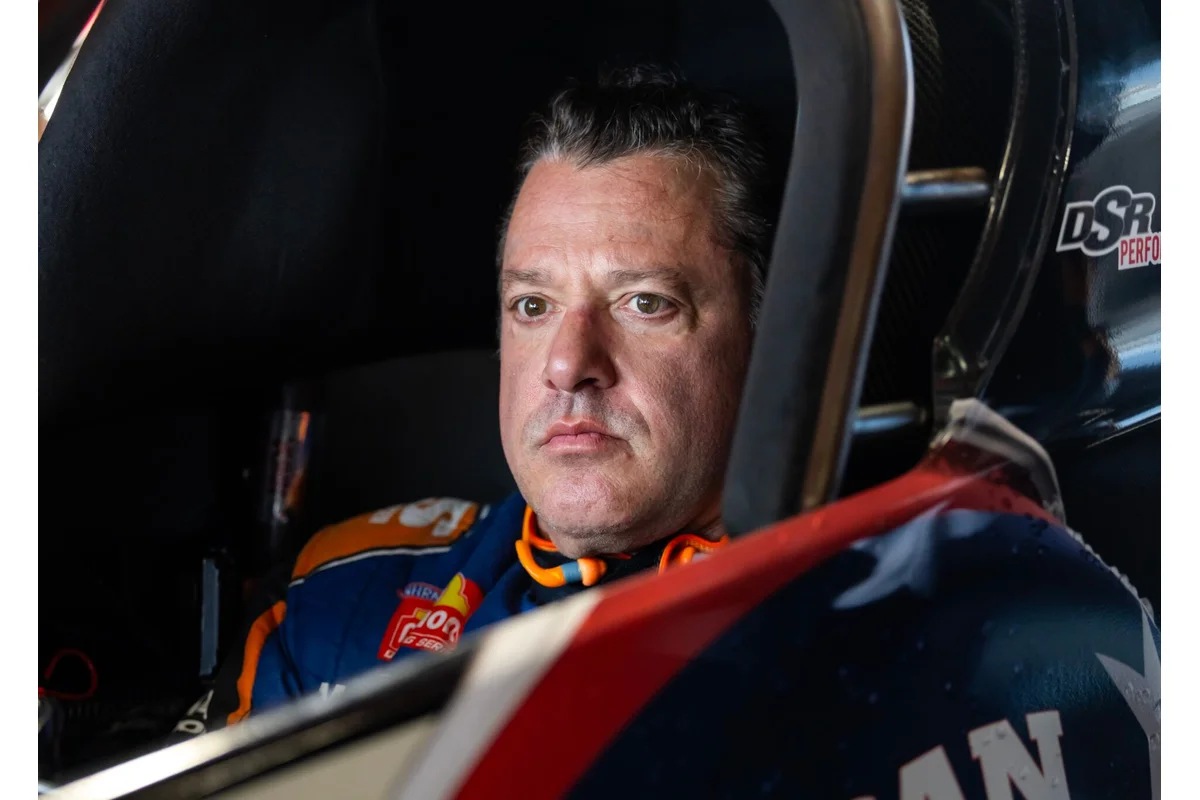
Tony Stewart’s introduction of the Superstar Racing Experience (SRX) in 2021 has escalated the longstanding Tony Stewart NASCAR rivalry, unsettling NASCAR’s leadership and raising questions about the sport’s identity and future. With Stewart’s new series capturing fans and key figures speaking out, the friction inside NASCAR reveals growing uncertainty over how the organization shares its platform and power.
The Growth of SRX as a Challenger to NASCAR’s Dominance
For several years, NASCAR has fought to maintain its relevance amid changing TV ratings, economic concerns, and evolving rules. Yet, another battle has emerged—this one centered on attention and loyalty in the world of motorsports. The launch of SRX by legendary Cup Series champion Tony Stewart appeared, at first glance, to be a simple return to grassroots racing: a summer series featuring short-track races, racing legends, and up-and-coming talent. The event’s format, with short, energetic races on Thursday nights and a laid-back approach, drew older fans back and attracted newcomers, all while capturing a sense of nostalgia for the sport’s classic era.
However, this surge in popularity sent ripples through NASCAR headquarters. Unlike other competitors, SRX was serious business; it boasted potent broadcast support from CBS, prominent sponsors, and participants who were household names within NASCAR—many of whom were still closely aligned with the mainline Cup Series. For NASCAR leadership, the threat was not abstract but very real, as SRX borrowed elements—tracks, drivers, and an engaging fan experience—that mirrored NASCAR’s roots but operated outside of its authority.

Inside NASCAR’s Reaction: Tensions Surface During Lawsuit Drama
The underlying strain between the two racing entities became unmistakably clear during the ongoing Michael Jordan charter lawsuit. On the witness stand, NASCAR President Steve Phelps openly described NASCAR’s early legal scrutiny of SRX, admitting they had explored whether SRX infringed on the organization’s trademarks. Ultimately, NASCAR’s legal team chose not to pursue action, leaving SRX to continue building its audience unchecked.
Yet, a revealing moment occurred when Phelps acknowledged a privately sent message suggesting NASCAR needed to
stick a knife in this trash series.
— Steve Phelps, NASCAR President. Though he later attempted to clarify his words, Phelps emphasized his frustration stemmed from similarities between the two brands, noting the use of familiar paint schemes, sponsors, and participation by Cup drivers made SRX too reminiscent of NASCAR for comfort.
Phelps recounted an instance when NBC executive Sam Flood called shortly after popular driver Chase Elliott competed in an SRX event, warning that fans might get mixed messages and the Cup Series risked losing its top billing as stars drew attention to a rival format. The intensity was no longer just a business dispute—it had become deeply personal. Stewart, long celebrated as one of NASCAR’s brightest figures, succeeded in bringing back an old-school style of competition that many felt was lost in modern NASCAR, prompting fans and even industry insiders to question the current trajectory of the sport.
Restrictions imposed by NASCAR’s charter system—rules governing who can race, where events are held, and how teams participate—surfaced as crucial points in the dispute. As the legal battle played out, the recurring references to SRX highlighted a deeper fear among NASCAR elites: if Stewart could win hearts and sponsors with a summer series, what would prevent an even larger challenge to NASCAR’s supremacy in the future?
Kenny Wallace Calls for a New Era of Leadership in Racing
Commentator Kenny Wallace added another layer to the debate, suggesting that NASCAR’s current business model has outlived its usefulness. While acknowledging the France family’s foundational role, Wallace emphasized that the sport’s sheer size now demands broader, modern ownership. He pointed out,
Look at Formula 1, it’s owned by Liberty Media Group. Look at IndyCar. Roger Penske sold a third to Fox Sports.
— Kenny Wallace.
Wallace’s remarks reflect a view that successful leagues diversify their ownership and invite new partners, which encourages innovation and diffuses risk. He proposed that NASCAR’s insular approach—where control remains tightly held—prevents teams from having genuine input and constrains the growth of racing as a sport. According to Wallace, a sale could be the best step forward, not as a slight against NASCAR’s past but as an acknowledgment that the sport’s future may require a different model.
This perspective resonates with ongoing ownership disputes and legal clashes, amplifying calls for a more open, transparent structure. Fans, Wallace contends, yearn for competition that feels authentic and unfettered, and Tony Stewart’s SRX has demonstrated that love for racing doesn’t depend on long-standing brands or rigid formats. His words underscore the intensity of the Tony Stewart NASCAR rivalry and the wider desire among fans and teams for change and freedom from legacy constraints.
The Impact of SRX and What It Means for NASCAR’s Future
The emergence and sudden influence of SRX have exposed deep vulnerabilities within NASCAR’s leadership and approach. Phelps’s description of SRX as ‘trash’ was an acknowledgment that a rival series could succeed without NASCAR’s direct oversight or approval. Meanwhile, Wallace’s comments urge a critical reevaluation of how the sport is managed, highlighting the challenges that arise when innovation and tradition collide.
The ongoing debate in courtrooms and across media channels signals more than just a business dispute—it reveals a pivotal moment where NASCAR must decide whether to cling to a long-standing family-run model or open itself to broader ownership and a more flexible, fan-focused environment. Figures like Steve Phelps, Tony Stewart, and Kenny Wallace feature prominently, reflecting the conflict’s complex layers and the high stakes involved for fans, drivers, and the sport’s identity.
As Tony Stewart continues to attract crowds and media with SRX, the pressure on NASCAR executives and stakeholders is likely to intensify. Whether this rivalry leads to meaningful reform or deepens existing divides, the Tony Stewart NASCAR rivalry will remain a defining issue with lasting implications for the future of American motorsports.

