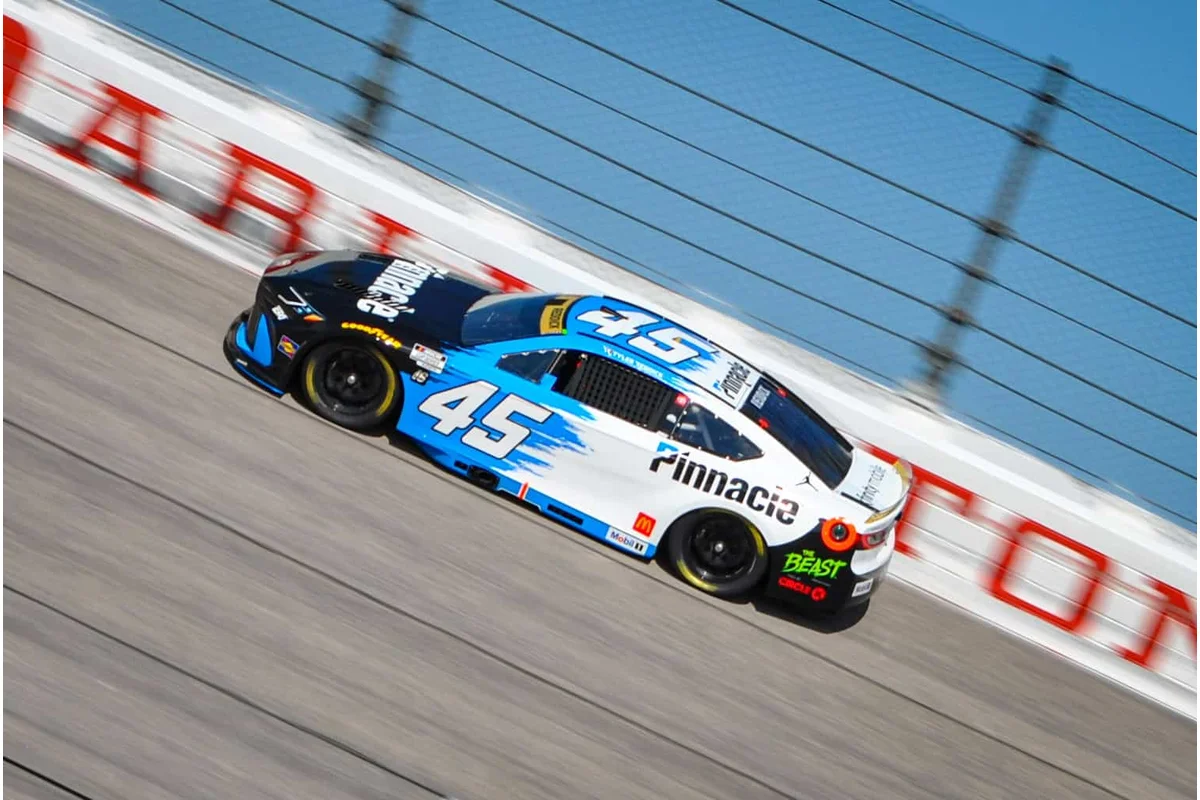
The 23XI Racing NASCAR antitrust trial is heading toward a conclusion, with significant consequences possible for NASCAR, its teams, and fans. As the jury prepares to deliberate in the closely watched case, the focus keyword—23XI Racing NASCAR antitrust trial—remains at the heart of a debate over competitive fairness and the future structure of NASCAR’s business.
Key Testimonies Shape the Jury’s Perspective
Throughout the trial, a variety of prominent figures have taken the stand, offering insight into internal NASCAR operations and the various viewpoints in the dispute. Notable witnesses have included Denny Hamlin, whose testimony was described as combative and passionate, particularly during exchanges with NASCAR’s attorneys. Heather Gibbs provided a contrastingly emotional account, followed by Michael Jordan, whose testimony was marked by a charismatic presence.
Building a compelling narrative for jurors has been central to both the Plaintiffs’ and Defendants’ strategies. Each witness’s demeanor, order, and the nuances of their statements have been carefully orchestrated to influence the jury’s perception.
“You know, at a higher level, you’re trying to figure out, what’s the story, and does it appeal to jurors,”
Rakesh Kilaru, partner at Wilkinson Stekloff and antitrust expert, explained regarding the significance of witness selection.
Kilaru emphasized that both sides have employed strong trial lawyers, balancing the economic intricacies of antitrust with the need to connect on a personal level with jurors through credible, consistent storytelling, rather than just technical arguments or expert reports.
“And what I’ve found in my own experience is when you actually try these cases, both sides have to figure out how to connect with the jurors and tell a story that follows the law that actually makes them view it from your side. More often than not, it’s not some very political anti-trust economic argument, even though I think jurors take their job seriously and really try to figure that out. It’s which side seems more credible, which side has the most of the story, which side is saying things that match to what they were saying back in the time.”
— Rakesh Kilaru, Antitrust Expert
The leadership of NASCAR, represented by CEO Jim France, also took the stand but reportedly offered limited substantive testimony, frequently responding with uncertainty or lack of recall. Plaintiffs’ attorney Jeffrey Kessler has targeted this approach, alleging that it reflects a stubborn and abusive NASCAR leadership style.
“There’s also the storytelling aspect of it. You know, what keeps the jurors together, what keeps them engaged, what keeps them focused.”
— Rakesh Kilaru, Antitrust Expert
Determining Liability and Remedies: The Jury and Judge Bell’s Roles
23XI Racing and Front Row Motorsports are seeking up to $365 million in damages—a figure calculated by economic expert Edward Snyder. The core of the trial centers on whether NASCAR abused its market position, with the jury responsible for deciding if the Plaintiffs are entitled to damages.
Judge Kenneth Bell, however, will have final say on any remedies or changes to NASCAR’s business structure, should antitrust violations be found. He can take recommendations from either side or dictate his own solution to improve fairness and competition in the sport.
“I believe the case has two phases, right?”
— Rakesh Kilaru, Antitrust Expert
Kilaru described the structure: first, a jury phase to decide possible monetary awards, and a subsequent phase in which the judge determines any structural remedies.
“The jury will decide damages. … So typically in these cases, we’ll have hired experts who will say, here’s what an injunction would look like that would increase competition. And NASCAR will say, well, actually, that doesn’t work for this reason or that reason. If you’re going to impose an injunction, you should maybe do it like this instead. That’s like the kind of common second phase of these cases. At the end of the day, it is up to the judge.”
— Rakesh Kilaru, Antitrust Expert
The Plaintiffs, notably, are not pursuing the formation of a separate racing league or eliminating NASCAR’s charter system. Their stated goal is a more equitable charter agreement, which has been a focal point of the dispute. Judge Bell, for his part, has repeatedly expressed his preference for an out-of-court resolution, indicating sensitivity to the potential for drastic business disruption in NASCAR.
Expert Witness Testimony: Crucial Yet Challenging
Expert witnesses have played a central, if sometimes tedious, role in the trial. Edward Snyder, for the Plaintiffs, offered exhaustive calculations of lost profits, reductions in team market value, and projected future losses. This detailed testimony, though dense for jurors, is critically important in establishing a factual basis for any compensation.
“I think jurors evaluate experts in the way that they evaluate other witnesses,”
and,
“Did I understand what they were saying? Were they helpful? Were they credible? You know, did they seem like they had a dog in the fight and they were a hired gun? Those are things that can matter to people. You see a paid expert on the stand and he’s super nice to the person who’s asking the questions, and then the other side gets up and will deny that the sky is blue.”
— Rakesh Kilaru, Antitrust Expert
Expert assessments must not only withstand cross-examination but also resonate as clear, unbiased, and credible for the jury. Their work synthesizes all previous witness statements, adding analytical weight to the financial arguments made by the attorneys.
Rigorous Standards for Calculating Damages
The jury, if it finds in favor of the Plaintiffs, will be tasked with assessing monetary damages strictly rooted in trial evidence. Any figure they settle on must be supported by the expert calculations and testimony provided, rather than arbitrary estimation.
According to Snyder’s report, Plaintiffs identified three principal areas of revenue loss: $84.5 million in lost profits from reduced revenues, $260.2 million as the total decline in market value, and $20.1 million in lost revenues for 2025 due to lost charters and associated performance monies. These losses, they argue, are the direct result of NASCAR’s contested business practices.
“The reason it’s important, in my view, is that at the end of the day, the jurors have to make a decision, and that decision has to be grounded in the evidence that they actually heard at the trial, right? So, the expert has to convince the jury that the numbers he’s putting out are more likely than not the right numbers, and what the plaintiffs really want and need, I think, is for the jury to ultimately write down the numbers that the expert gives.”
— Rakesh Kilaru, Antitrust Expert
Kilaru referenced a similar high-profile trial—an NFL class-action suit—where the damages awarded by jurors did not align with the evidence, and were subsequently dismissed by the judge, highlighting the critical need for a verdict closely linked to expert testimony in this 23XI Racing NASCAR antitrust trial.
Tight Schedule Sparks Concerns Over Trial Fairness
Judge Bell has pressed for a swift resolution, aiming to close testimony by Friday, with a possibility of closing statements shifting to Monday. This expedited timeline has generated concern among fans that the pace could risk a mistrial or grounds for appeal, particularly if NASCAR’s side feels their arguments have been abbreviated due to schedule pressure. NASCAR’s attorneys have responded by paring down their witness list.
Still, Kilaru downplayed the likelihood of a mistrial or appeal based on timing, attributing Judge Bell’s urgency to a desire for thoroughness and judicial prudence.
“I would say, I don’t want to speak for [Judge Bell], but I would bet that the person in the world who is most concerned about that possibility is actually Judge Bell,”
said Kilaru.
“Because, you know, the last thing you want if you’re a judge and you preside over this trial and you bring a jury in … So, that’s why I think we see some of the things that have been happening from a timing perspective.”
— Rakesh Kilaru, Antitrust Expert
The defense’s case is expected to be more succinct than the plaintiffs’, both because jurors have already seen much evidence and because legal convention aims to avoid redundant arguments.
“In my experience, as a general matter, defense cases are usually shorter than the plaintiffs’ case. And what I mean is, like, by the time the plaintiff says, I rest my case, and the defense gets up, typically the defense case ends up being a little less long. That’s partly because the jury’s heard a lot already, and it’s partly because, you know, you don’t want to seem to be the side hat’s belaboring things or making claims they already made.”
— Rakesh Kilaru, Antitrust Expert
NASCAR’s Legal Challenge: Defending Its Dominance
Ahead of the trial, Judge Bell issued a pivotal finding: NASCAR holds a monopoly in premier stock car racing. While having a monopoly is not inherently illegal under U.S. law, leveraging such a position through anticompetitive means is the key issue for the jury to decide.
NASCAR’s legal defense, led by Jim France, must convince the jury that its market power resulted from fair competition, not exclusionary or abusive practices. Their claim rests on being the best at what they do, rather than engaging in illegal activity to suppress rivals. The Plaintiffs argue the opposite, pointing to restrictive charter rules and business behavior as barriers to fair competition.
“Sometimes with sports leagues, and I don’t want to overgeneralize, but sometimes with sports leagues, those arguments can be a little hard to make to begin with,”
explained Kilaru, who further noted that monopolies often arise naturally in professional sports, but the legal question remains: were they lawfully acquired and maintained?
“But with that said, given that Judge Bell obviously thought they had a strong argument. So, it sounds like that would have been something that they would have pushed in this trial. So I do think it makes it more difficult [for NASCAR] for sure. I think the real question is, sometimes it’s hard to get jurors to follow this rule, but the rule is, it’s not unlawful to have a monopoly. If you get a monopoly through fair competition, that’s fine. The question is, are you doing things to keep it that are unlawful? And so that’s what I suspect the trial is going to focus on.”
— Rakesh Kilaru, Antitrust Expert
With NASCAR commencing its defense, the trial’s resolution will likely hinge on whether the jury sees NASCAR’s conduct as legitimate business or unlawful exclusion.
Timing, Outcome, and What Comes Next in the Antitrust Trial
The 23XI Racing NASCAR antitrust trial could fundamentally reshape NASCAR’s operating structure if the Plaintiffs succeed. Much rides on the jury’s findings regarding damages, as well as Judge Bell’s ultimate decisions about remedies and business modifications. Any changes to charters or competition could ripple through the teams, the business side of the sport, and its fan base.
While the proceedings have moved swiftly under Judge Bell’s supervision, all eyes remain on the jury as it weighs extensive expert testimony and the narratives put forth by both sides. Regardless of the outcome, appeals remain a possibility, and the sport awaits potential shifts in its most closely held business practices.
The verdict in the 23XI Racing NASCAR antitrust trial will signal the next chapter not only for the teams involved but for all of NASCAR, underscoring the continuing attention to competitive fairness and the enduring impact of legal scrutiny in elite sports.