

An intense legal standoff continues in Charlotte as Denny Hamlin challenges NASCAR data at the center of an ongoing antitrust trial involving Michael Jordan’s 23XI Racing, Front Row Motorsports, and NASCAR leadership. Day eight saw disputes over how financial figures are calculated, who truly controls the sport’s competitive balance, and whether the current charter system harms teams’ long-term stability.
This antitrust lawsuit escalated when several teams, including 23XI Racing, declined to sign NASCAR’s proposed 2025–2031 charter deal. At the heart of their argument is the allegation that NASCAR maintains firm control over access to tracks, technical components, and approved vendors, which they claim stunts teams’ revenue growth and hinders competition. NASCAR, in response, maintains the charter rules are fair and vital for maintaining order in the sport.
Executive Testimony on Spending and the Next Gen Car
During Wednesday’s session, NASCAR Executive Vice President John Probst defended both the design and financing of the Next Gen car. According to Probst, NASCAR committed between $10 million and $12 million to the vehicle’s research and production, covering significant upgrades like the underwing and diffuser flap in full. This, he asserted, was part of the organization’s commitment to safety and technological advancement.
Probst released detailed spending figures for 23XI Racing, indicating the team spent $1.446 million per vehicle on essential parts in 2023, and over $1 million for each car in 2024. With these expenditures, 23XI landed among the top three highest-spending organizations from 2022 to 2024. Addressing a key element of the case, Probst suggested that financial outlay does not directly translate to wins, challenging a common narrative surrounding the sport.
As reporter Jeff Gluck described from a NASCAR witness’s review,
“They get all the data for Alexa orders first, and they find that the three highest spending teams, the three teams that ordered the most parts, all had less than 10 wins. He was very happy about those, essentially, because he was worried that their chart would show that the more you buy parts and the more you spend on the action card, the more you win. But in fact, they find that’s not the case. 23XI was one of the three highest spending, 1.7 million, Gluck explained.”
– Jeff Gluck, Reporter
Hamlin Critiques Data Exclusions and Expansion Plans
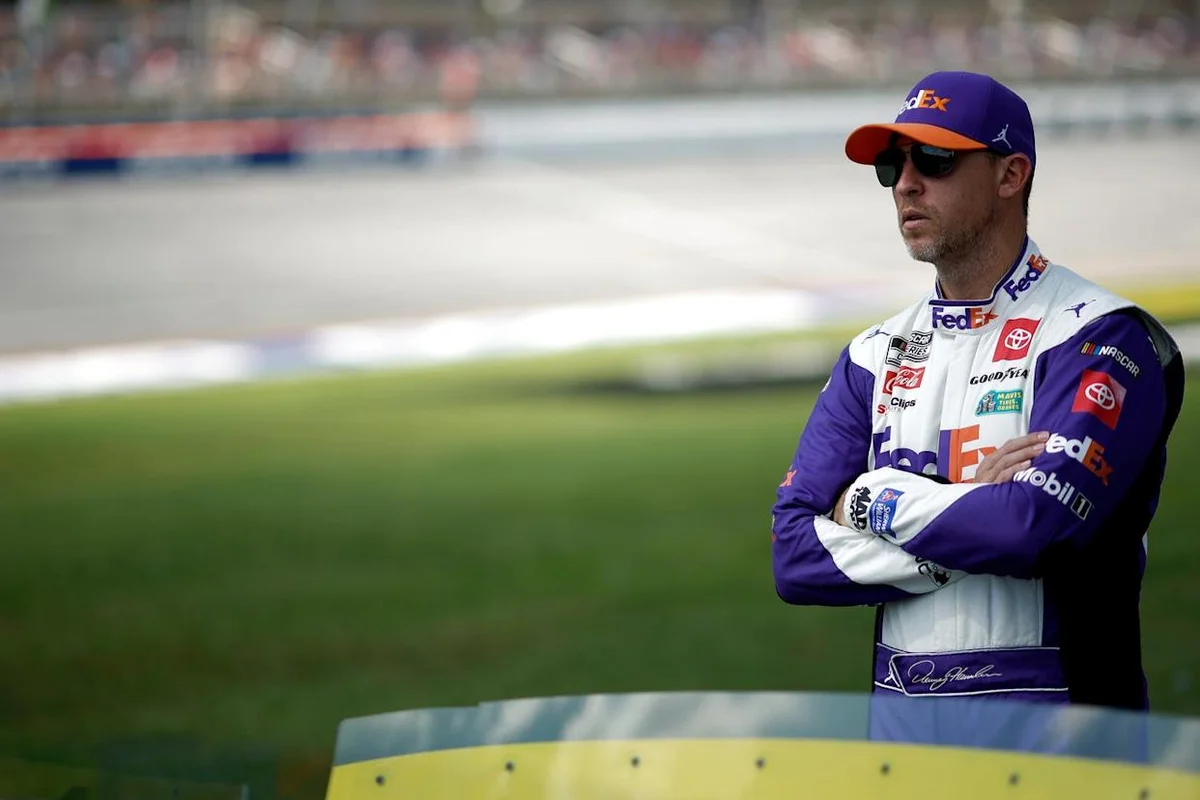
Shortly after these numbers were introduced, Denny Hamlin—veteran driver and co-owner of 23XI Racing—voiced strong disagreement. Hamlin argued that the financial data presented to the court omitted crucial information about the organization’s real expansion strategy. He claimed that the numbers failed to consider 23XI’s growth, which included plans to field three cars in 2025 and up to four entries during select weekends. This, Hamlin argued, made the numbers used in court misleading.
“We were going to have 3 cars in 2025. We had to buy cars and parts for 3 entries (4 entries some weeks), and the data they provided was based on 2. More disingenuous information.”
– Denny Hamlin, Co-owner and Driver
This statement underlined concerns that court records may be understating the financial demands of team expansion, which, if substantiated, could shift perceptions of how much spending impacts success within NASCAR.
NASCAR’s Chairman Jim France addressed the broader topic of charter permanence during his own testimony, emphasizing that the organization is reluctant to guarantee long-term arrangements it cannot be certain to uphold.
“I don’t have a sightline to the future, and I’m really not comfortable making a promise that I cannot keep forever, he said.”
– Jim France, NASCAR Chairman
Meanwhile, plaintiffs’ attorney Jeffrey Kessler dug into past internal correspondence, seeking evidence that NASCAR leadership has long resisted changes to the charter, further fueling the tension in the courtroom.
Experts Clash Over Damage Estimates and Market Comparisons
The focus later turned to expert analysis on damages and team valuation. NASCAR Chief Financial Officer Greg Motto countered the claims of Edward Snyder, the plaintiffs’ financial expert, who asserted that NASCAR’s policies had cost 23XI and Front Row Motorsports $364.7 million and deprived all chartered teams collectively of more than $1 billion. Motto expressed that satisfying such demands would force NASCAR into bankruptcy, and pointed to ongoing investments, such as $600 million reportedly spent on upgrading tracks in recent years.
Edward Snyder’s calculations used Formula 1 as a benchmark for team valuation and compensation, but NASCAR’s economist, Dr. Mark Zmijewski, argued that this comparison was inappropriate. Zmijewski outlined that Formula 1 had grown 70 percent during the period studied, while NASCAR’s growth was only 7 percent, ultimately stating that using Formula 1 as a guide leads to exaggerated value claims. During cross-examination, attorney Kessler contended that NASCAR’s own structural restrictions might be stunting the potential for teams, and thus the entire sport, to achieve similar levels of prosperity.
Implications for NASCAR’s Future Structure
The confrontation in Charlotte marks a critical juncture for NASCAR, its racing teams, and the underlying structure of professional stock car racing in the United States. The outcome of Denny Hamlin’s challenge to NASCAR data—and the wider antitrust dispute—will likely influence future agreements about charter deals, investment distribution, and the autonomy teams have to grow and compete. With high-profile individuals like Michael Jordan and organization heads testifying, the stakes rest not just on financial terms, but on the very direction and fairness of the sport moving forward.
More spending doesn’t guarantee more victories. 🏁
Check out The Teardown’s recap of Day 8 of the NASCAR antitrust trial. Out now! 💼
Spotify: https://t.co/2btDqP5vdw
Apple: https://t.co/nxxPYiwLp9
YouTube: https://t.co/U70KcSguAo@jeff_gluck | @Jordan_Bianchi pic.twitter.com/jRLpFZC30O— Dirty Mo Media (@DirtyMoMedia) December 11, 2025

