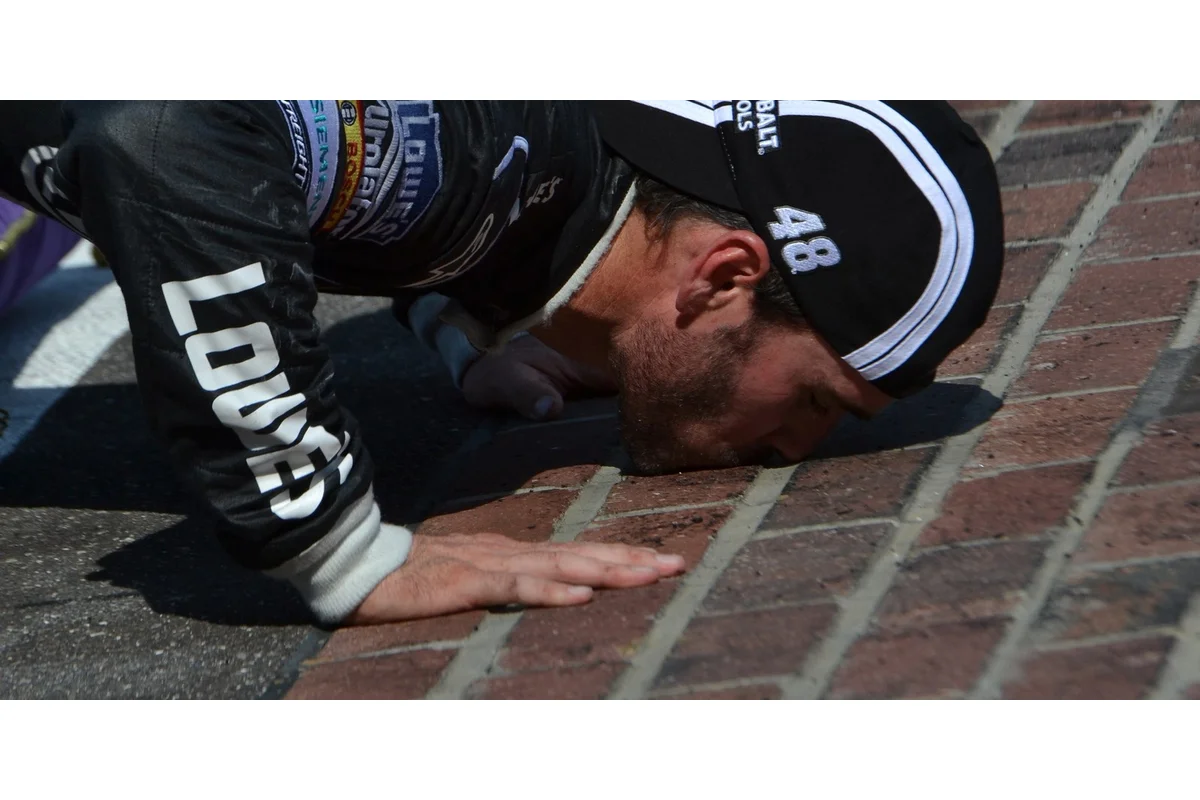
Jimmie Johnson, after clinching seven NASCAR Cup Series championships, embarked on the challenging adventure of open-wheel racing in 2021, making the Jimmie Johnson IndyCar transition one of motorsports’ most discussed shifts. While he had dominated in stock cars, adapting to Chip Ganassi Racing’s No. 48 Dallara DW12 proved to be a far tougher test than he had anticipated.
Historically, drivers have crossed the divide between NASCAR and the IndyCar Series, but not without major hurdles. For Johnson, the initial hurdle was rooted in the starkly different handling of open-wheel cars. Unlike NASCAR machinery, where a twitching car signals the need to ease off, IndyCar demands more aggression, especially when the car begins to slide. Johnson described a moment of realization in the new environment, saying,
“In an IndyCar, you’re just getting into the bottom side of the performance window. And when it moves around, you’ve got to commit more. And there’s more if you’re going faster. And so to almost bust your a** and like, ‘Oh, okay, I just got to go faster, and it’s going to fix that. It is so much easier said than done.”
– Jimmie Johnson, Driver
The task of reprogramming his instincts, as Johnson admitted, was both demanding and time-consuming. Despite two seasons with Chip Ganassi Racing (CGR), highlighted by a top-five finish at Iowa Speedway in 2022, the challenges he faced adjusting to the intensity and demands of IndyCar remained formidable.
Physical Demands in the Open-Wheel Arena
Throughout his legendary Cup Series career, Johnson maintained a high level of physical fitness, often competing in marathons during the offseason. However, nothing fully prepared him for the physical toll of IndyCar competition. During his initial offseason, Johnson’s team scheduled exhaustive, heart-rate-elevating workout sessions—something he didn’t fully appreciate until his first real test in the new car.
Recalling that turning point, Johnson explained,
“I think my first test at Barber is when I realized the physical requirements and the intensity, the high heart rate intensity that went with it. Just such a physical challenge in those cars.”
– Jimmie Johnson, Driver
Among the biggest surprises was the effort required for even basic driving operations. Johnson remarked,
“Even hitting the brake pedal! Like, we don’t have any brake pedal assist in IndyCar. So yeah, that is 1400 to 1600 PSI. I mean, you’re generating that through your leg.”
– Jimmie Johnson, Driver
This exposure to new physical limitations and technical challenges marked a significant chapter in Johnson’s storied career, adding depth to his reputation as one of the sport’s hardest-working drivers. Each session on the track and in training underscored how grueling the Jimmie Johnson IndyCar transition truly was, especially when compared to his earlier NASCAR exploits around circuits like Iowa Speedway and Barber.
The Broader Meaning of Johnson’s Racing Evolution
Jimmie Johnson’s time in IndyCar not only challenged the boundaries of his physical and mental endurance but also highlighted the complexities of switching between racing disciplines. The famously rigorous workouts and test sessions during the offseason reflected the commitment required at the highest level of motorsport, especially at venues like Barber and Iowa Speedway.
This chapter in Johnson’s racing life illustrates why the Jimmie Johnson IndyCar transition is remembered within motorsport circles. It symbolizes the drive to tackle new frontiers, the humility to acknowledge difficulties, and the tireless pursuit of improvement—even after immense success. For drivers considering similar career shifts, Johnson’s story is a compelling reminder of both the excitement and the demands that await in a new racing universe.