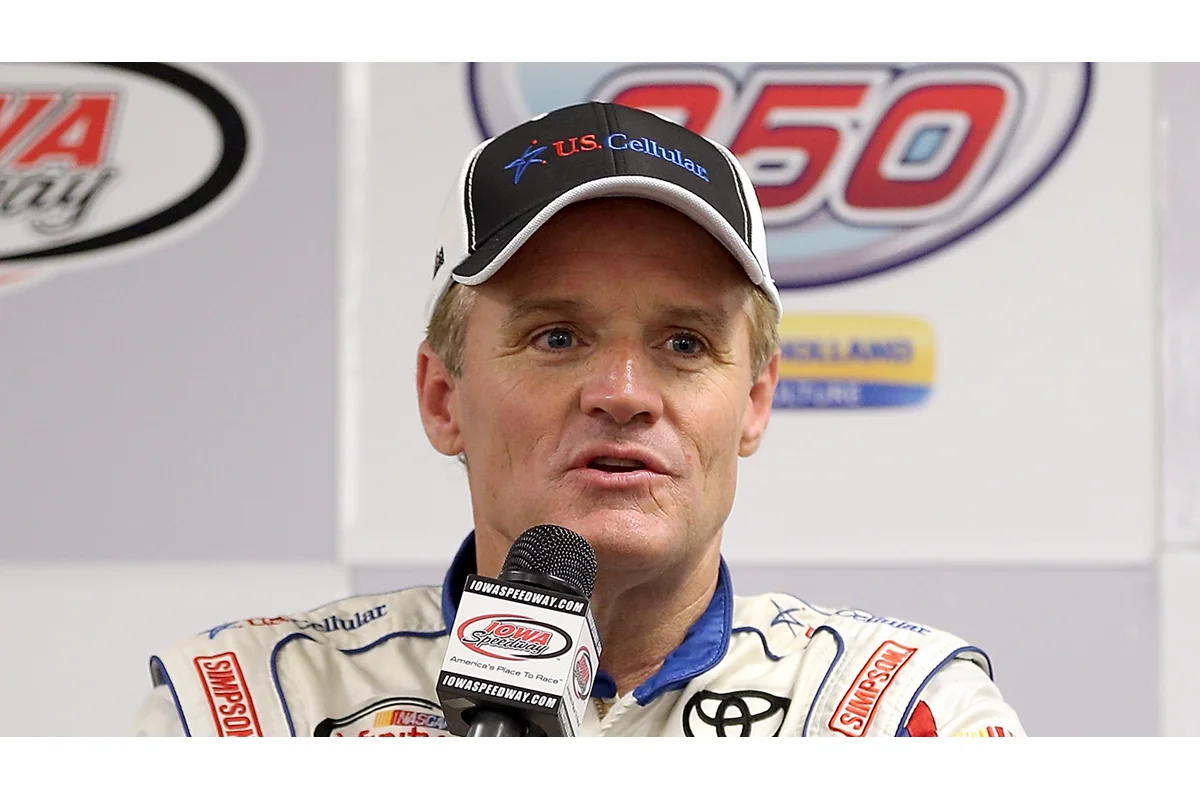
Longtime NASCAR personality Kenny Wallace has reignited the debate over where post-race interviews should take place, urging for a return to the classic Victory Lane format as the 2026 season approaches. The discussion highlights the growing divide between tradition and modern television coverage, as Wallace emphasizes that the essence of a NASCAR victory lies in team celebration, not individual glory—an idea at the heart of Kenny Wallace NASCAR Victory Lane conversations.
Kenny Wallace Calls Attention to Lost Traditions in Post-Race Interviews
This week, Kenny Wallace spoke out amid increasing social media frustration from fans who want to see winners interviewed in Victory Lane, surrounded by their teams, instead of isolated on the frontstretch. For decades, the Victory Lane interview was a signature moment in NASCAR, with the triumphant driver flanked by crew members, engineers, owners, and loved ones—all sharing the collective triumph of a hard-fought race.
Recent seasons have seen NASCAR shift toward conducting interviews immediately on the track’s frontstretch, a change meant to capture immediate driver reactions and offer clean visuals for viewers. However, this format has drawn criticism for eliminating the visible emotional payoff and diminishing the team aspect of the sport. Many supporters argue that NASCAR’s move to the frontstretch caters more to streamlined broadcast needs than longstanding traditions.
Wallace put his endorsement for tradition plainly:
“Yes. I like the @NASCAR Victory Lane TV interviews IN Victory Lane,”
Kenny Wallace, Media Personality.
“Because it shows all the people involved. The driver out on the Frontstretch is on an island by himself.”
Kenny Wallace, Media Personality.
Victory Lane’s Symbolic Importance for the NASCAR Community
For many, the staging of interviews in Victory Lane represents more than a nostalgic nod; it encapsulates NASCAR’s roots, where wins are the result of collaboration.
“The driver out on the Frontstretch is on an island by himself,”
Wallace remarked, underscoring how the team dynamic is lost when focus shifts solely to the driver. In the high-energy, emotionally charged atmosphere following a win, it is the team—crew chiefs, mechanics, pit crews, fabricators, and engineers—who should also share the spotlight.
Wallace’s perspective, shaped by his own experience as a former Cup Series driver and as the brother of legendary competitor Rusty Wallace, echoes concerns that the sport’s traditional culture is slipping away amidst adaptations for television. The iconic scene of winners celebrating in Victory Lane alongside their teams and sponsors has gradually given way to a show designed for quick transitions and immediate post-race coverage.
This shift, some critics argue, risks alienating core fans who cherish the communal spirit of NASCAR. At the same time, some broadcasters and supporters of the frontstretch interviews still acknowledge that something intangible is lost when crew members and contributors do not get their moment of recognition in the post-race spotlight.
Impact on Future NASCAR Engagement and Identity
The timing of Wallace’s comments is notable. NASCAR is in the midst of broader discussions about fan engagement, authenticity, and the future of race broadcasts. As more viewers and prominent voices call for a return to Victory Lane interviews, the debate has become a crossroads between preserving NASCAR’s identity and evolving with broadcast trends.
The Victory Lane setting, with its congregation of team members, owners, sponsors, and supporters, stands as a visual testament to the collaborative spirit underpinning every win. For Wallace, and many within the community, bringing interviews back to Victory Lane is not just about nostalgia—it’s a statement about valuing every contributor to the journey from green flag to victory.
Ultimately, as NASCAR considers these concerns in shaping its future presentation, Wallace’s advocacy signals a broader push to balance television needs with the rich traditions that have defined the sport. Whether this will spur an official shift remains to be seen, but the call for change has captured the hearts of those who see NASCAR victories as a shared achievement—one worthy of a proper celebration in Victory Lane.
Yes 💯. I like the @NASCAR Victory Lane TV interviews IN Victory Lane. Because it shows all the people involved. The driver out on the Frontstretch is on an island by himself. https://t.co/QWY74GK1Ex
— Kenny Wallace (@Kenny_Wallace) January 3, 2026