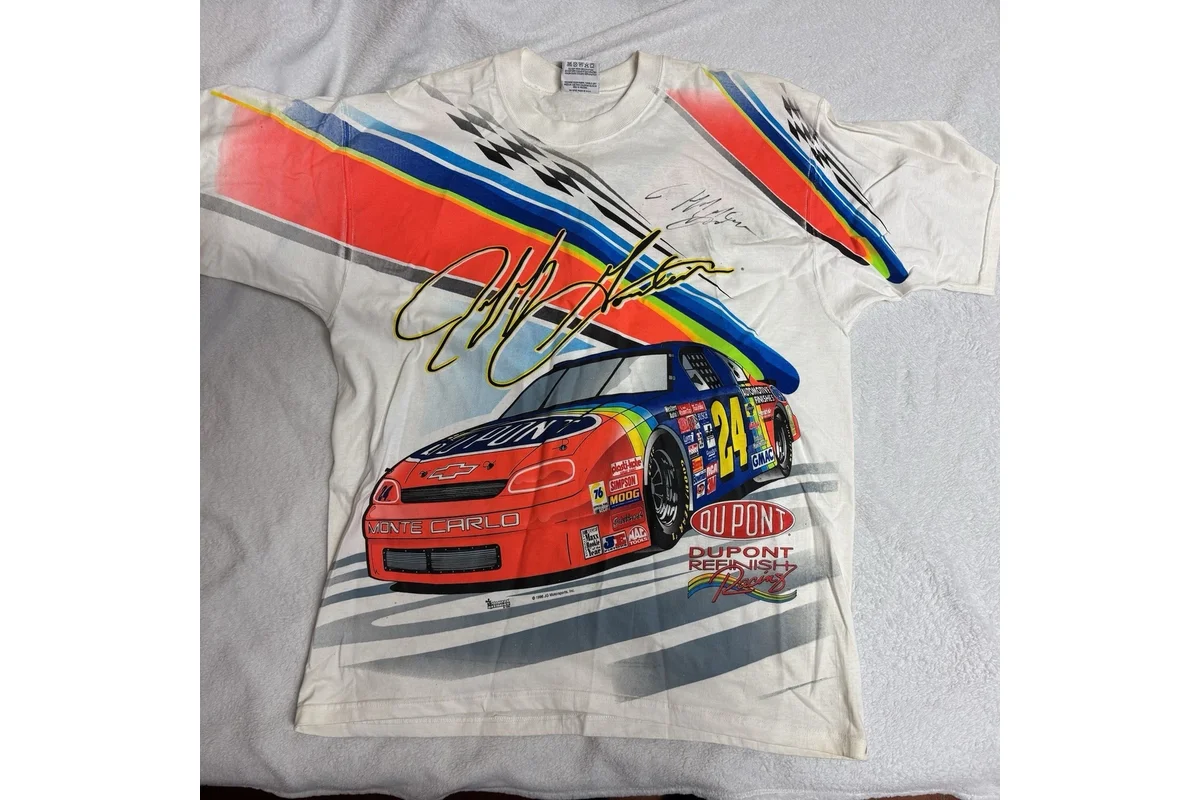
Jeff Gordon’s long-standing place in NASCAR history includes both celebrated and less-publicized rivalries, but a recent revelation has reignited scrutiny of a pivotal on-track moment. In a renewed spotlight, Ron Hornaday Jr. has publicly delivered his final assessment on Gordon’s actions from a controversial race, giving clarity to a decades-old incident that once tested both drivers’ reputations and the wider culture of accountability in the sport. The Jeff Gordon NASCAR rivalry verdict, once left quietly unresolved, now resonates again throughout racing circles.
Ron Hornaday Jr. Re-examines an Old Dover Incident
Ron Hornaday Jr., who achieved nearly 600 starts across NASCAR’s Cup, Xfinity, and Truck Series, brought a forgotten confrontation back to public attention during his appearance on the Dinner with Racers podcast. Reflecting on the late stages of the 2001 MBNA 400 at Dover Downs International Speedway, Hornaday described running near the front of the pack before being knocked out of contention.
I’m running third with about 40 or 50 laps to go. I started to come up, and then I got dumped.
—Ron Hornaday Jr., Veteran NASCAR Driver
This contact resulted in Hornaday spinning out, ending his hopes for a top finish while Jeff Gordon, at the front of the field, continued on to ultimately claim victory. Unlike many heated exchanges that have defined the sport, the aftermath of this collision proved more telling than the event itself.
According to Hornaday, what followed set the incident apart from typical racing altercations. During driver introductions a week later, Gordon made a point of finding Hornaday in the pre-race ceremony.
Jeff Gordon comes over and says, ‘I guess I owe you an apology,’
—Ron Hornaday Jr., Veteran NASCAR Driver
Gordon’s admittance was rare for the time, with the multi-time champion explaining that mistaken assumptions about traffic and racing pressure led to the contact. Hornaday accepted the apology, indicating that Gordon’s direct approach helped put the matter to rest for good.
The apology, delivered publicly, stood out in a culture where on-track disputes often linger and escalate, especially among championship-caliber drivers. Hornaday’s statement, made years after the fact, transformed the once-controversial incident into a moment resolved through personal accountability, showing an alternative route to closure in an intensely competitive environment.
Inside the 2001 Dover Clash: A Turning Point for Both Drivers
The 2001 MBNA 400 marked the 13th race of that year’s NASCAR Cup Series. With qualifying cancelled due to rain, Dale Jarrett started on pole beside Gordon while Hornaday began further back in the field for A.J. Foyt Racing. As the race entered its final stages, the intensity of traffic increased and Gordon, while leading, made contact with Hornaday. Spun out and dropping to a 35th-place finish, Hornaday’s day ended in frustration while Gordon sailed forward to capture the checkered flag, finishing ahead of Steve Park and Dale Earnhardt Jr.
This incident did not catalyze an ongoing feud; instead, it became significant for its quiet resolution. In an era marked by grudges and physical altercations between rivals, especially among championship contenders, Hornaday spoke out years later:
For whatever reason, my time coming into the sport and being able to go up against one of the all-time greats put me on the map and changed my life forever,
—Jeff Gordon, Four-Time NASCAR Cup Series Champion (Motorsport.com, 2019)
Hornaday’s willingness to accept Gordon’s apology, rather than nurse a grievance or escalate tensions, stands out in NASCAR’s tough culture. His verdict was that closure was achieved not in bitterness but in the willingness to own a mistake and move forward—a rarity, particularly among established competitors in such a fiercely competitive landscape.
Broader Implications for NASCAR’s Culture of Accountability
The sports world frequently celebrates rivalries that transform careers and create lasting storylines, with the Jeff Gordon NASCAR rivalry verdict providing a fresh example of how raw competition can sometimes give way to respect and mutual recognition. Gordon’s most iconic rivalry—his clashes with Dale Earnhardt Sr.—helped shape a generation of fans, drivers, and leaders across the Cup and Xfinity Series. These legendary confrontations have been immortalized in documentaries and continue to inform how current and future contenders approach the emotional intensity of NASCAR competition.
Though Hornaday’s incident with Gordon never reached the notoriety of other racing disputes, its recent airing highlights the value of direct communication and accountability—even in the face of national scrutiny and immense pressure. For emerging drivers and established veterans alike, the story demonstrates that apologies, when offered sincerely, can produce closure and even admiration among peers and fans.
At a time when NASCAR’s future keeps evolving, with new controversies involving figures like Ross Chastain, Steve Phelps, Justin Marks, and Jimmie Johnson filling headlines, the renewal of interest in the Gordon-Hornaday moment serves as a reminder. As the sport confronts transition, leadership changes, and changing audience dynamics, the legacy of integrity and honest reflection may prove just as crucial as checkered flags and championship titles. In the volatile, emotionally charged world of motorsports, this verdict stands as a rare testament: even bitter moments can become defining ones, resolved through respect rather than rivalry.