

Mark Martin recently opened up about the pivotal Kurt Busch team shake-up at Roush Racing in the early 2000s, detailing how the move transformed both drivers’ careers in NASCAR. The decision to swap entire teams and crew chiefs was a turning point that altered the course for Martin, Busch, and the organization during a challenging period without race wins.
A Season Defined by Struggles Prompted Radical Change
In the NASCAR Cup Series in 2001, Roush Racing fielded Mark Martin and Kurt Busch, an experienced veteran and a rising young driver, yet both remained winless throughout the season. This lack of victories served as a wake-up call for Jack Roush’s team, despite pairing proven talent like Martin with veteran crew chief Jimmy Fenning. The mounting pressure highlighted an urgent need for change within the organization, as the pairing of youth and experience couldn’t deliver the results fans and team leaders expected.
The inability of both drivers to secure wins with their respective teams led to increasing frustration. Instead of sticking with a stagnant lineup, Martin and the team’s co-owner Jack Roush arrived at a bold solution: to swap the two drivers’ teams and crew chiefs entirely, launching a transformation that would soon bear fruit. Detailing the team’s decision, Martin recalled,
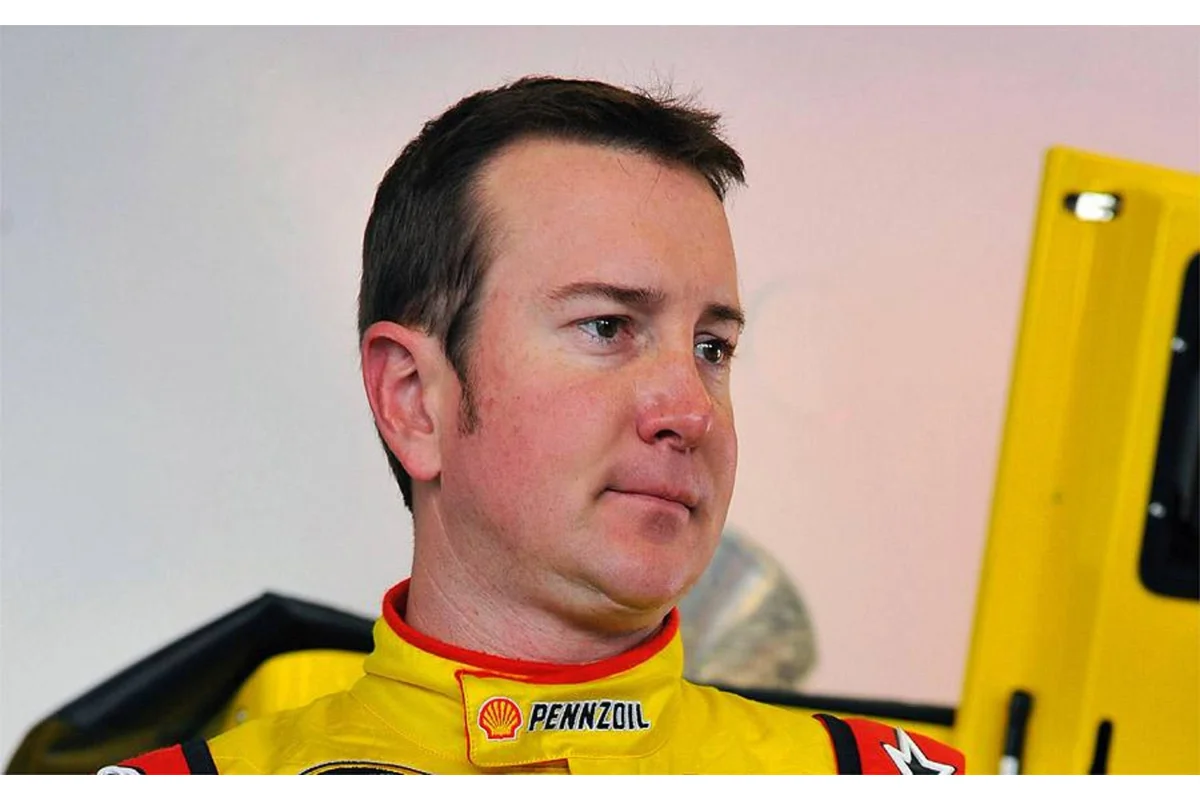
“So, Jack (co-owner of Roush Racing) and I, sort of made the executive call to swap teams,”
—Mark Martin, speaking on Kenny Wallace Media podcast.
Inside the Swapping of Teams and Its Impact
By the end of 2001, it was apparent that the current structure at Roush Racing was not producing success. Mark Martin and Jimmy Fenning, despite a lengthy history and many Cup victories together, could not revive the team’s performance. Busching, meanwhile, was paired with Ben Leslie, then a rookie crew chief, along with a largely inexperienced pit crew. Martin acknowledged the challenges they faced, stating,
“Jimmy and I worked together in one. I won two-thirds of my Cup wins, under Jimmy Fenning. It’s a huge one. ASA Championship, all the way back to 1985. But things weren’t working.”
—Mark Martin, Kenny Wallace Media podcast.
It wasn’t tension between Martin and his crew chief, but rather their lack of results, that drove the shake-up. Martin noted,
“Sometimes you gotta make a change, it wasn’t because Jimmy and I wasn’t getting along, but Jimmy and I weren’t getting it done at this time.”
—Mark Martin, Kenny Wallace Media podcast.
The swap paired the young Kurt Busch with the experienced Jimmy Fenning, while Martin took the reins of Busch’s previous car and young crew, led by Ben Leslie. Martin said,
“So, it would be a great swap to put a veteran like Jimmy with Kurt because Kurt was with Ben Leslie, who was pretty much a rookie crew chief, cut to crew chief himself. And most of Kurt’s team were rookie guys as well,”
—Mark Martin, Kenny Wallace Media podcast.
The full extent of the transition involved cars, colors, and entire teams. Martin described,
“So, my team, they changed the colors of cars. I got Kurt’s car, Kurt’s got my car. Kurt’s got Jimmy and my guys, and I got all those young guys.”
—Mark Martin, Kenny Wallace Media podcast.
Breakout Seasons After the Team Switch
The effects of the shake-up became evident quickly. In the 2002 season, Mark Martin clinched the prestigious Coca-Cola 600 and spent much of the year in contention for the championship, while Kurt Busch seized his first NASCAR Cup Series win at Bristol. Busch capitalized on the change, winning further races at Martinsville, Atlanta, and Homestead before establishing himself as a serious Cup contender.
Kurt Busch’s momentum built into the following years. By 2003, he remained among the strongest drivers in the Cup field. In 2004, Busch captured the ultimate prize, the NASCAR Cup Series Championship, by holding off fellow stars Jimmie Johnson and Jeff Gordon. For Martin and Busch, this shake-up engineered by Roush Racing’s leadership changed the trajectory of their careers and the team’s fortunes in American motorsports.
Mark Martin Pays Tribute After Greg Biffle’s Tragic Accident
Alongside his reflections on the historic team swap, Mark Martin also shared his emotions following the deadly plane crash involving longtime competitor Greg Biffle at Statesville Regional Airport. Utilizing his own background as a pilot, Martin remarked on the gravity and disturbing circumstances surrounding the incident.
“As a Citation pilot for 20 years and a product of around 75 days of @FlightSafetyInt training and over 3000 hours of flight time in the aircraft I have deep knowledge of these aircraft and performance. The more I learn about Biffle’s crash the more disturbing it is to me.”
—Mark Martin, via social media.
Martin commented specifically on the type of aircraft involved, the Cessna C550 Citation II, and underscored his personal connection as someone with years of Citation jet experience. The aftermath of the tragedy has left a deep mark on Martin:
“Every day I get sicker and sicker about this tragedy,”
—Mark Martin, via social media.
The crash’s impact extended beyond the racing community, with 911 calls from both airport staff and nearby golfers highlighting the traumatic nature of the event. For Martin, the loss of Biffle and the circumstances of the crash continue to weigh heavily.
Why the Shake-Up Still Resonates in NASCAR
The decision by Mark Martin and Jack Roush to initiate the Kurt Busch team shake-up stands as a rare example of bold leadership and adaptability in the face of adversity within NASCAR. By entrusting a veteran crew to an up-and-coming driver and giving Martin a new perspective with a younger team, Roush Racing not only revived its winning ways but also proved the value of calculated risk-taking. For Martin and Busch, the shake-up was more than a tactical adjustment—it was a career-altering moment that wrote a new narrative for themselves and for Roush Racing in the competitive world of American motorsport. As the sport continues evolving, this chapter reminds teams and drivers of the lasting impact the right midseason move can have.

