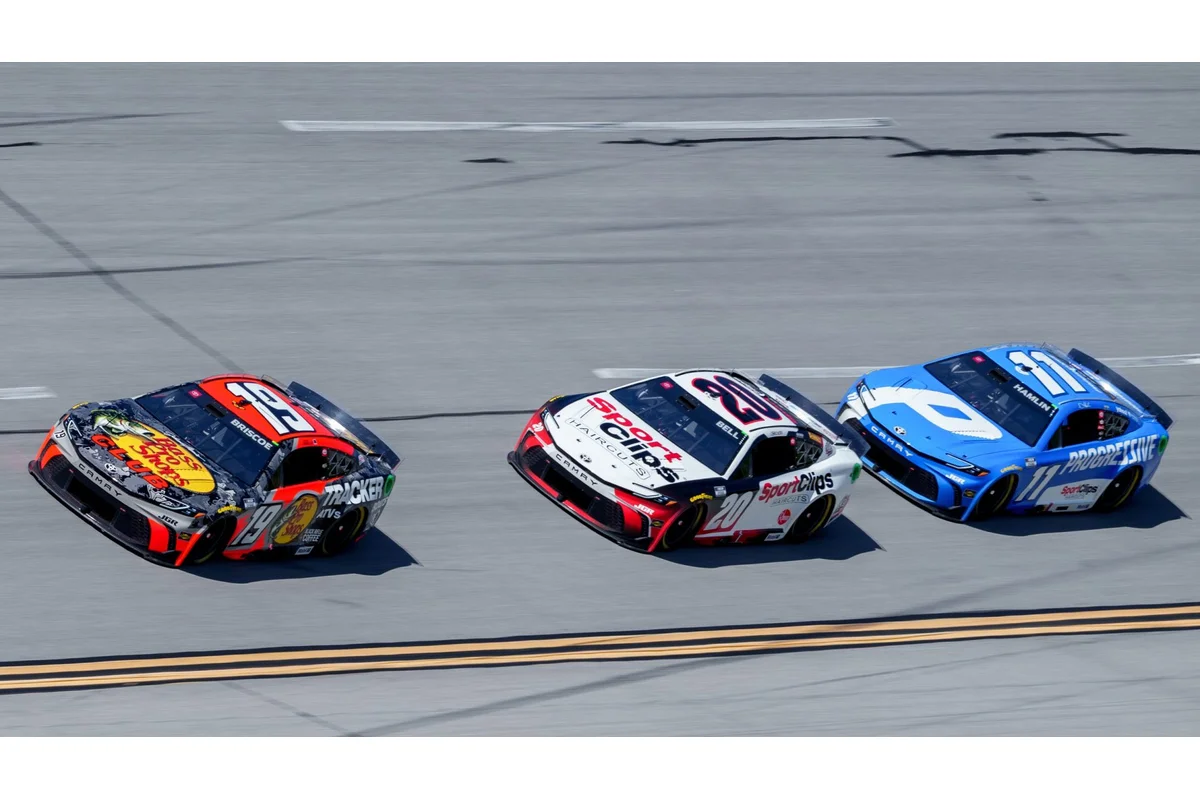
Christopher Bell has spotlighted significant challenges in NASCAR race preparation, emphasizing how modern drivers depend heavily on simulators since the pandemic-era reduction in track practice time. Now limited to only 20 minutes of on-track practice per weekend, Cup Series competitors must balance virtual learning with the realities of racing, as they prepare for each event under much tighter constraints than in the past.
The shift stems from COVID-era changes, which reduced practice sessions as a cost-cutting measure. Previously, drivers like Christopher Bell and William Byron had up to two hours at the circuit, allowing them to fully understand both the layout and the car’s handling in real-world conditions. With the current short sessions, much of the driver’s preparation has moved online, where platforms have played a transformative role, particularly for those who started their careers in the digital world, such as William Byron.
Simulated Experience Versus On-Track Reality
While simulators and online platforms offer drivers the convenience of unlimited laps without the risks or expenses of damaging real cars, Bell points out a crucial distinction between the virtual and physical race environments. Unlike in the simulator, where a quick reset erases mistakes, actual NASCAR races demand vigilance, discipline, and an acute fear of making costly errors.
Bell put the issue into perspective when discussing the psychological difference in approaching a simulator versus being strapped into a real car.
“So, one thing that the drivers love to talk about is the fear factor,”
Christopher Bell, Joe Gibbs Racing driver, explained. That fear factor—absent in simulations—can lead to drivers pushing much harder than they would on an actual track, which brings inherent risks when habits from simulators are carried over to real-world competition.
“So, you come in here, and oftentimes you can run faster laps in the simulator than you can in real life just because you’re not going to wreck the car. If you do wreck, you tell him he’s going to hit the reset button, and so you’re willing to push it a little bit harder than you would in real life,”
Bell added, describing how the absence of real consequences can foster unrealistic driving styles.
Track-Specific Hazards and the Need for Realism
Bell illustrated his concerns by pointing to the difficulties NASCAR drivers face on tight circuits like the Chicago Street Course. The unforgiving nature of such tracks means even minor errors can have major consequences, in stark contrast to the forgiving environment of simulation racing.
“Specifically, like the road courses, [the] Chicago Street Course is the one that comes to mind. It’s a super supertight track with walls on both sides. There’s no room for error,”
said Bell, referencing his experience navigating challenging courses.
He further explained the danger of becoming too comfortable with virtual risks:
“And you go in the simulator, and you’re just like, ‘Oh, I’m gonna hammer out a lap, and if I hit the wall, no big deal.’ And then you go to real life, and you have to like back it up a little bit. So, yeah, you have to make sure that you, as the driver, drive it realistically,”
Bell underscored. This calls for drivers to maintain a disciplined, realistic approach in both digital and physical practice, or risk dangerous habits carrying over into real competitions.
High-Tech Tools Demand Smart Preparation
Modern simulators offer advanced features—helping Cup Series competitors, including those from Joe Gibbs Racing, to learn layouts, fine-tune car settings, and sharpen technique. Tracks such as Phoenix make it possible in simulation to pull off dramatic drifts and recoveries, maneuvers that could end a real race in a crash. Muscle memory, cognitive skills, and familiarity with track characteristics are honed in these virtual environments under conditions free from physical risk and financial cost.
However, as Bell and others have highlighted, the value of simulator practice hinges on using these sessions with the same caution and seriousness they would show on race day. Tempting as it is to drive aggressively online, NASCAR drivers like Christopher Bell warn of the dangers in letting unrealistic expectations bleed into actual race performance. The best results come from treating every simulated session with race-day intensity, reinforcing habits that can withstand the pressure and unpredictability of live NASCAR competition.
As NASCAR evolves, and influential drivers such as Christopher Bell and William Byron continue to shape the field, the balance between simulation and real-world practice has become a defining aspect of modern race preparation. This technological transformation brings both opportunity and risk, challenging all drivers to adopt smarter, more disciplined training routines for peak performance on the track.