Jimmie Johnson on NASCAR changes is coming into focus after the league’s recent overhaul of its championship system, moving away from the win-and-in playoff model for 2026 and beyond. The revisions, which see a return to a consistency-driven Chase format, have drawn praise and concern from across the NASCAR community, with Johnson sharing insights on how this evolution reflects the sport’s values and what it means for teams like Legacy Motor Club.
NASCAR’s Return to Consistency: Details of the New Chase Format
NASCAR announced it will discontinue its elimination-style, win-and-in championship model, opting to reinstate a Chase format reminiscent of earlier seasons. Under this structure beginning in 2026, the top 16 drivers in regular-season points after 26 races will qualify for a 10-race playoff. The champion will be determined by total points over these final races, rewarding drivers who perform well across the entire season rather than those who clinch spots through singular race wins.
The revised rules notably drop the win-and-in provision, as well as knockout-style eliminations. NASCAR has also increased the reward for race victories, raising winnings from 40 to 55 points to maintain the importance of competitive finishes. The regular season points leader will get a 25-point bonus heading into the playoffs. This balancing act, NASCAR states, aims to recognize year-long excellence while still valuing the thrill of race-day victories.
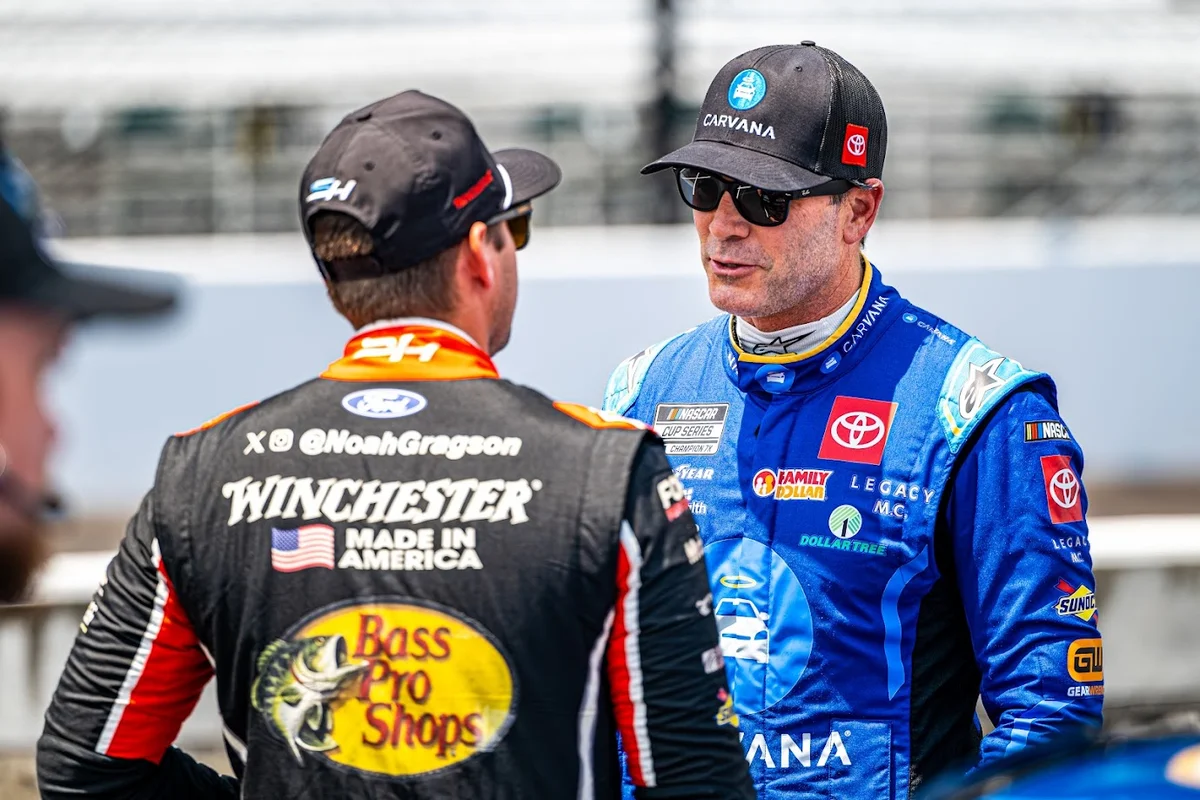
Jimmie Johnson, who claimed six of his seven Cup Series titles in the Chase era, believes NASCAR has shown courage in making such a significant change, stating,
brave and making a big decision.
— Jimmie Johnson, driver and team owner.
Johnson added,
I am, of course, fond of the system I won so many championships. … As I look at it, I think there’s been a lot of thought and attention behind this, and I think it’s the next evolution of our points system,
— Jimmie Johnson, driver and team owner. He continued,
We’re trying to solve for a lot of things and it’s really tough to make everyone happy. But again, the intentionality behind this points system and bringing back a championship that does reward consistency, feels closer to home of what our sport was founded on.
— Jimmie Johnson, driver and team owner.
Implications for Teams: Legacy Motor Club’s Perspective
The removal of the win-and-in rule is a notable shift for NASCAR. In the previous format, any driver, regardless of season-long performance, could secure a playoff spot by winning any of the 26 regular-season races. This benefited younger drivers and underdog teams, such as when Harrison Burton, sitting 34th in points, clinched a postseason berth with a single win at Daytona International Speedway in 2024.
With these days now in the past, Johnson sees the changes as providing opportunity for Legacy Motor Club to build on steady performance throughout the season. He shared,
I think for us and where we are as an organization, it helps us,
— Jimmie Johnson, driver and team owner. Johnson elaborated that with the pressure of sudden eliminations lifted, teams can commit to consistent finishes, especially as the playoff cutoff approached, which previously prompted riskier strategies. He noted the return to emphasis on locking down top-10 results matches the team’s strengths, especially as they continue developing their relationship with Toyota.
Johnson also pointed to the opportunity for growth among Legacy Motor Club’s younger lineup, reflecting,
Young drivers, young team, lot of evolution taking place, we’re new with Toyota in a lot of respects and trying to understand, so I do feel like it’s better for us. But we’ll go racing and see where it lands.
— Jimmie Johnson, driver and team owner.
Broader Impact: What the 2026 Changes Could Mean for NASCAR
This reimagining of the NASCAR championship structure is expected to create a more level playing field and underscore consistency over one-off triumphs. Established teams and those able to maintain top-tier finishes across the calendar could see renewed opportunities, while smaller teams might need to adjust their strategies absent the win-and-in path to the playoffs.
The Chase format’s comeback also signals NASCAR’s responsiveness to its history and a desire to reconnect with foundational principles that rewarded reliability and performance over a grueling, lengthy season. For drivers, organizations, and fans, the coming seasons will reveal whether these changes yield increased excitement—or new debates—across the sport.
As Jimmie Johnson continues his journey with Legacy Motor Club, his perspective encapsulates both the challenges and anticipation that NASCAR and its community face ahead of the implementation of these reforms.