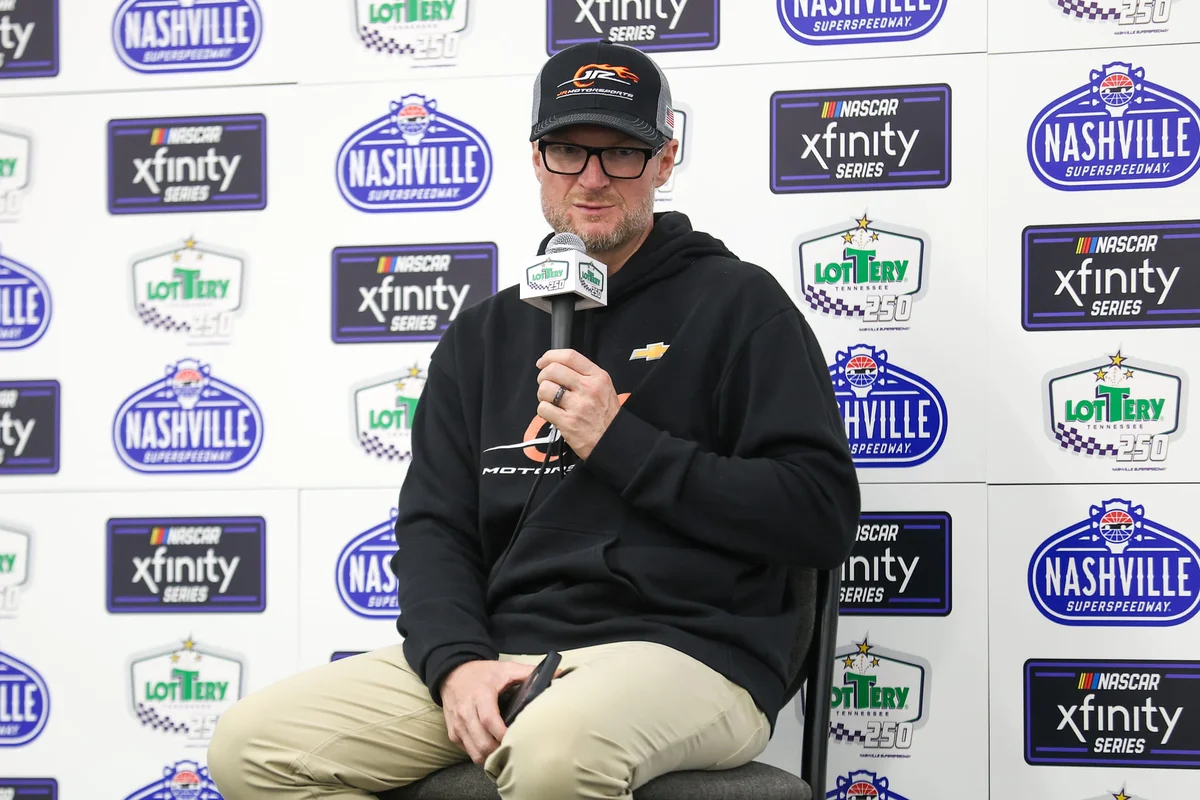
On January 12, 2026, NASCAR revealed sweeping changes to its championship format, a move that has garnered strong support from former Cup Series champions Dale Earnhardt Jr. and Mark Martin. This new Dale Earnhardt Jr NASCAR format was shaped through months of discussion and formal recommendations by a Playoff Committee, of which both Earnhardt and Martin were key members.
The announcement, made at the NASCAR Productions Facility in Concord, North Carolina, marks a transformative moment for all three major stock car divisions. Earnhardt Jr. and Martin, whose careers overlapped in the 2000s and early 2010s, both attended the event and voiced enthusiastic approval for the format’s emphasis on season-long excellence and fairness.
Key Details of the 2026 NASCAR Championship Structure
The 2026 update returns to a variation reminiscent of The Chase, used from 2004 to 2013, but with impactful innovations. Sixteen drivers will qualify for a 10-race playoff, based strictly on the highest point totals accumulated during the regular season. Unlike the previous system from 2014 to 2025, where a single race win could secure playoff entry, the new approach makes consistency the most critical factor for eligibility.
The comeback of “The Chase” means that there will be no elimination rounds and no Championship 4 finale. The champion in each top series—the Cup, O’Reilly Auto Parts, and Craftsman Truck—will be determined by the driver who earns the most points throughout the 10-race playoff.
According to an announcement from NASCAR,
“16 drivers. 10 races. No eliminations. The Chase is back.”
Dale Earnhardt Jr. Welcomes the Focus on Season-Long Performance
Dale Earnhardt Jr., a central figure in shaping the new format, has praised the system for rewarding week-in, week-out effort and compelling storylines. He argued that, under the previous format, drivers needed only an occasional win and average results to lock in a playoff spot. Now, accumulating points through steady performance across the regular season determines who will contend for the championship.
Earnhardt emphasized the accessibility and clarity the updated system brings for NASCAR’s fans:
“It makes it simpler for our fans to follow,”
Dale Earnhardt Jr. said.
“I’m a fan of the sport. And now I’m compelled to plug in every single week, because I know there’s a long-form objective for my driver to accomplish to be able to give himself the opportunity to win the championship.”
—Dale Earnhardt Jr., Former NASCAR Driver
He further explained how the removal of guaranteed postseason spots for race winners heightens the stakes throughout the year:
“So, even though my driver may have success early on in the season, it does not assure him success in the postseason. … Every single race, every single lap will have more importance.”
—Dale Earnhardt Jr., Former NASCAR Driver
Instead of elimination or sudden-death showdowns, the 2026 playoffs will reward those who demonstrate steady performance and resilience over the entire stretch. Consistency becomes valuable not only in qualifying for the playoffs but also throughout the run to the championship.
Earnhardt relishes the opportunity for fans to witness drama across every race:
“I love the idea that, once we do get to the Chase, we just get to sit back and watch these guys go at it for 10 races,”
Earnhardt said.
“And they have to put together the full body of work. I feel like whoever can accomplish that can feel pretty darn good about what they’ve done at the end of the day.”
—Dale Earnhardt Jr., Former NASCAR Driver
He summarized the new system’s appeal succinctly:
“every race is going to matter.”
—Dale Earnhardt Jr., Former NASCAR Driver
Mark Martin Sees Format as an Equitable Solution
Mark Martin, another celebrated driver and member of the committee, has long advocated for a return to the traditional all-season points format used prior to 2004. While this wish wasn’t fully realized, Martin expressed satisfaction with the compromise achieved in the new championship system.
Martin pointed out that while points will reset for playoff contenders after the regular season, drivers’ efforts throughout the entire year—and especially the 10-race playoff—will be much more influential than before. He considers the 16-driver, non-elimination playoff a fair blend of tradition and modern engagement.
He was enthusiastic in his response:
“I think that it is the best possible scenario that you could have asked for,”
said Martin, a NASCAR Hall of Famer and 40-time Cup Series winner.
“After the second meeting that we had (with NASCAR), I was still convinced that we couldn’t even get to this. I am so happy.”
—Mark Martin, NASCAR Hall of Famer
Martin stressed the broad benefit of the changes:
“Everyone wins with this format. Everyone. The fans win. They were heard. They win. The drivers, the teams win. NASCAR wins. Everybody wins. You know, you can’t always have everything you want. I wanted it all. But I’m sure happy.”
—Mark Martin, NASCAR Hall of Famer
Although Martin hopes NASCAR may one day return to the 36-race, no-playoff championship structure, he views the 2026 changes as a positive step led by president Steve O’Donnell. He added:
“We’re really lucky to have gotten what we’ve got here,”
Martin said.
“This is a great compromise, in my eyes. … So, you never know what happens in the future. (Steve) didn’t say that. I did, though.”
—Mark Martin, NASCAR Hall of Famer
Martin’s presence in committee discussions was deemed instrumental. Ben Kennedy commented,
“had it not been for @markmartin being in the Playoff Committee meetings, he feels #NASCAR likely would have landed on a different format that wouldn’t have put as much emphasis on consistency.”
—Ben Kennedy, NASCAR Vice President (via Toby Christie)
Immediate Impact and What Lies Ahead for NASCAR
This bold step toward rewarding overall excellence seeks to address concerns from longtime fans and competitors alike, focusing on both merit and spectator engagement. With veteran voices like Dale Earnhardt Jr. and Mark Martin shaping the outcome, the new NASCAR format for 2026 aims to make every lap, race, and strategic decision count more than ever before. The season promises closer championship battles and renewed viewer investment across the Cup, O’Reilly Auto Parts, and Craftsman Truck Series.
As NASCAR implements its new era, anticipation is high that the format will offer a fairer, more compelling championship chase, where top performers are rewarded for enduring skill and consistency on the track. All eyes now turn to the 2026 season to see if this Dale Earnhardt Jr NASCAR format will meet supporters’ hopes—and possibly inspire future refinements based on its on-track success.
16 drivers. 10 races. No eliminations.
The Chase is back. pic.twitter.com/9EVY0VTel1
— NASCAR (@NASCAR) January 12, 2026
#NASCAR … Dale Jr. likes the Chase format because “every race is going to matter.” pic.twitter.com/cAygOs047L
— Dustin Long (@dustinlong) January 12, 2026
Ben Kennedy says had it not been for @markmartin being in the Playoff Committee meetings, he feels #NASCAR likely would have landed on a different format that wouldn’t have put as much emphasis on consistency. pic.twitter.com/TX7muis0YI
— Toby Christie (@Toby_Christie) January 12, 2026