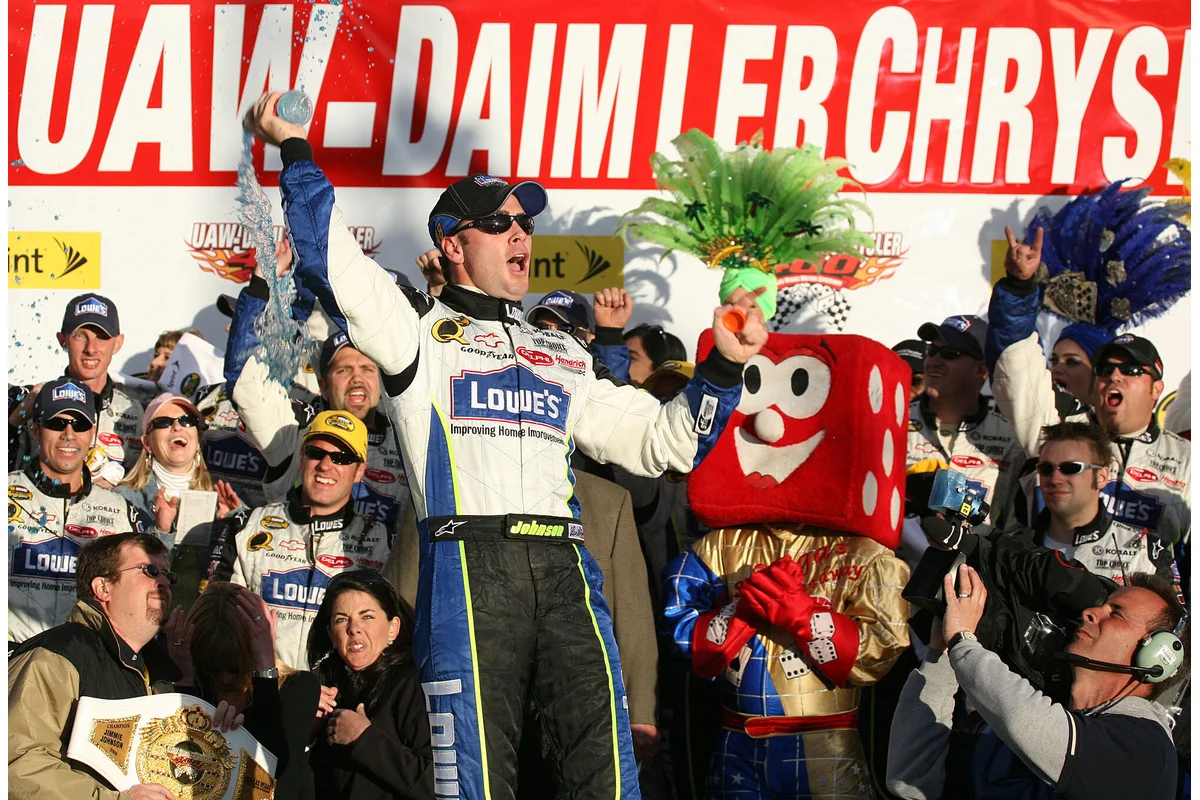
Jimmie Johnson’s NASCAR dominance took flight during the dramatic 2007 Cup Series season, propelled by the Chase format that tested both resilience and the ability to win under pressure. The period marked a pivotal moment for Johnson, as his performance not only secured a title but reshaped the competitive atmosphere of stock car racing, highlighting how success in the Chase format demanded far more than consistency alone.
The Chase Format Shifts the Competitive Balance
The introduction of the Chase format in NASCAR fundamentally changed the way drivers approached the championship battle. While Team Penske had found success with the Elimination Format and the Next Gen car, clinching three championships in a four-year span starting in 2022, NASCAR’s decision to revert to the Chase framework aimed to create a fairer competition. However, this system had already allowed some drivers to carve out legendary streaks, with Jimmie Johnson claiming each of his seven Cup titles while racing under these rules.
The format tested drivers in new ways, emphasizing the need not only for strong finishes but for outright victories when the pressure was at its peak. Jeff Gordon, despite claiming four championships, found himself challenged by this structure, as his brand of smooth consistency became less advantageous in a format demanding headline-making wins. The 2007 season would become a defining test.
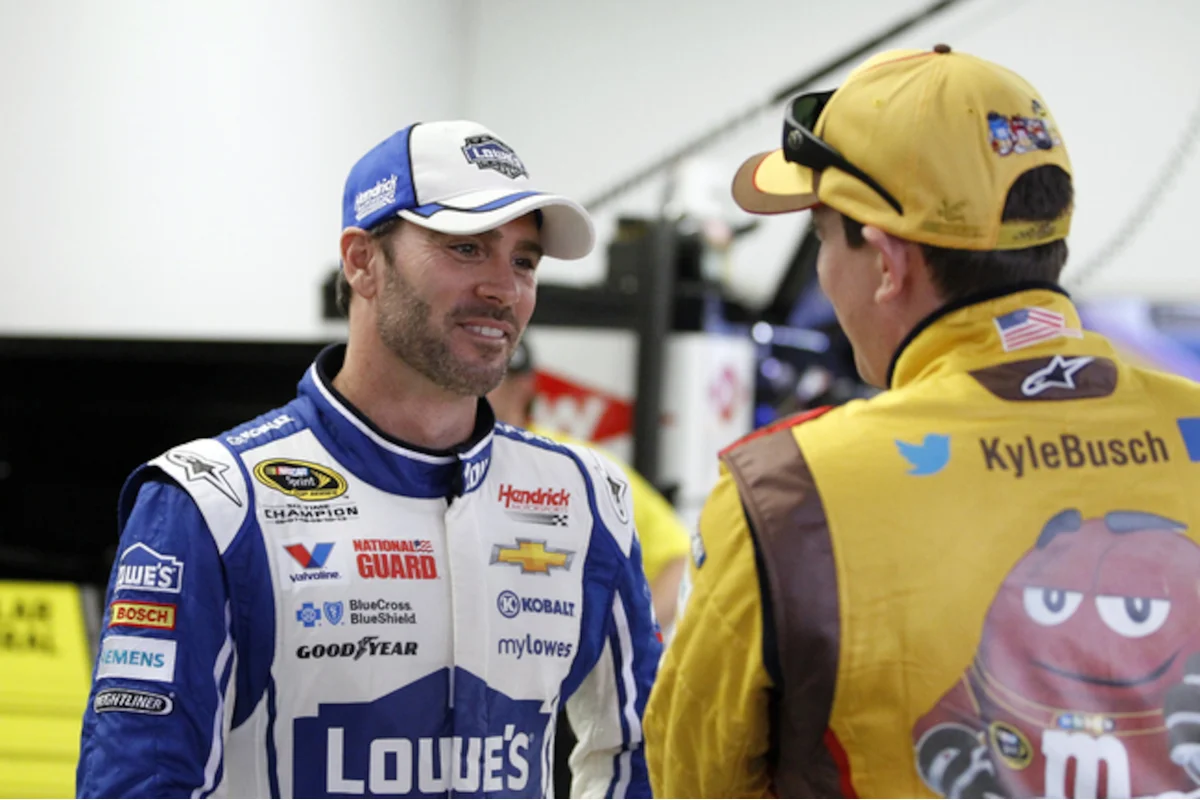
2007: A Season of Excellence and a Defining Rivalry
Throughout 2007, Jeff Gordon and crew chief Steve Letarte engineered a nearly impeccable campaign for the No. 24 team. The season saw Gordon take six victories, notch 21 top-five results, and reach the top-10 a record 30 times in 36 starts. This remarkable consistency left Gordon outside the top-10 in only six races the entire year, laying the foundation for a textbook championship run on paper.
However, Jimmie Johnson responded with a relentless display of performance that would set the stage for his dominance. Johnson captured 10 race wins, including four of the final five, showcasing his talent for executing under the immense pressure of the championship stretch. His victory at Homestead-Miami Speedway clinched his second Cup title and solidified his emerging dynasty. Gordon himself reflected on the turning point during that season, crediting the pressure of their rivalry for catalyzing Johnson’s rise:
“I think 2007 was the year that the 48 team became that team themselves. They were so resilient and got it right back. When they won all those races in a row, it was devastating to us,”
— Jeff Gordon, NASCAR Champion
Gordon continued to point out the lasting impact of that championship showdown:
“But for them, I think that championship and that battle catapulted them to where they are now. It gave them an air of invincibility that allowed them to win even more championships,”
— Jeff Gordon, NASCAR Champion
Despite Gordon’s extraordinary average finish of 5.0—an incredible feat in itself—he ultimately finished second to Johnson’s No. 48 team, which averaged a 10.75 finish but amassed more wins. The battle underscored how, while consistency remained key, victories held the ultimate currency under the Chase.
Steve Letarte’s Perspective on Winning Versus Consistency
Reflecting on that notable season, Steve Letarte has continued to voice how the Chase format forever changed the calculus for championship hopefuls. Even amid recent tweaks that emphasize consistent point-earning, Letarte stressed the inescapable need for victories to seal the title, recalling his own experience from 2007:
“I had a 5.0 average finish in 2007 and lost to Jimmy Johnson, who won four races [more],”
— Steve Letarte, Former Crew Chief
Letarte added a hard truth about the winning mentality necessary under the Chase:
“We could talk about consistency all we want, but in those final ten, you have to have both consistency, and you HAVE TO WIN RACES. There is no way, in my opinion, you can be the champion without winning multiple races in that championship 10 just because the points value is so high for the wins,”
— Steve Letarte, Former Crew Chief
His experience became a widely cited lesson as the series continued to evolve. Letarte also reiterated the same on social media, standing by that lesson years later:
“I once had an average finish of 5.0 in The Chase and still lost the Championship…you have to be consistent AND win races to be crowned Champion in this format. Inside The Race: https://t.co/2wM2dPm3Eg pic.twitter.com/WAi5RqTnPE”
— Steve Letarte, Former Crew Chief
Spotlight on NASCAR’s Pursuit of a Balanced Formula
In the ongoing pursuit of equitability, NASCAR has recently adjusted its scoring system to reward both consistency and victory. Drivers now earn 55 points for a win—up from 40—while consistent top-five finishes remain critically important. This adjustment invites drivers of various styles to compete for the pinnacle, creating scenarios where a balance between reliability and ambition can determine the champion. Throughout the field, teams and individuals study the example set by Johnson, recognizing how his ability to recover from setbacks and capitalize in clutch moments defined a new apex standard for drivers and crews alike.
For those like Jeff Gordon and the No. 24 team, the story of 2007 remains a powerful lesson in how a single season—and one extraordinary rival—can redefine what it means to chase a NASCAR championship. As new formats and rules continue to evolve, Jimmie Johnson’s NASCAR dominance, forged in the white heat of that pivotal title run, stands as the yardstick for greatness in stock car racing’s most demanding moments.
I once had an average finish of 5.0 in The Chase and still lost the Championship…you have to be consistent AND win races to be crowned Champion in this format.
Inside The Race: https://t.co/2wM2dPm3Eg pic.twitter.com/WAi5RqTnPE
— Steve Letarte (@SteveLetarte) January 13, 2026