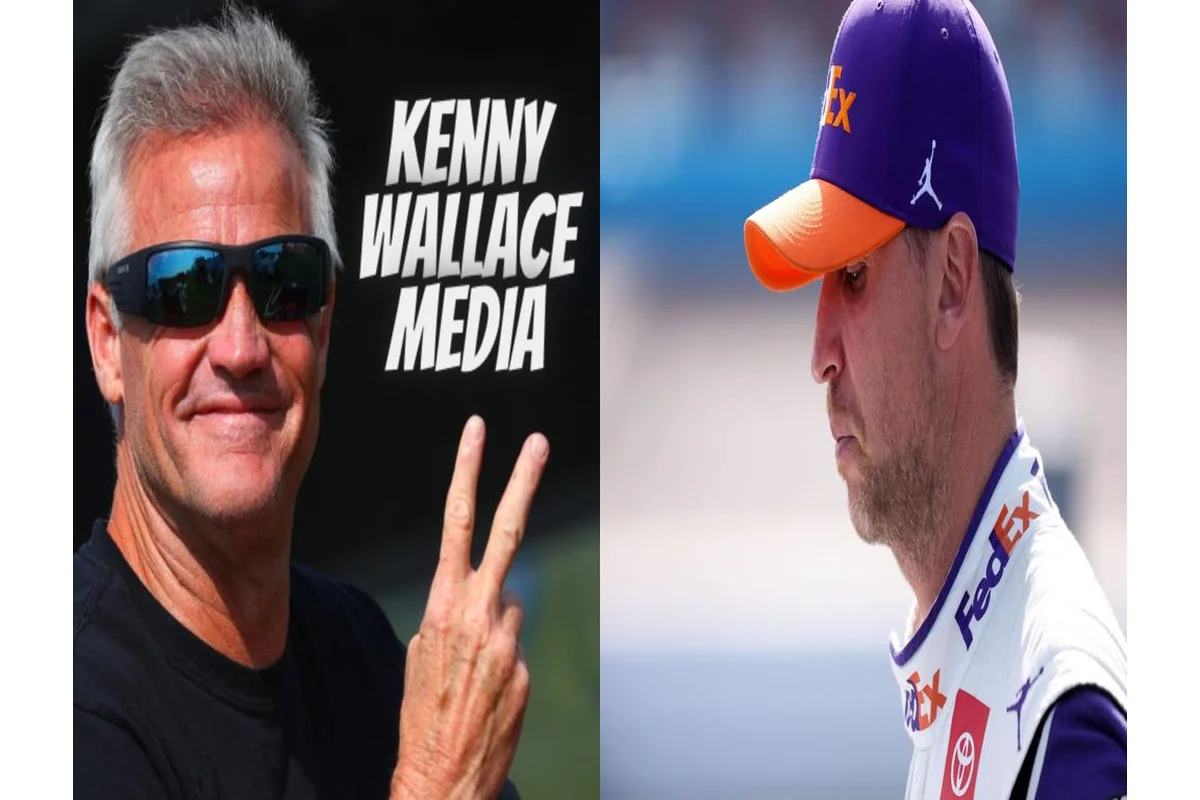
The details of NASCAR’s 2026 Championship format have been revealed, with notable figures weighing in on the shift—including Kenny Wallace, whose perspective is shaped by direct communications with top NASCAR leadership. Wallace’s reaction, coupled with his reveal of a message from Steve O’Donnell, adds unique insight to this pivotal shift in racing as fans and the industry digest the latest updates about the future of the sport; this article explores the changes using the Kenny Wallace NASCAR 2026 reaction as a focus.
Inside Look: Kenny Wallace Shares Industry-Leading News and a Private Message from Steve O’Donnell
As outrage mounted after Denny Hamlin’s devastating loss in the Cup Series Championship, calls for change grew urgent across the NASCAR community. The crescendo of fan dissatisfaction forced officials to rethink priorities, resisting pressure from network bosses and NASCAR’s own leadership structure in order to address broader concerns.
These events aligned with a major off-track moment—a crucial settlement over charter disputes—further intensifying the need for reform and steering NASCAR away from its polarizing elimination-style playoff system. Amid this environment, preparations began for a new format set to debut in 2026, and news of significant alterations began circulating among a select few, including Wallace.
Kenny Wallace, former driver and prominent media voice, recently broke his silence on his role as an early recipient of confidential information. On his Herm & Schrader podcast, Wallace read aloud from a message sent to insiders by Steve O’Donnell, NASCAR’s Chief Operating Officer. In O’Donnell’s communication, he explained the deliberative process that led to these changes:
“After a year of industry meetings, we tried to find a balance of those that wanted full points and some sort of playoff. The key was to make sure that we continued to reward winning but also rewarded consistency throughout the year.”
—Steve O’Donnell, Chief Operating Officer, NASCAR
Breaking Down the 2026 Championship Format: From Points to Playoff Chase
The new system signals a decisive break from the “win and you’re in” approach, placing the emphasis squarely on total points amassed across 26 regular-season races. The top 16 drivers by points will qualify for the postseason playoffs, regardless of individual race victories, representing a return to an earlier “chase” philosophy where sustained performance decides advancement.
A major modification is the increase in points awarded for race wins: drivers will now earn 55 points for a victory, up from the previous 40 points available through the 2025 season. This adjustment is designed to motivate drivers to strive for both race victories and week-after-week consistency, blending two traditional racing values.
Once the 16 playoff contenders are set, the postseason format introduces a staggered starting grid based on regular-season performance. The leading driver kicks off the 10-race chase with 2100 points. Second place enters with 2075 points, third with 2065 points, and each subsequent position drops by five points, continuing down the order. This structure rewards drivers who excelled throughout the regular season, offering an advantage in the championship run-in.
Strategies and Industry Response: What the 2026 Format Means for NASCAR
By realigning its championship to value both winning and sustained form, NASCAR responds to the lessons of recent seasons and the clear preferences of its fanbase, as voiced after Denny Hamlin’s championship hopes were dashed. The move is seen as an attempt to blend fairness, entertainment, and integrity, updating an evolving sport while honoring its competitive roots and the input of veteran drivers and industry insiders like Kenny Wallace.
The changes are expected to drive new strategies among teams and drivers, as the battle for every point now carries additional weight—a shift likely to keep fans engaged throughout both the regular season and the playoffs. Industry insiders, drivers, and team executives are now preparing for a more nuanced and competitive postseason landscape where every stage of the season counts toward the ultimate prize.
As the community reflects on these revelations and the first reactions circulate, the attention turns to how these adjustments will play out in real time, influencing tactics, rivalries, and potentially changing championship narratives. With Wallace and NASCAR’s brass illuminating the process, the stage is set for a new era that seeks to balance excitement with fairness in motorsport’s most-watched series.