
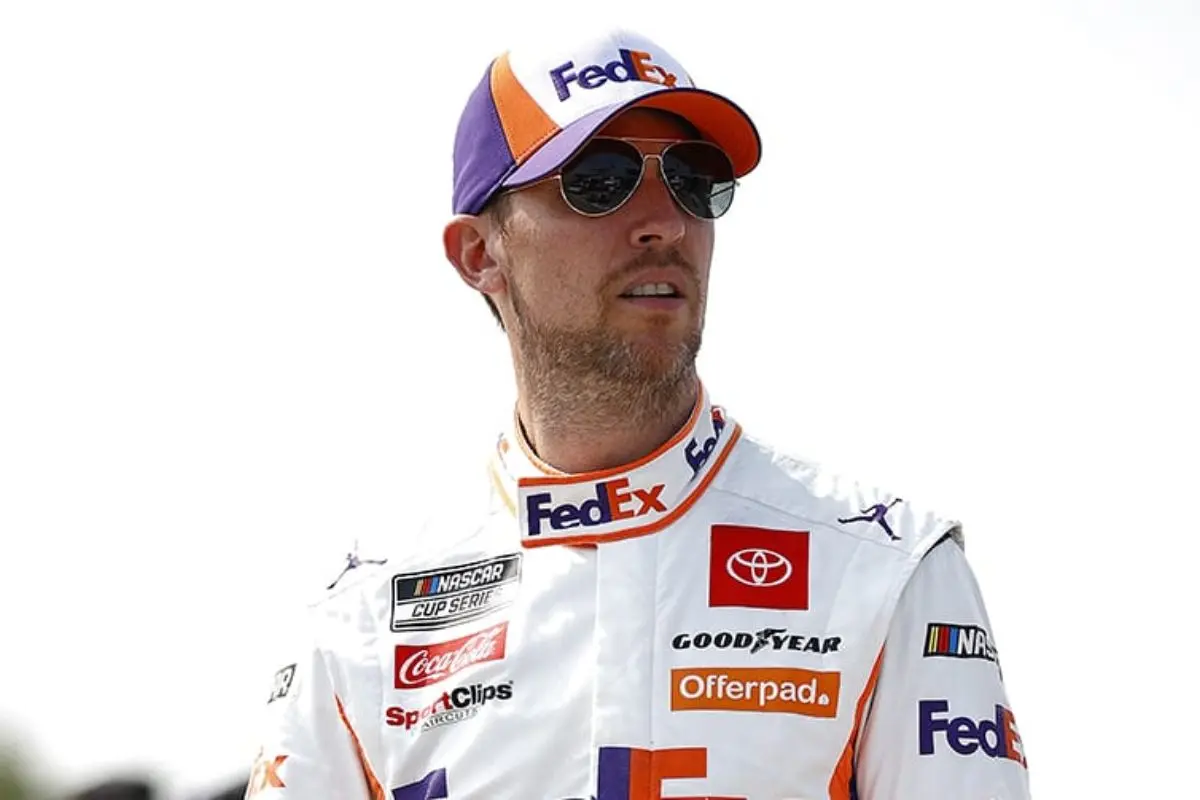
Denny Hamlin slams NASCAR for holiday hypocrisy in an ongoing legal war that’s keeping fans on edge. The battle between Denny Hamlin, Michael Jordan, and NASCAR is intensifying after a recent court ruling that could change the sport’s landscape. With charter rights at stake, Denny Hamlin has made his frustrations clear, especially as the holidays approach. The stakes are high, and this legal fight could alter the future of NASCAR in ways fans won’t expect.
Key Highlights
- Denny Hamlin criticized NASCAR’s urgency during holidays despite initially seeking delays in legal proceedings against 23XI Racing.
- Hamlin’s social media posts highlighted broader discontent with NASCAR’s governance and perceived inconsistency.
- The legal battle involves securing chartered status for 23XI Racing, impacting NASCAR’s 2025 Cup Series plans.
- Hamlin’s critique underscores calls for greater fairness and transparency from NASCAR towards teams and stakeholders.
- The ongoing litigation raises concerns over NASCAR’s economic stability and potential exposure of confidential information.
Denny Hamlin and Michael Jordan’s Legal Victory
In a notable twist in the legal landscape of motorsports, Denny Hamlin and Michael Jordan have achieved a vital victory against NASCAR, highlighting the complexities of ownership rights and team status within the racing industry.
The legal dispute centers around the pursuit of chartered team status by 23XI Racing, a team co-owned by Hamlin and the basketball legend, Michael Jordan. Initially, their request for a preliminary injunction was denied, but the duo’s persistence bore fruit after refiling their motion with a robust argument showcasing the potential irreparable harm to their teams.
The tactical maneuvering in the courtroom reflects a deeper understanding of the sport’s intricacies and the substantial influence chartered status provides. U.S. District Judge Kenneth D. Bell was convinced of the merits presented, acknowledging the necessity for 23XI Racing to secure its spot in the 2025 racing season under chartered status.
This decision marks a critical moment not just for Hamlin and Jordan but for the broader motorsports community, as it redefines the negotiation power balance between team owners and NASCAR’s governing body.
NASCAR, now facing an unexpected legal setback, is expected to appeal the ruling. This ongoing legal saga emphasizes the evolving dynamics of team ownership and the stringent policies governing NASCAR’s charter system.

Denny Hamlin’s Response to NASCAR
Following their notable legal victory, Denny Hamlin has turned his focus towards NASCAR with a sharp response that emphasizes the ongoing friction between the racing teams and the sport’s governing body. In view of the recent preliminary injunction that temporarily secures the future of his team, 23XI Racing, alongside Front Row Motorsports (FRM), Hamlin has not shied away from critiquing NASCAR’s approach during this contentious period.
The crux of Hamlin’s critique lies in NASCAR’s apparent reversal in strategy regarding the scheduling of legal proceedings. Initially, NASCAR aimed to delay the proceedings, a move perceived as a tactical measure to increase stress on the teams. However, following the court’s injunction, NASCAR has shifted gears, now advocating for an expedited hearing, even as the Christmas holiday approaches.
This sudden urgency has not gone unnoticed by Hamlin, who took to Instagram to highlight the irony of the situation. By sharing a Sportico article, Hamlin pointedly emphasized NASCAR’s inconsistent stance on working through major holidays, contrasting their current demands with their previous objections to a Thanksgiving timetable.
“There’s some irony with NASCAR’s demand that the attorneys work as a major holiday, Christmas, nears. In November, NASCAR objected to 23XI Racing’s and Front Row’s proposed scheduling that would have required working during the Thanksgiving break.” – Denny Hamlin
Hamlin’s response encapsulates a broader sentiment of frustration within the racing community, as teams work to guarantee stability for their drivers, sponsors, and staff amidst an ongoing antitrust case. His outspoken stance serves as a rallying cry, emphasizing a need for equitable treatment and transparent governance from NASCAR.
Charter Issues and Legal Implications
Amidst the escalating legal battle, NASCAR’s charter issues have taken center stage, revealing considerable implications for the sport’s governance and competitive landscape. The recent court ruling, which stripped NASCAR of control over two Stewart Haas Racing (SHR) charters, has highlighted vulnerabilities in the existing charter system. This decision not only reconfigures the team dynamics but also raises questions about NASCAR’s authority and tactical direction.
The court’s decision to allow the fielding of a tertiary entry from the acquired SHR charter further complicates the competitive equilibrium. It highlights a notable shift in power dynamics, granting teams more influence and autonomy than previously anticipated. This move, while beneficial for the teams involved, sets a precedent that could encourage further legal challenges and renegotiations of charter agreements.
Moreover, the legal implications extend beyond the immediate parties involved. The ruling could catalyze a reevaluation of NASCAR’s regulatory framework, prompting a reassessment of how charters are distributed and managed. This could lead to increased scrutiny from stakeholders, including team owners and sponsors, who might demand more transparency and fairness in the allocation process.
The situation also accentuates the precarious balance NASCAR must maintain between maintaining control and allowing competitive freedom. The sanctioning body’s expressed concern over suffering “irreparable harm” if the injunction isn’t stalled suggests a fear of losing regulatory grip, which could undermine its governance model.

NASCAR’s Defense Against the Injunction
NASCAR faces a challenging predicament as it mounts a defense against the recent injunction, which threatens to alter its established charter framework. The core of NASCAR‘s defensive strategy lies in its assertion that the absence of a charter does not constitute irreparable harm to 23XI Racing and Front Row Motorsports (FRM). By arguing that both sponsors and drivers, such as Tyler Reddick and Bubba Wallace, possess opt-out clauses, NASCAR seeks to demonstrate that these teams have viable alternatives should their charter status change.
This legal stance emphasizes NASCAR’s resolve to uphold its planned 2025 Cup Series structure, which envisioned 32 chartered teams. However, the ruling complicates matters, as it potentially disrupts the competitive landscape and the expectations set forth by the sanctioning body. By highlighting the opt-out clauses, NASCAR aims to mitigate the perceived damages claimed by the plaintiffs, thereby framing the injunction as a non-essential alteration to their operations.
NASCAR’s defense must consequently navigate these complexities, balancing legal arguments with the need to maintain stability and confidence among its participants. In this unfolding legal drama, NASCAR’s ability to effectively counter the injunction will be vital in maintaining its authority over the charter system, even as it faces increasing strain from teams challenging the status quo.
NASCAR’s Concern Over Confidentiality
The confidentiality concerns looming over NASCAR in the wake of the recent injunction are not merely administrative headaches but considerable tactical challenges. As NASCAR grapples with the implications of possibly entering a long-term agreement with racing teams, the stakes are exponentially heightened. The injunction threatens to pry open NASCAR’s financial records, a scenario that could severely weaken their defense in the pending antitrust lawsuit. Without a protective stay order, they stand on the precipice of a legal quagmire, where transparency might serve as a double-edged sword.
NASCAR’s assertion of potential “irreparable harm” highlights the gravity of their predicament. By disclosing sensitive information, NASCAR fears that its business strategies, financial margins, and operational intricacies might become vulnerable—knowledge that could be utilized against them both in court and the competitive circuit. The tactical disadvantage of such exposure extends beyond mere legal ramifications; it could shift power dynamics within the sport, altering negotiations and partnerships that underpin NASCAR’s economic ecosystem.
This looming threat is not merely theoretical. NASCAR’s statement, “This Court’s order…will inflict irreparable harm,” paints a vivid picture of the potential fallout. The disclosure of confidential information could unravel years of tactical planning, potentially destabilizing the balance of power NASCAR currently holds over its teams.
As they navigate this legal labyrinth, NASCAR must weigh the benefits of compliance against the inherent risks of exposure, all while maintaining the integrity and competitive edge that have long defined the sport’s hierarchy. The outcome of this legal battle may well redefine the contours of confidentiality in motorsports.

News in Brief: Denny Hamlin Slams NASCAR for Holiday Hypocrisy
The legal confrontation between Denny Hamlin, Michael Jordan, and NASCAR emphasizes considerable tensions within the sport, particularly regarding charter issues and confidentiality concerns. NASCAR’s defense against the injunction highlights its stance on maintaining operational integrity, while Hamlin’s critique points to perceived inconsistencies in the organization’s policies. This ongoing legal battle may have lasting implications for the governance and transparency of NASCAR, with potential reverberations affecting stakeholders and the general landscape of professional racing.

