
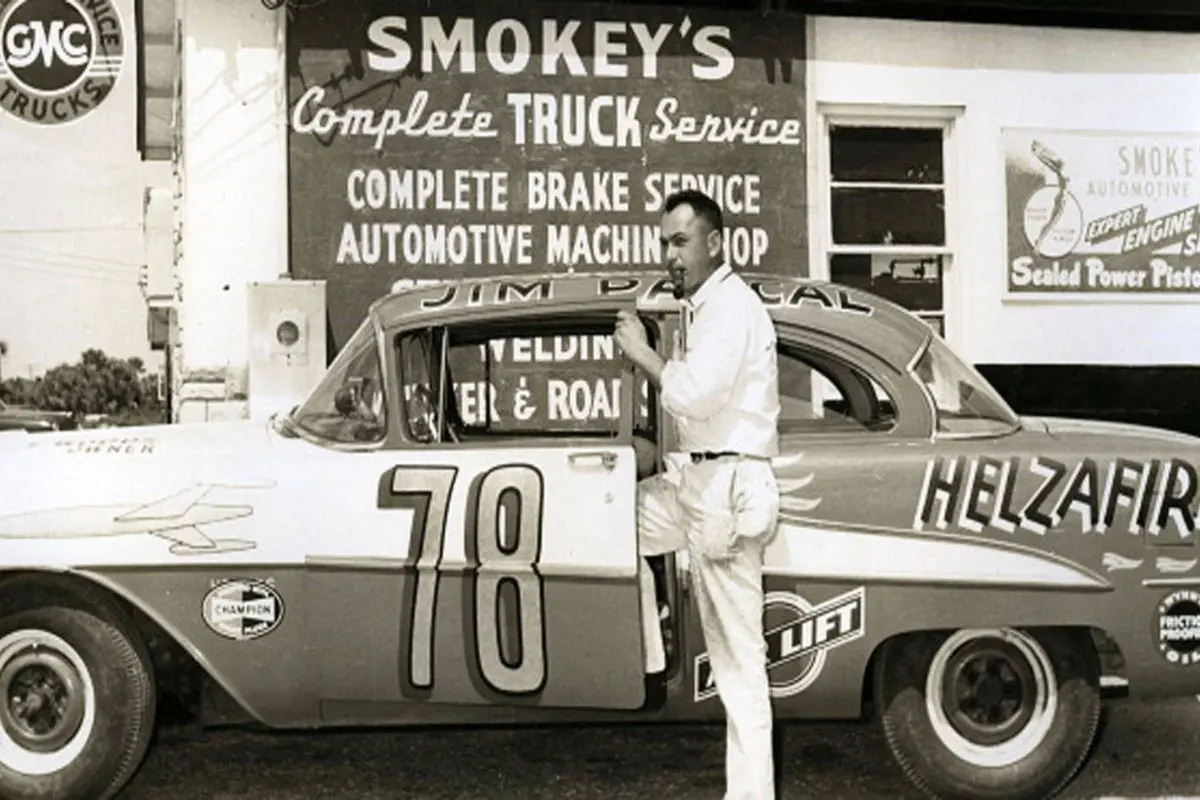
Smokey Yunick’s rule-bending mastery changed NASCAR in ways that still surprise fans today. Known for his wild ideas and clever tricks, Smokey Yunick wasn’t afraid to bend the rules to gain an edge on the competition. His daring methods helped him win races and challenge the limits of what was possible in NASCAR. But was he just a genius mechanic, or did he push too far?
Key Highlights
- Smokey Yunick exploited regulatory ambiguities, creating innovative car modifications that significantly improved performance and handling in NASCAR.
- His ingenious engineering solutions, including aerodynamic and engine modifications, pushed the boundaries of conventional car design.
- Yunick’s mastery in rule-bending prompted NASCAR to clarify regulations, transitioning to stricter guidelines and reducing creative engineering leeway.
- The shift in NASCAR regulations following Yunick’s innovations led to a more standardized and predictable racing environment.
- Yunick’s legacy highlights the enduring influence of creative innovation and regulatory adaptation in the evolution of motorsport.
Smokey Yunick: A Legendary Figure in NASCAR History
In the domain of NASCAR history, few figures embody the spirit of innovation and defiance quite like Smokey Yunick. Renowned as a legendary mechanic and crew chief, Yunick’s legacy is woven from tales of brilliance and controversy. His presence in the NASCAR arena was not just as a participant but as a groundbreaking force, challenging conventions and reshaping the sport’s competitive landscape.
Smokey Yunick’s approach to racing was as unconventional as it was effective. Known for his creative interpretations of the rule book, Yunick’s ingenuity often placed him at odds with NASCAR’s governing body. Yet, it was precisely this rebellious spirit that solidified his status as an icon. His philosophy was simple: exploit every conceivable advantage, often operating within the gray areas of the sport’s regulations. This audacious strategy not only won him races but also earned him a reputation as a master of manipulating rules to his favor.
Yunick’s impact extended beyond engineering skill. His larger-than-life persona, characterized by a blend of charm, irreverence, and raw intellect, captured the imagination of fans and competitors alike. He was a man who lived life on his own terms, unafraid to challenge authority and stir the pot, making him both revered and reviled within the racing community.
Ultimately, Smokey Yunick’s legacy is a reflection of the enduring power of innovation and audacity. His contributions to NASCAR are not merely historical footnotes but cornerstones that continue to influence the sport’s evolution, embodying the relentless quest for speed and excellence.
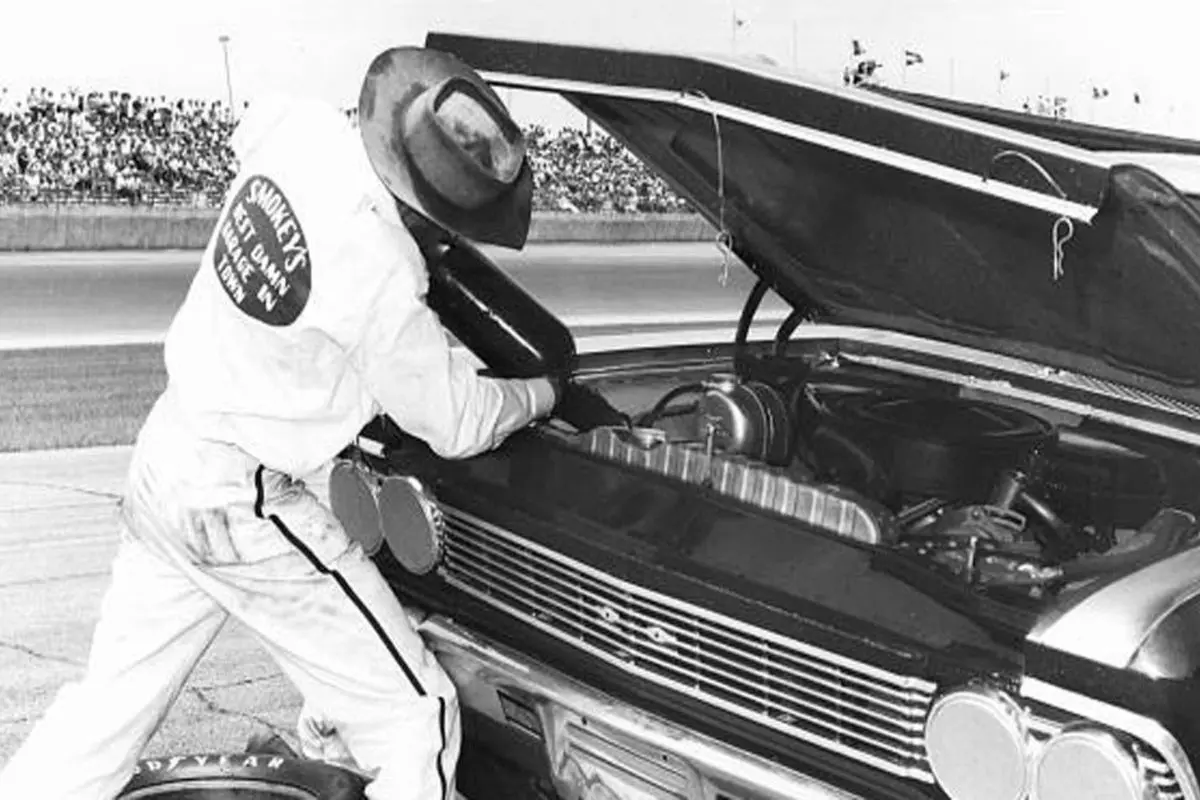
Early Life and Military Service
Smokey Yunick’s unconventional approach to NASCAR racing can be traced back to his formative years and wartime experiences, which forged his indomitable spirit and creative mindset. Born in 1923 in Tennessee and raised on the outskirts of Philadelphia, Yunick’s early life was marked by resilience and resourcefulness. Dropping out of school in the 10th grade, he took on the responsibility of supporting his mother and sister. This early necessity to adapt and innovate set the stage for the ingenuity he would later bring to the racetrack.
“I went to the state fair in Memphis while I was stationed at Dyersburg (Tennessee).”
“I got drunk and came back for high-altitude formation. While I was up around 30,000 feet my appendix burst, but I didn’t know what it was. I knew I needed to get on the ground in a hurry. After (the co-pilot) tried to land it two or three times and he couldn’t, I came to long enough to get it on the ground. If I hadn’t, we would all have been dead.” – Smokey Yunick
Yunick’s military service during World War II further honed his ability to thrive under pressure. As a B-17 pilot in the Army Air Corps, he exhibited remarkable courage and tenacity. His service was characterized by:
- Surviving an emergency landing after an appendix burst at 30,000 feet
- Completing 52 bombing missions across multiple theaters of war
- Earning distinction as a highly decorated pilot
- Being shot down over Poland and surviving
- Participating in every major World War II battle from Africa to Japan
“I was in every World War II battle from Africa to Japan, every single one.”
“I was kind of a bad boy. I did about the same there as I did in NASCAR.” – Smokey Yunick
These experiences not only solidified his reputation as a “bad boy” but also cultivated a mindset that would redefine innovation in NASCAR. Yunick’s wartime exploits were a demonstration of his ability to navigate such environments, a skill that translated seamlessly to the competitive world of auto racing.
Rise to NASCAR Fame
In the center of the backdrop of post-war America, Smokey Yunick’s rise to NASCAR fame was as swift as it was significant. Arriving in Daytona Beach, Florida, a region more frontier than tourist haven, Yunick established “The Best Damn Garage in Town,” setting the stage for his legendary status in the world of motorsports. His course was intertwined with that of Bill France, a fellow entrepreneur who would become a formidable rival both on and off the track. During this competitive landscape, Yunick’s mechanical brilliance began to shine.
Yunick’s expertise was best exemplified through his collaboration with driver Herb Thomas, leading to NASCAR Grand National championships in 1951 and 1953. Their partnership yielded an impressive 39 victories over four years, cementing Yunick’s reputation as a master mechanic and car builder. His skill did not go unnoticed; General Motors enlisted his talents in 1955 to refine the Chevrolet small-block V-8, a pivotal moment that expanded his influence beyond NASCAR.
Yunick’s NASCAR expedition peaked at Daytona, with four major stock-car victories in the speedway’s formative years. His collaboration with Fireball Roberts was particularly remarkable, culminating in a triumph at the 1962 Daytona 500. Beyond stock cars, Yunick also achieved success in open-wheel racing, especially as Jim Rathmann’s mechanic in the 1960 Indy 500, further solidifying his multifaceted legacy in motorsport history.
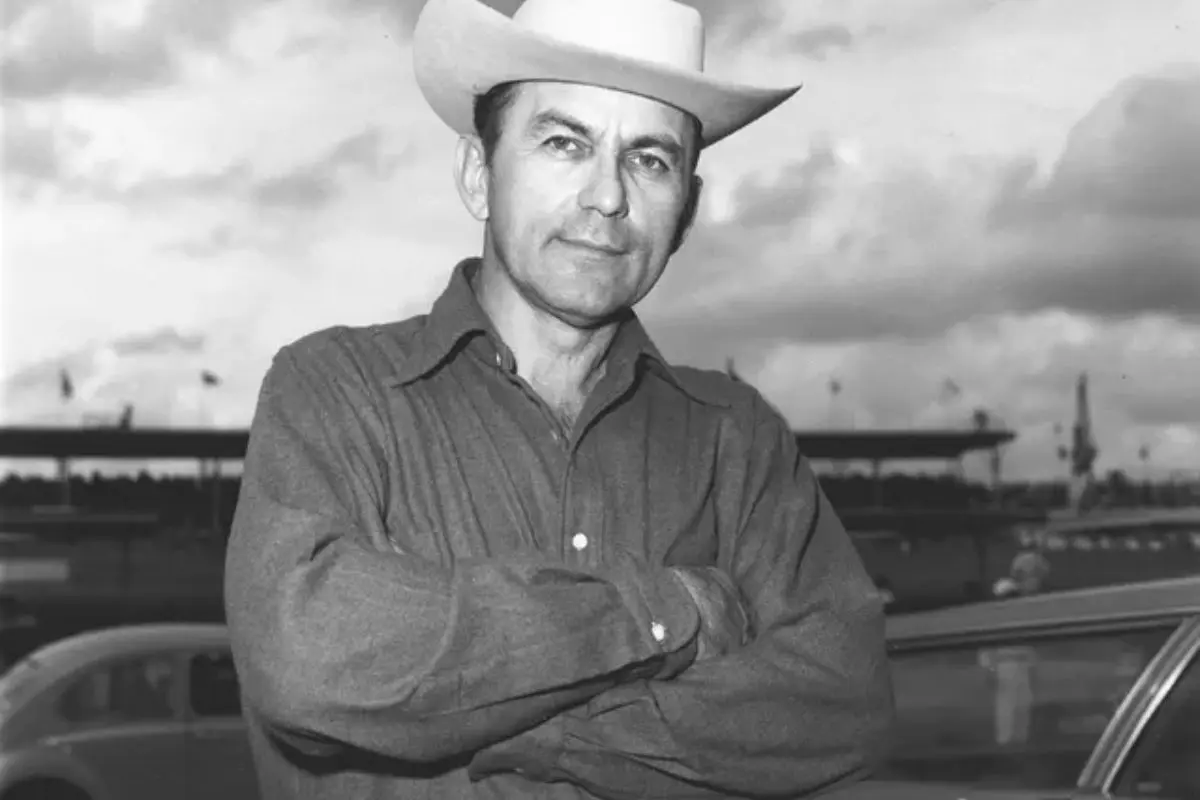
Innovative and Controversial Methods
Few figures in NASCAR history have wielded innovation as audaciously as Smokey Yunick, whose inventive yet controversial methods forever altered the sport’s landscape. Yunick’s approach to racing was not merely to abide by the rules but to tactically investigate the gray areas within them. His mastery of aerodynamics was legendary, with peers like Bud Moore acknowledging Yunick’s unparalleled ability to modify a car’s shape for ideal downforce. This ingenuity set him apart from contemporaries and, at times, the rules themselves.
Yunick’s innovations were as much about engineering skill as they were about understanding where regulations could be pushed:
- Aerodynamic Skill: Yunick’s ability to tweak car bodies for superior downforce gave his teams a competitive edge.
- Spoiler Innovations: His subtle use of spoilers, like the hidden one on the roof, showcased his knack for discreet yet impactful modifications.
- Engine Expertise: Yunick exploited gaps in engine regulations, maximizing performance while maintaining a veneer of compliance.
- Handling Mastery: Despite perceptions, Yunick’s cars had unmatched handling, allowing drivers to enter corners at higher speeds.
- Driver Selection: His vehicles demanded skilled drivers, capable of harnessing the power and handling Yunick engineered.
David Pearson, a titan of the track, noted Yunick’s uncanny ability to innovate, recognizing the thin line between creativity and perceived rule-breaking. Meanwhile, Humpy Wheeler lauded Yunick for finding and exploiting rule gaps, particularly in engine regulations.
The End of an Era
Though Smokey Yunick’s inventive spirit left an indelible mark on NASCAR, his career eventually reached a natural resolution as the sport evolved and regulations tightened. As NASCAR refined its rulebook, the opportunities for creative engineering like Yunick’s became more restricted. Yunick’s era was one of innovation under ambiguity, where the absence of specific guidelines allowed him to test the boundaries of possibility. His departure from the sport coincided with NASCAR’s move towards clearer regulations, reducing the freedom that once defined the innovation landscape.
Yunick’s reflections on “cheating” underscore a dynamic period in racing history. His approach wasn’t about breaking rules but exploiting their absence. For instance, his infamous two-inch gas line at the 1968 Daytona 500 was a demonstration of his ingenuity. It was a solution so unconventional that it prompted immediate regulatory change, embodying the core of Yunick’s influence.
Yunick’s legacy is not merely in the cars he built but in the very way NASCAR approached innovation and regulation. His era exemplified the profound impact of inventive minds on the continuous evolution of motorsport. With his departure, NASCAR’s progression toward a homogenized, tightly regulated sport marked the end of an era that celebrated bold experimentation and unorthodox solutions.

News in Brief: Smokey Yunick’s Rule-Bending Mastery
Smokey Yunick’s influence on NASCAR remains indelibly etched in the annals of motorsport history. Through groundbreaking engineering and controversial techniques, Yunick challenged the conventional boundaries of racing, nurturing a culture of ingenuity and adaptability. This life-changing impact not only propelled his teams to success but also compelled NASCAR to evolve its regulations, thereby redefining the parameters of originality within the sport. Yunick’s legacy endures as a tribute to the power of creativity and boundary-pushing in achieving competitive excellence.
ALSO READ: NASCAR’s Grip on Charter System Slips as Court Denies Their Motion for the Second Time

